Oil Markets Shudder as US-Iran Confrontation Escalates, Brent Surges 2%
Brent crude futures climbed more than 2% on Tuesday following US strikes in Iran and Israeli attacks in Lebanon, as energy markets reacted sharply to the most significant escalation between Washington and Tehran in years.
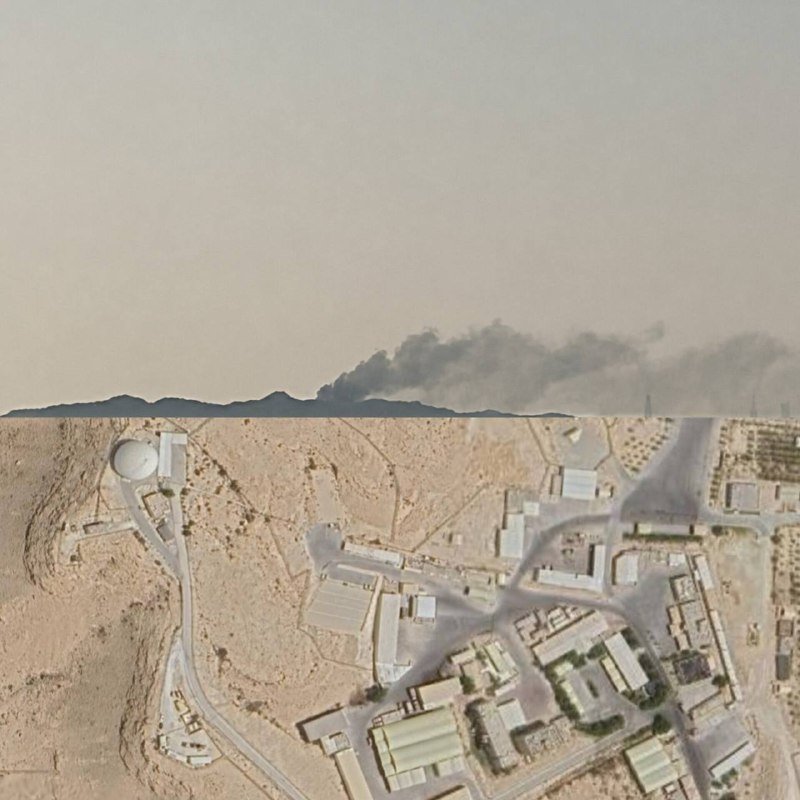
Brent crude futures climbed more than 2% on Tuesday following US strikes in Iran and Israeli attacks in Lebanon, as energy markets absorbed the most direct military confrontation between Washington and Tehran since a period of sustained diplomatic back-channel negotiations collapsed earlier this year. The twin actions — coordinated, according to initial accounts from regional wire services, but executed under separate national chains of command — sent traders rushing to price in a geopolitical risk premium that analysts had anticipated but hoped to defer.
The immediate market reaction reflects a pattern energy economists recognise intimately: when Persian Gulf stability comes into question, oil markets respond before any physical disruption materialises. The Strait of Hormuz, through which roughly a fifth of the world's oil shipments pass, runs between Iran and Oman. Any credible threat to its throughput triggers price spikes even without a single tanker being stopped. That mechanism fired on Tuesday, with Brent futures — the global benchmark — briefly touching intraday levels that had not been seen since late 2024 when earlier sanctions packages tightened.
What the strikes targeted — and what they signalled
The US action appeared concentrated on facilities associated with Iran's nuclear programme and its missile infrastructure, a continuation of the "maximum pressure" posture inherited and sharpened across successive administrations. Israeli operations in Lebanon compounded the regional signal, targeting assets linked to Lebanese Hezbollah, Iran's primary regional proxy. The combination was deliberately expansive: Washington and Tel Aviv signalling a unified position even as domestic constituencies in both capitals have grown restless with the sustaining costs of Middle Eastern engagement.
Tehran's initial response, as captured by Iranian state media, characterised the strikes as unjustified aggression and reserved the right to proportional retaliation. That framing is formulaic — every such incident produces it — but the substance behind it is not abstract: Iranian officials have repeatedly warned that any strikes on nuclear sites would be met not with proportional tit-for-tat but with a response calibrated to impose maximum cost on the initiator. Whether that posture represents genuine strategic intent or deterrent signalling through threat inflation remains the central question analysts are trying to answer from incomplete information.
The energy geography that makes this Australia's problem too
The Indo-Pacific region — Australia's sphere of primary strategic and economic interest — depends on Middle Eastern oil more heavily than any other theatre except perhaps South and Southeast Asia. China, Japan, South Korea, and much of ASEAN are net importers of crude that transits Hormuz or exits the Persian Gulf via other routes. Disruption to that flow, or even credible risk of it, translates directly into import costs for economies Australia trades with and competes alongside.
This matters for Canberra in ways that are rarely spelled out in the shorthand of "energy security" talking-points. A sustained oil price elevation — defined here as Brent holding above $90 per barrel for more than sixty to ninety days — feeds into broader inflation dynamics, complicates monetary policy calibration for central banks throughout the region, and erodes consumer purchasing power in key export markets for Australian agricultural and manufactured goods. The effects are not immediate. Energy commodity prices take time to transmit through refined-product costs into industrial input chains. But the trajectory established on Tuesday, if it persists, reshapes the operating environment for Australian exporters across every sector that uses fuel as an input or trades with economies that do.
The Australian context carries an additional wrinkle. Canberra has aligned itself closely with Washington's Indo-Pacific posture while simultaneously deepening energy trade relationships with Middle Eastern sovereign wealth funds and national oil companies. That dual commitment — strategic solidarity with the guarantor of regional security, commercial ties with the hydrocarbon states whose security the guarantor claims to guarantee — has never been comfortable. It becomes more acute when the guarantor itself strikes at one of those hydrocarbon states.
The price mechanism and what drives its staying power
A single-day 2% move does not a sustained shock make. Markets regularly overshoot on geopolitical news and retrace once the initial alarm fades. The more consequential question is whether Tuesday's moves represent a spike or the opening chapter of a sustained repricing. The answer turns on three variables: whether Iran retaliates directly or through proxies in a way that threatens physical oil infrastructure; whether other OPEC+ members move to offset any actual supply loss by raising production quotas; and whether the financial positioning of major commodity trading houses — many of which entered 2026 with long Brent positions — intensifies the price move through anticipatory buying.
On that third variable: commodity traders at major houses including Trafigura and Vitol have publicly flagged Middle Eastern supply risk as the dominant concern in their mid-year outlooks, according to their published market commentary. That positioning means there is already "smart money" aligned on the side of higher prices. Whether that alignment reflects fundamental analysis of actual supply disruption risk or simply tradeable geopolitical premium is, ironically, irrelevant to the price effect — either way it tends to sustain and amplify the initial move.
The structural frame: energy as instrument, energy as target
What Tuesday's events confirm, if confirmation were still needed, is that energy infrastructure has fully transitioned from civilian commons to strategic arena. When Western powers apply military force in the Persian Gulf, they are not merely signalling resolve or degrading adversarial programmes — they are deliberately working the oil price mechanism. Higher prices disadvantage net oil importers everywhere, including across the Global South, while benefiting producers in North America, the Gulf, and Australia. That is not a secondary consequence. For analysts who study the intersection of military operations and financial markets, it is the primary calculus.
This creates a double bind for states in the Indo-Pacific that are simultaneously US security partners and large net oil importers. Their alliance commitments position them to support actions that, materially, raise their own energy input costs. The dissonance is rarely named plainly in official communications. It is felt in the background noise of diplomatic cables and the careful wordings of foreign ministers who must reassure Washington of solidarity while quietly reassuring their own economic ministries that contingency planning is underway.
Unresolved questions and near-term watchpoints
The sources reviewed do not specify the scope of physical damage inflicted by either the US or Israeli strikes, nor Tehran's formal assessment of which assets were hit. Iranian state media framing should be read as a starting position in an escalatory signal chain, not as a verified damage assessment. Regional wire services with correspondent access to affected areas had not published independent confirmation of target lists as of this deadline.
Three watchpoints for the days ahead: whether Iranian proxies in Iraq, Yemen, or Syria initiate secondary actions that broaden the theatre; whether OPEC+ convenes an emergency session — formally or informally through the extraordinary consultation mechanisms built into the alliance's charter — to assess the supply implications; and whether Brent crude prices establish a higher floor or retreat as traders conclude the risk premium embedded on Tuesday was excessive. Australia, as a major LNG exporter with exposure to global commodity sentiment, sits inside all three of those dynamics.
This publication covered the price reaction as a market event before treating it as a geopolitical signal — the wire services led with the 2% Brent move; this article led with the strategic context that produced it.
Wire provenance
This editorial synthesis draws on the following public wire/social posts:
- https://t.me/thecradlemedia/8742
- https://t.me/thecradlemedia/8743