Ferrari's Electric Gamble: Luce Marks the End of an Era — or the Start of Another
Ferrari's first all-electric model, the Luce, carries a $640,000 price tag and a quad-motor powertrain producing over 1,000 horsepower in boost mode — a bet the Maranello marque can redefine itself without surrendering the combustion heritage that built its legend.
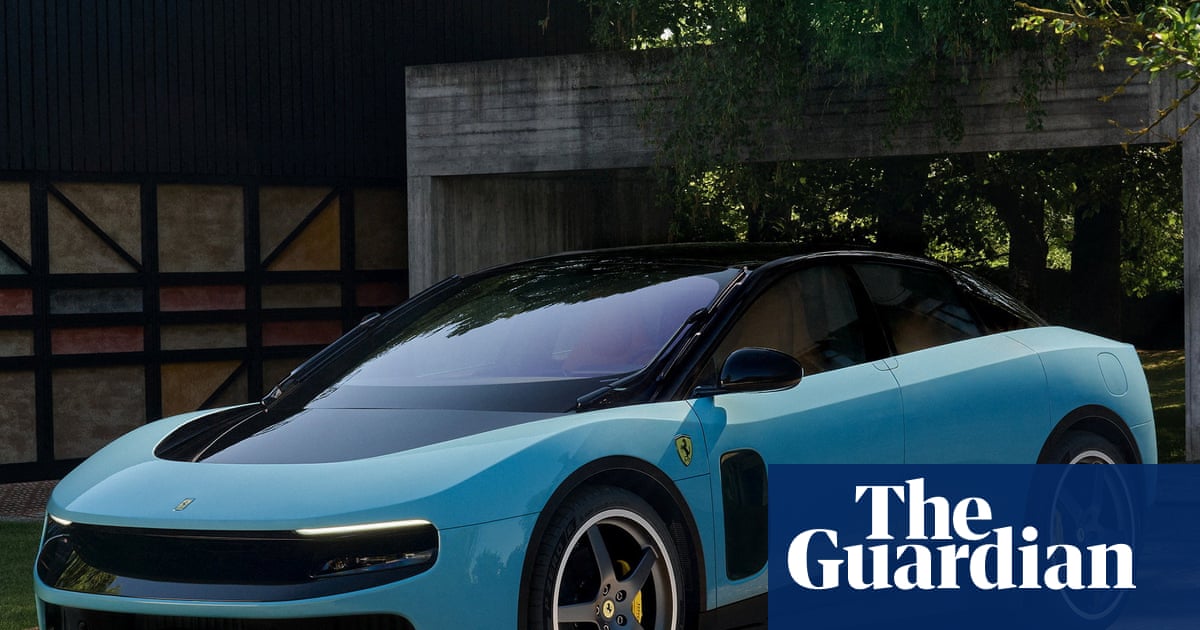
Ferrari unveiled its first fully electric production car on 26 May 2026, ending decades of resistance to battery propulsion and forcing a reckoning across the haute automobile sector. The Luce — Italian for "light" — carries a starting price of around $640,000, seats five, and routes power through a quad-motor all-wheel-drive system that delivers in excess of 1,000 horsepower in boost configuration. The announcement, carried simultaneously on Ferrari's corporate channels and wire services, has divided opinion in a way that only Ferrari can: on one side, enthusiasts mourning the last naturally aspirated V12; on the other, institutional investors relieved that the 77-year-old company finally has a credible response to the regulatory and competitive environment tightening around every legacy OEM.
The Chinese EV sector casts a long shadow over every announcement in this space. BYD, NIO, and a cohort of well-funded domestic manufacturers have normalised extreme performance at a fraction of the price point Ferrari commands. That pressure is not abstract — it shapes what Ferrari's engineers can plausibly claim as differentiated. The Luce's designers have not tried to out-accelerate a Yangwang U9 or out-range a Mercedes EQS. Instead, they have done what Ferrari has always done: built a car around the feeling of control at the limit. The battery architecture is designed to mimic the weight distribution and centre-of-gravity behaviour of a mid-engined combustion car. Whether that engineering philosophy translates to buyers willing to spend six figures on an unfamiliar paradigm is the question the next 18 months will answer.
Maranello's Calculated Leap
Ferrari has resisted electrification longer than almost every competitor in the premium segment. The company's late former CEO, Sergio Pinninfarina, once described electric vehicles as "soulless," and the marque's roadmap as recently as 2022 still featured plug-in hybrid as the electrification horizon. That posture was commercially sustainable as long as regulatory pressure remained abstract and customer sentiment remained anchored to combustion. Both assumptions have eroded. The EU's 2035 internal combustion phase-out, combined with evidence that the ultra-high-net-worth demographic — Ferrari's core buyer base — is beginning to accept that legacy is not synonymous with piston count, changed the calculus. Ferrari's board, under chairman John Elkann, appears to have concluded that defining the electric Ferrari on its own terms, before the regulatory floor forced the issue, was preferable to arriving second to a segment already occupied by Porsche and Lotus.
The Luce's specifications are not incremental. A five-seat configuration signals that Ferrari is targeting the buyer who needs a car that functions as a daily driver, not just a weekend track instrument. The quad-motor architecture allows torque vectoring at each corner — a capability combustion engines cannot replicate — and the boost-mode output places the Luce in performance territory previously exclusive to multi-million-dollar hybrid hypercars. Whether this technical ambition translates into the visceral feedback that Ferrari's customers regard as non-negotiable remains the industry's most debated open question.
The Chinese Counterpoint
Chinese EV manufacturers have spent the better part of a decade convincing Western analysts that performance parity was coming. BYD's仰望 platform and NIO's EP9 have demonstrated that Chinese engineers can deliver 1,000+ horsepower at price points that make Ferrari's positioning look increasingly architectural. Polymarket markets currently assign roughly a 9 percent implied probability to a Chinese company claiming the leading position in AI model performance by year-end, a figure that reflects the same underlying logic: the gap between Chinese and Western technology has narrowed to the point where competitive superiority is no longer assumed to reside in one geography. In the EV context, that narrowing has already arrived. A Yangwang U9 delivers comparable track performance to a 488 Pista at one-third the price. The question for Ferrari is not whether the technology can be matched — it manifestly can — but whether brand equity, engineering legacy, and the specific driving experience Maranello has spent decades perfecting constitute a moat that price compression cannot breach.
The structural argument for Ferrari is that luxury is not a commodity market. A Birkin bag costs more than objectively superior alternatives because of what it signifies, not what it does. Ferrari's bet is that the same logic applies to the driver's seat. The counter-argument is that automotive performance is more measurable and less symbolic than handbag craftsmanship — that when a $100,000 Chinese EV laps a Ferrari on a track, the brand argument weakens in a way that Hermès's customer base is insulated from. The Luce's reception among professional automotive reviewers will be the first real data point on which argument prevails.
What This Means for the Industry
Ferrari's entry into the all-electric segment is the clearest signal yet that the internal combustion era is entering its final phase at the very top of the market. Lamborghini has announced hybrid-only targets for 2030. Aston Martin's electrification roadmap is in its third iteration. The question for investors and industry strategists is not whether the premium sector goes electric — it does — but whether Ferrari's brand premium survives the transition intact. Historical precedent is mixed: Porsche's transition to electric with the Taycan preserved the brand's positioning, but Porsche occupies a different price tier and has a broader model range that includes practical crossover vehicles. Ferrari has no such buffer. If the Luce disappoints on driver experience — if the silence of electric power reads as absence rather than presence — the cost is not measured in market share but in the foundational proposition that has sustained Ferrari's valuation premium for three-quarters of a century.
The China File lens adds a layer of structural uncertainty that previous automotive transitions did not face. Chinese manufacturers are not merely competing on price and performance; they are operating within an industrial policy framework that subsidises development at a scale no Western OEM can match. BYD's vertical integration — from battery chemistry to semiconductor design — gives it cost structures that Ferrari's supplier network cannot replicate. If the Luce succeeds, it will be despite this structural disadvantage, not because it overcame it. That distinction matters for how analysts should model Ferrari's long-term competitive position.
The Luce deliveries are scheduled to begin in Q1 2027. Pre-orders, according to sources familiar with the matter, have exceeded internal targets. Whether those deposits translate into sustained demand or represent a one-time gesture of brand loyalty in a novel category is the industry question that 2027 will answer.
This publication's coverage foregrounds the industrial policy dimension and Chinese EV competitiveness in a way that the wire services have placed further down the agenda.
Wire provenance
This editorial synthesis draws on the following public wire/social posts:
- https://x.com/pirat_nation/status/1953478765434552325