Ferrari Goes Electric: What the Luce Tells Us About the Future of High-Performance Luxury
Ferrari's first fully electric car is a 1,050-horsepower, $640,000 statement that the era of the combustion-engine supercar has formally ended — and that one of the world's most tradition-bound brands believes it can stay itself while becoming something entirely new.
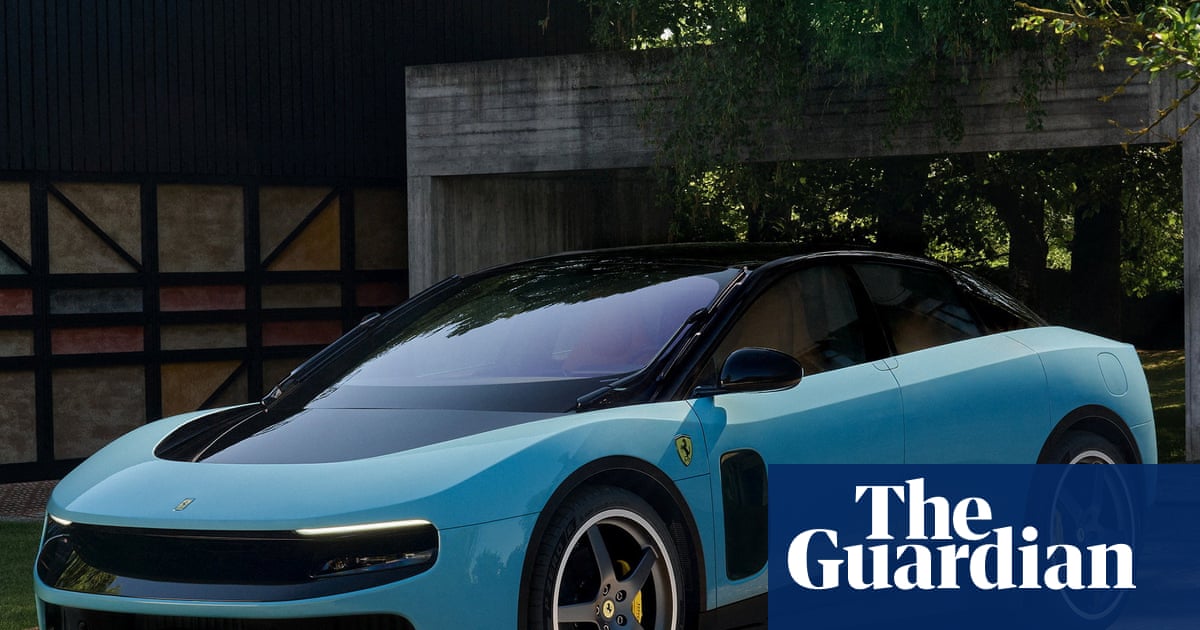
It took Enzo Ferrari's company 78 years and eleven Formula One world championships to arrive at this moment. On 25 May 2026, at a purpose-built facility adjacent to the Maranello factory, Ferrari unveiled the Luce — its first fully electric vehicle. The car produces 1,050 horsepower, reaches 60 miles per hour in 2.4 seconds, and starts at $640,000 in the United States. Deliveries to American customers begin within months, according to reporting by Reuters and confirmed across specialist automotive outlets.
The announcement carries a weight that transcends any single product launch. Ferrari spent longer than any of its peers resisting the electric transition, arguing publicly that battery technology could not yet deliver the driving experience its clients expected. That argument, sustained for nearly a decade, has now been abandoned — or, more precisely, answered. The Luce is Ferrari's answer: a car that retains the brand's performance credentials while running on electrons rather than combustion.
The timing is not accidental. Electric vehicles have reached a threshold where the performance ceiling — the horsepower figures, the acceleration times, the dynamics — no longer constrains what a luxury supercar can be. Ferrari did not pioneer this threshold. It arrived late, watching rivals move first. But arriving late, for a brand whose scarcity model depends on exclusivity and cultural authority, may prove an advantage.
What the Luce actually is
The specifications are, by any measure, extraordinary. One thousand and fifty horsepower places the Luce at the outer edge of what production automobiles can deliver — a figure that would have required a mid-sized powerplant a generation ago and now fits inside a battery pack. The 2.4-second sprint to 60 mph puts it in the company of vehicles that have redefined what "fast" means in the electric era: cars like the Rimac Nevera, whose 1,914 horsepower and $2.4 million price tag have made it both the benchmark and the ceiling of what battery technology enables.
The $640,000 starting price is, by Ferrari's own historical pricing, not extraordinary. The company has sold front-engine coupés and convertible variants in similar ranges. What is extraordinary is what the price represents: a floor, not a ceiling. In Ferrari's model, production volumes are managed to maintain secondary-market premiums; a buyer who orders a Luce should expect to pay more than the listed price if they want delivery within a reasonable horizon.
The partnership with Jonathan Ive — the former Apple chief design officer who shaped the iPhone, the iPad, and the aesthetic language of a generation of personal technology — adds a dimension that pure performance figures cannot capture. Ferrari has described the Luce's design process as a collaboration with Ive's studio, leveraging his background in product language and industrial refinement. For a brand whose visual identity is one of its most valuable assets, the Ive relationship signals that this is not merely an electric Ferrari — it is a Ferrari reimagined through the lens of a designer who rebuilt the grammar of everyday objects.
The counterargument Ferrari had been making for years was not simply about performance. It was about experience. The silence of an electric powertrain — long cited as the main weakness of battery vehicles relative to combustion-engine cars — is, in Ferrari's framing, a feature. The company has described the Luce as offering a different kind of driving experience, one rooted in refinement and engagement rather than the operatic mechanical feedback of its twelve-cylinder engines. Whether buyers accept this reframe will be one of the most significant tests in recent luxury automotive history.
The structural frame: a transition deferred and then chosen
The broader movement in high-performance automotive has been toward electrification for more than a decade. Porsche launched the Taycan in 2019; BMW's M division has committed to electric platforms; Mercedes-AMG is developing high-performance battery vehicles. Every marque with pretensions to performance has, in some form, committed to the electric future.
Ferrari held out longer than any of them. The company's public position was consistent: electric technology was not yet adequate for Ferrari's standards, and Ferrari's clients were not yet ready to accept it. That position was commercially sustainable as long as demand for Ferrari's combustion vehicles remained robust — which it did, through supply chain disruptions and a pandemic that reshaped luxury spending globally.
What changed is not Ferrari's willingness to compromise. What changed is that the technology has matured enough to meet the standard. One thousand horsepower from a battery pack is no longer an engineering challenge; it is a specification. The question for Ferrari was never whether electric power could be made fast — it was whether it could be made into a Ferrari. The Luce is the company's answer.
The structural significance extends beyond Ferrari's own strategy. When the brand that defined combustion-engine performance declares that the future has arrived, the signal to the rest of the industry is unambiguous. The era of the internal combustion supercar is over. What remains is the question of who captures the cultural premium that follows.
Precedent: what other luxury brands learned
The transition to electric has not been uniform across luxury marques, and the outcomes have been instructive. Porsche's Taycan sold well but created a secondary market problem: the brand's electric vehicles depreciated sharply in the used market, undermining the exclusivity positioning that supports new-car pricing. BMW and Mercedes have both launched electric performance variants of their core ranges with mixed results, struggling to maintain the premium brand experience in segments where the comparison to Tesla is unfavourable.
The lesson from these precedents is that electric platforms lower the barrier to high performance — which is good for buyers and bad for brands whose exclusivity depended on scarcity and mechanical complexity. A company that could build a 1,050-horsepower car from batteries and electric motors loses one of the advantages it previously held over mass-market manufacturers: the exclusivity of extreme performance. Ferrari's challenge is to maintain brand distinction at a moment when the technical foundations of performance are being commoditised.
The company's response has been to lean heavily on heritage, design, and scarcity management. The Luce is not positioned as a rival to the Taycan or the Mercedes EQS. It is positioned as a Ferrari — and the name carries enough cultural weight that the comparison does not arise. This is the strategy that has worked for Ferrari in previous decades, and it is the strategy the company is applying to the electric transition.
The stakes: brand, market, and the identity of performance driving
For Ferrari, the Luce is not simply a new product — it is a statement about what the brand will be over the next generation. The company's ability to maintain its pricing power, its production scarcity model, and its cultural authority depends on making the electric transition without diluting the brand. If the Luce drives like a Tesla that happens to have a prancing horse on the nose, Ferrari's position in the luxury hierarchy is weakened.
The stakes extend further. Ferrari's client base — the individuals who spend $300,000 to $500,000 on a car they may drive only a few hundred miles per year — has historically been resistant to technological disruption that changes the character of their ownership experience. The range anxiety that dominates discourse around mainstream electric vehicles is not a primary concern for Ferrari buyers, who typically own multiple vehicles and can charge at home or at dedicated facilities. What concerns them is whether the car feels like a Ferrari.
This is the question the Luce will answer. Ferrari's bet is that it can build an electric vehicle that carries the brand's identity into the next era — that the prancing horse means something beyond the sound of a twelve-cylinder engine. It is a substantial bet, and the outcome will shape not only Ferrari's future but the future of what high-performance luxury means in an age of artificial intelligence, autonomous systems, and digital infrastructure. When the world's most tradition-bound automotive brand places its mark on the electric future, it is making a claim about what humans want from machines: not just efficiency, but meaning.
The Luce's name means "light" in Italian. It is, in that sense, a declaration that the electric future is also a Ferrari future — and that the two can coexist. Whether the buyers who have sustained Ferrari through eight decades of combustion agree will determine whether the bet pays off.
Sources differed in emphasis. Reuters led with the performance figures and competitive context; Monexus examined the cultural and strategic implications of Ferrari's electric debut. Cointelegraph provided the most granular technical reporting alongside live commentary on the Luce's specifications and the design partnership with Jonathan Ive. The Reuters wire served its audience — investors and automotive specialists tracking market positioning — with precision. This desk's interest was in what the moment represents: the end of the holdout, and what that tells us about the speed of transformation in the luxury automotive sector.
Wire provenance
This editorial synthesis draws on the following public wire/social posts:
- http://reut.rs/4uxTfHW