Gulf States Build Around Hormuz as U.S. Navy Steps Back In
The U.S. Navy has resumed escort missions through the Strait of Hormuz on 26 May 2026 — but concurrent pipeline expansions by UAE and Iraq suggest Gulf producers are preparing to route oil around the corridor they depend on most.
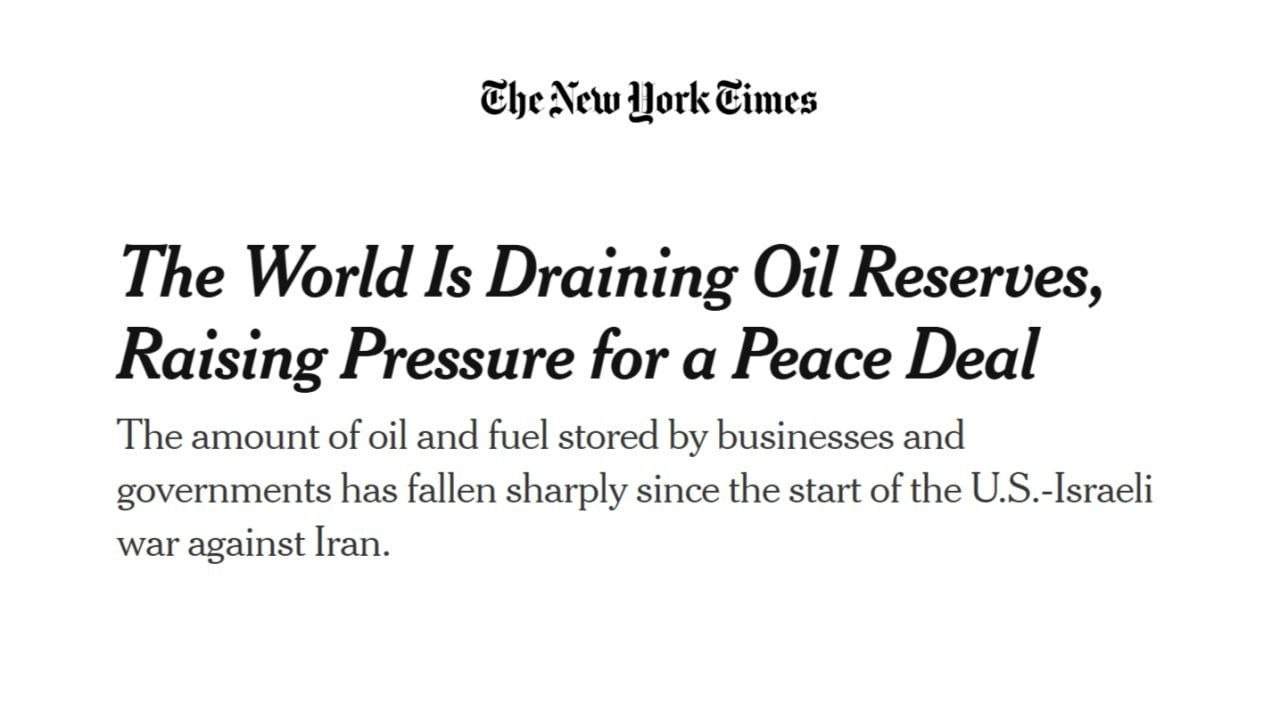
On 26 May 2026, the United States Navy resumed escort operations for commercial vessels transiting the Strait of Hormuz — a move that reversed an unescorted convoy protocol that had been in place since late 2025. The same day, Nikkei Asia reported that the United Arab Emirates and Iraq had accelerated pipeline projects designed to route crude oil around the strait entirely. The two developments landed simultaneously, and they point in opposite directions. One doubles down on the corridor; the other hedges against it. Understanding what drives both at once is a window into how Gulf producers are positioning themselves for a security environment that looks less predictable than the one Washington assumed would last indefinitely.
The Strait of Hormuz remains the world's most consequential maritime chokepoint. Roughly 21 million barrels of oil pass through its 54-kilometre width daily — a volume equivalent to about a third of global seaborne crude trade. Any meaningful disruption registers immediately in tanker markets, energy futures, and the supply chains feeding Asian refineries that rely on Gulf sour crude. For decades, the U.S. Navy's Fifth Fleet anchored the security architecture around the passage, operating from Bahrain and maintaining the kind of presence patrols that made interference costly. That arrangement shaped not just shipping logistics but the dollar-denominated trading infrastructure through which Gulf oil moves to market.
The Escort Decision: Continuity Amid Uncertainty
The decision to resume escorted transits rather than continue the unescorted model carries a direct operational signal. The sources do not specify the precise trigger for the 26 May shift, but the timing coincides with sustained pressure on the strait's approaches from actors whose interests do not align with those of the Gulf monarchies or their Western partners. Whatever the specific threat vector, the operational change indicates that Washington still classifies the waterway as a core security interest requiring active naval commitment — not merely coded advisories and surveillance coverage. The escort model is more expensive and manpower-intensive than unmanned monitoring. Its resumption suggests that updated intelligence assessments found the risks of unescorted convoys unacceptable in the current environment.
This is not a trivial commitment. Escort operations demand sustained Fifth Fleet assets in theatre, coordination with commercial shipping companies, and a readiness posture that extends beyond the strait itself into the broader Persian Gulf and Gulf of Oman. The fact that the U.S. Navy calculated that resumption was necessary, despite the budgetary and operational pressure this places on a fleet already stretched across multiple theatres, tells us something about how seriously the current threat assessment rates the corridor's vulnerability. Whether the escort resumption is a temporary adjustment or a longer-term return to visible deterrence posture is a question the available sources do not answer — but the direction of the signal is unambiguous.
Pipeline Expansions: Building the Exit Ramp
Simultaneously, UAE and Iraqi pipeline expansions are advancing from feasibility discussions to execution phase. Per Nikkei Asia's reporting on 26 May, oil-producing states in the Middle East are rushing to add pipeline capacity that would allow their crude to reach buyers without transiting the strait at all. Iraq's infrastructure push — connecting southern fields to Turkish terminals via expanded corridor capacity — and the UAE's parallel buildout coordinated with Saudi Arabia's own pipeline infrastructure, together represent a structural hedge that has been discussed since the early 2020s but is now moving on accelerated timelines.
The implications are direct. Iraq's southern oil fields produce roughly 3.5 million barrels per day, most of which currently flows through Gulf端口 that require Hormuz transit to reach Mediterranean or Atlantic buyers. A pipeline route to Turkish territory would allow that crude to reach European markets through a completely different logistics chain. The UAE and Saudi coordination — routing additional volumes through the east-west pipeline corridor that terminates at Red Sea terminals rather than Gulf terminals — serves a similar function: disaggregating the supply routes so that a single point of disruption cannot strangle the market or the producer.
The projects are not cost-free, and they are not substitutes for the strait's capacity in the short term. A pipeline segment cannot match the throughput economics of bulk maritime tanker transport for the volumes that currently move through Hormuz. But the Gulf states are not building these routes to replace the corridor immediately. They are building them to ensure that the option exists — and that the corridor's centrality, which Washington treats as a strategic asset requiring constant protection, does not become a dependency that their adversaries can exploit.
The Structural Logic: Corridor Power Without the Chokepoint
What is at work here is a structural calculation that plays out across two registers simultaneously — security and financial architecture. On the security dimension, the strait's centrality creates a vulnerability that runs in both directions. A retaliatory disruption, whether from state or non-state actors targeting tanker traffic, strands Gulf oil at wellhead as effectively as it starves consuming markets. Every Gulf producer has a structural incentive to develop alternative routes not because they expect Hormuz to be closed, but because the existence of the chokepoint gives potential adversaries a leverage point they would otherwise not possess.
On the financial dimension, the Hormuz corridor's dominance reinforces the trading architecture through which Gulf crude is priced and settled in dollars through Western banking channels. A bypass route that terminates at Mediterranean ports touches the same dollar-settlement network — but pipeline infrastructure reaching deeper into South Asian and East Asian terminus points increasingly intersects with bilateral currency swap arrangements and local-currency settlement frameworks that are growing as a share of Gulf export trade. The producers are not engineering a coordinated exit from the petrodollar system. But they are building infrastructure that makes any future disruption — whetherfrom conflict, sanctions escalation, or political rupture — considerably less catastrophic for their revenues. A producing state that can route its crude to market through a bypass corridor enters any renegotiation of the terms on which that oil reaches world markets from a structurally stronger position than one whose entire export logistics chain depends on a single, already-contested waterway.
Stakes and Forward View
The stakes are asymmetric and differ depending on the time horizon. In the near term, Washington benefits from the escort resumption: it signals continued commitment to Gulf allies, sustains the credibility of the Fifth Fleet's deterrence posture, and keeps open the logistics chains that move not just Gulf oil but a substantial volume of global trade. The pipeline story, in the short term, is more about hedging than about any immediate displacement of the corridor's centrality.
Over a decade-long horizon, the pipeline strategy represents a structural bet: that strategic dividends from corridor control will diminish as alternative routes mature, and that the Gulf states which position themselves as corridor-optional will hold more leverage in any renegotiation of the terms on which their oil reaches world markets. Washington retains a strong interest in keeping the strait open — but the urgency is felt differently depending on whether U.S. crude production has continued its upward trajectory and whether American barrels are competing with, rather than depending on, Gulf supply. The degree to which the Fifth Fleet's visible escort posture continues will be a leading indicator of how Washington reads the threat environment, and how long Hormuz remains the world's most consequential fifty-four kilometres of waterway.
The concurrent developments reveal a Gulf that is simultaneously committed to the existing security architecture and building the infrastructure to eventually operate without it. The U.S. Navy's escort resumption answers a near-term question about the threat environment. The pipeline expansions answer a longer-term question about regional hedging. How these two trajectories interact — whether the bypass infrastructure matures before the security calculus around the strait shifts further — will be among the more consequential structural questions in global energy markets for the rest of this decade.
Reporting from Disclose.tv and Nikkei Asia on 26 May 2026 did not specify the precise security trigger for the escort resumption decision, the proposed construction and commissioning timelines for the pipeline segments, or the financing structures underpinning the UAE and Iraqi expansion projects. Monexus will continue to follow both storylines as additional detail becomes available.
Wire provenance
This editorial synthesis draws on the following public wire/social posts:
- https://t.me/disclosetv/12942
- https://t.me/nikkeiasia/12834
- https://t.me/nikkeiasia/12827
- https://x.com/PolymarketAlert/status/1924387261571350834