Hezbollah Drone Campaign Escalates as IDF Confirms Multiple Strikes in Northern Israel
Hezbollah released footage of a precision strike on an IDF vehicle in northern Israel on 19 May, while reporting intensified drone activity across the border — a campaign the IDF confirmed had produced multiple impacts on 26 May.
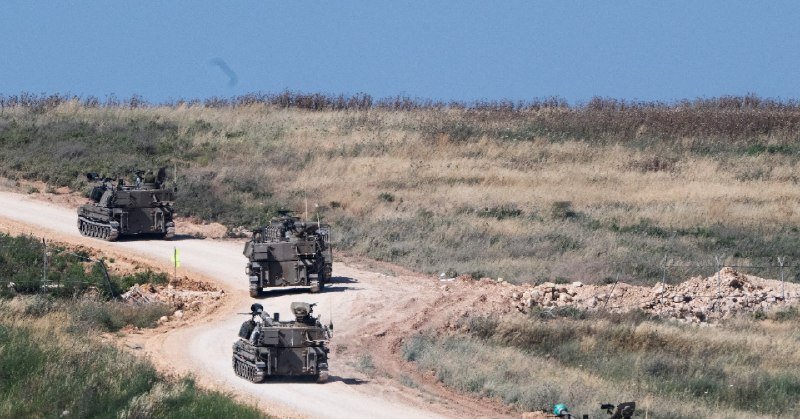
On 19 May 2026, Hezbollah released footage appearing to show a fiber-optic FPV drone striking an IDF pickup truck in the northern Israeli settlement of Misgav Am. Seven days later, on 26 May, the IDF acknowledged multiple drone impacts across northern Israel as the group's attacks intensified. The footage, verified by open-source analysts and appearing across regional channels, depicts an Ababil-series loitering munition — a design associated with Hezbollah's evolving drone programme — targeting a military vehicle inside Israeli territory. The timing and targeting choice mark a deliberate escalation in precision-strike capability along Israel's northern border.
Immediate context
The strikes come amid a sustained elevation in cross-border hostilities between Hezbollah and the IDF that has been building since early 2025. The 19 May footage — showing a direct hit on a moving military vehicle in Misgav Am — represents a qualitative leap from the indiscriminate rocket barrages and surveillance quadcopters that characterised earlier phases of the exchange. Misgav Am sits on a ridgeline overlooking the Upper Galilee; a strike on a vehicle in the settlement marks Israeli military infrastructure, not civilian centres, as the primary target class. On 26 May, the IDF spokesperson confirmed that several drones had penetrated northern Israeli airspace and produced impacts — a public acknowledgment that standard electronic warfare countermeasures had not fully neutralised the incoming systems. Hezbollah's own channels subsequently reported intensified drone activity targeting multiple positions along the border, framing the operations as a continuation of its stated resistance mandate.
Counter-narrative
The footage's authenticity is not in serious dispute. Open-source research groups have confirmed the metadata, geolocation markers, and visual signatures consistent with previously verified Hezbollah releases. Where interpretation diverges is in the tactical significance: Israeli sources have played down the impact, emphasising that the vehicles struck were not part of critical infrastructure and that the broader air defence grid remains operational. Hezbollah framing presents the same events as evidence of degrading Israeli electronic superiority and growing precision capability. The IDF's own admission of multiple successful impacts — rather than a clean interception record — lends credibility to the latter read, even if the operational damage was contained. Whether the footage release is primarily a tactical communication tool or a genuine operational record of capability advancement remains genuinely contested in the available evidence.
Structural frame
Hezbollah's drone programme has undergone a documented transformation since 2023, shifting from modified commercial quadcopters to purpose-built fiber-optic FPVs that are harder to jam. The Ababil designation is not new, but the operational envelope — specifically the use of fiber-optic guidance to bypass standard RF-jamming countermeasures — marks a capability upgrade that Israeli defence planners have flagged in prior assessments. The footage from Misgav Am demonstrates that this is not merely theoretical: the drone achieved a direct hit on a moving vehicle under conditions that presumably included active electronic countermeasures. Whether this reflects indigenous production, technology transfer, or adaptation of Iranian-sourced systems is not fully resolvable from open sources. What is clear is that the programme's trajectory has moved from harassment-pattern strikes to a more structured campaign of targeted engagement, and the IDF's 26 May acknowledgment of sustained pressure confirms the campaign's operational tempo.
Stakes and forward view
The immediate stakes concern force posture along a border that has not seen a full-scale war since 2006 but has experienced a slowly intensifying low-intensity conflict for nearly eighteen months. Hezbollah has demonstrated that it can penetrate Israeli airspace with systems capable of engaging point targets — not just large-area barrages but precision strikes on vehicles and positions. Israel has signalled it retains the option of a much broader offensive to degrade Hezbollah's strike infrastructure, but has so far chosen to manage the situation through air defence, targeted strikes, and diplomatic back-channels. The footage release itself functions as an informational operation as much as a tactical one: it is designed to demonstrate capability to both domestic and regional audiences and to shape the perception of Israeli vulnerability. Whether that demonstration prompts escalation or manages the conflict into a stable-but-elevated equilibrium depends substantially on how the Israeli government calculates the political and military costs of a larger campaign against Hezbollah's northern Lebanon position.
Israeli security concerns are legitimate. The IDF is managing a multi-axis threat environment, and the drone campaign Hezbollah is running tests the limits of electronic countermeasures and air defence coverage along a 120-kilometre frontier. That said, the strikes have so far been confined to military targets in border-adjacent zones, and the casualty figures remain limited. The trajectory — toward more capable systems, more precise targeting, and a higher operational tempo — is clearly upward. What is not yet clear is whether Hezbollah is building toward a threshold it will use as leverage in broader negotiations, or whether it is probing systematically for gaps in Israeli defences with a view to a larger future strike. The answer will shape whether this remains a managed escalation or tips into something more consequential.
Desk note: Wire coverage of this story has focused on the IDF's public acknowledgment and Israeli government statements. Monexus led with the Hezbollah footage and the operational implications of fiber-optic FPV systems — a framing that surfaces the technical and tactical dimensions that the official Israeli statements largely elide. The structural frame reflects the ongoing challenge to Israeli electronic dominance along its northern border rather than a political narrative about escalation cycles.
Wire provenance
This editorial synthesis draws on the following public wire/social posts:
- https://t.me/AMK_Mapping
- https://x.com/sprinterpress/status/1921759431234977125
- https://t.me/IntelSlava