Hezbollah Drone Strike on Northern Israel Settlements Tests IDF Air Defense Doctrine
Hezbollah released footage on 25 May 2026 of a fiber-optic FPV drone strike on an IDF pickup truck dated 19 May, one day after the group intensified drone attacks that the IDF confirmed caused several impacts in northern Israel.
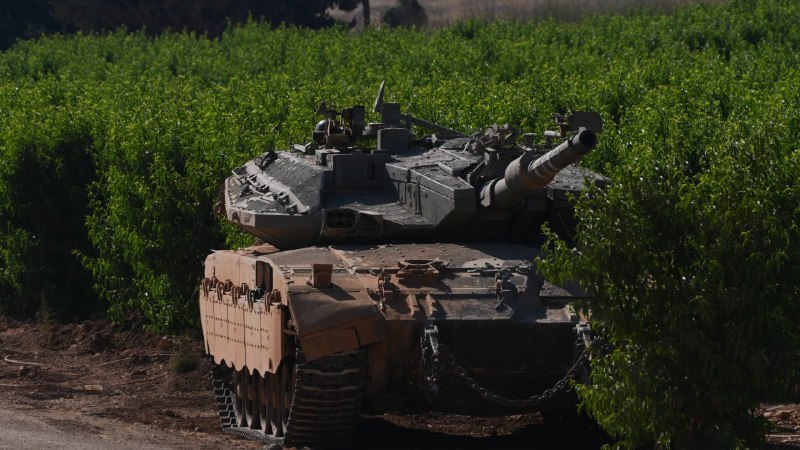
Hezbollah published footage on 25 May 2026 showing one of its Ababil fiber-optic FPV drones striking an IDF pickup truck in the northern Israel settlement of Misgav Am. The video was dated 19 May — six days before its public release. That same day, 25 May, the Iran-backed group launched multiple drone attacks across several targets in northern Israel, which the IDF later confirmed caused several impacts. A separate alarm that morning that sounded across multiple northern communities was ruled a false identification, the IDF stated. The sequence of events, spanning from a declared false alarm to confirmed drone damage in a civilian settlement area, illustrates the difficulty Israel's air defense architecture faces in distinguishing genuine threats from clutter in a battlespace that has grown steadily more saturated with low-altitude unmanned systems.
The footage itself is the most operationally revealing element. The Ababil drone — a fiber-optic guided FPV system — operates on a principle that resists one of Israel's most potent electronic countermeasures. Standard GPS-guided and radio-linked drones can be blinded by jamming; fiber-optic guidance, which transmits control signals through a physical filament trailing behind the aircraft, is immune to electromagnetic disruption. That technical characteristic makes Ababil systems a persistent problem for communities and forward positions along the border. The video shows the drone adjusting its approach and striking a moving vehicle — a level of terminal accuracy that distinguishes a precision strike from area bombardment. Hezbollah has deployed FPV systems throughout this conflict, but the fiber-optic variant represents a qualitative step: it cannot be electronically intercepted, only physically engaged.
The IDF acknowledged the drone impacts on 25 May, confirming what the footage from Misgav Am had already demonstrated. The false identification alarm earlier that morning complicates the picture. Air defense systems in northern Israel have operated under sustained pressure for months; the inability to distinguish a genuine infiltration from background noise points to a structural challenge that goes beyond individual system failure. Low-altitude, slow-moving, small-profile drones are inherently difficult to categorize — they sit in the gap between whatIRST systems are optimized to detect and what layered air defense can economically engage. This is not a new problem. But it is one that becomes more acute as Hezbollah's offensive UAS cadence increases.
Hezbollah has framed its operations along the northern border as a response to the Gaza conflict — a posture that allows the group to sustain pressure while limiting the scope of escalation in ways that complicate an Israeli ground response. The Ababil footage fits that strategy precisely: it generates verified strike evidence, demonstrates technical capability, and arrives at a moment when ceasefire negotiations have stalled. The six-day gap between the recorded strike and its release is not unusual — operational security and message timing routinely govern when footage surfaces. What matters is the content: a confirmed impact inside a settlement, on a verified target, using a system that Israel's electronic countermeasures cannot reach. That combination is the group delivering on a specific type of threat — one that has shifted from occasional rocket barrages to a sustained, precision, drone-mediated campaign.
For communities in northern Israel, the strategic logic is stark. Evacuation orders and no-build zones near the border have not produced the de facto buffer zone Israel's government has sought through military pressure. What has materialized instead is a security environment defined not by the absence of Israeli control, but by the presence of a persistent drone threat that can surveil, track, and strike across a wide depth of northern territory. The IDF's acknowledgment of multiple impacts on 25 May, combined with the footage from Misgav Am showing a vehicle destroyed inside a settlement footprint, is the confirmation that residents have long operated on the assumption of. The broader trajectory — toward drone-enabled precision warfare as the dominant feature of the northern front — does not lend itself to a diplomatic exit in the near term, nor to a ground operation that resolves the underlying technical challenge. What it produces instead is a managed, and increasingly normalized, state of low-intensity conflict along a 90-kilometer border, with the air defense problem at its center.
Wire provenance
This editorial synthesis draws on the following public wire/social posts:
- https://t.me/idfofficial/15678
- https://t.me/AMK_Mapping
- https://t.me/intelslava