The Strait of Hormuz Is Not a Typo: Why Washington's 'Defensive' Label Deserves More Scrutiny
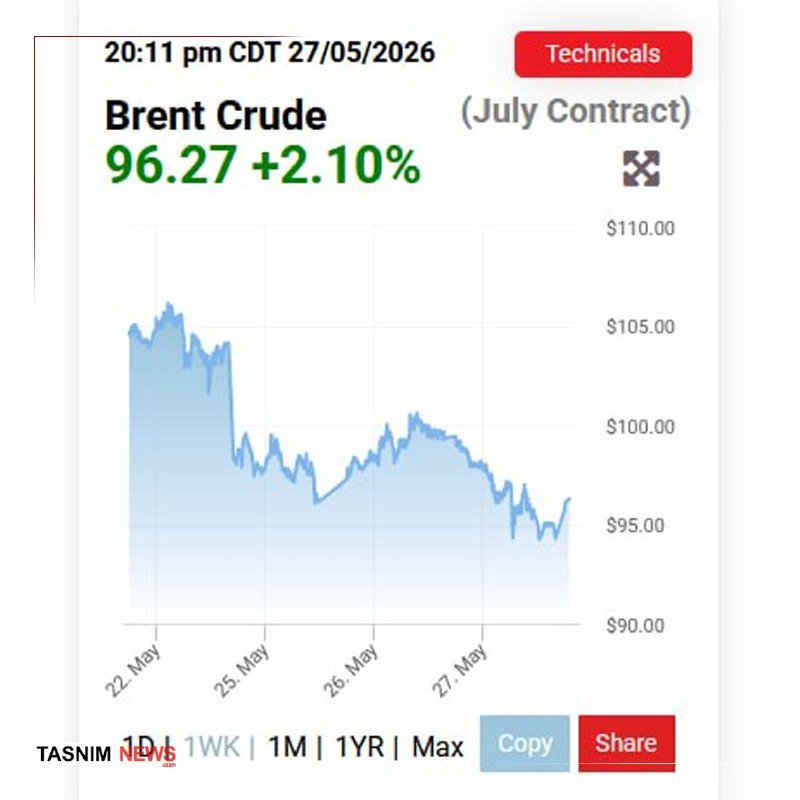
On the evening of 25 May 2026, according to US Central Command, two Iranian Islamic Revolutionary Guard Corps naval vessels were detected laying mines in the Strait of Hormuz. US forces destroyed both boats. A coastal surface-to-air missile site near Bandar Abbas was struck in the same operation. Captain Tim Hawkins, a CENTCOM spokesperson, told Fox News that US forces had conducted "self-defense strikes" to protect American troops from threats posed by Iranian forces. A senior US official, speaking to Fox News correspondent JenGriffin, confirmed the mine-laying operation was the precipitating act. Iran's Student News Agency, cited via OSINT wires, reported at least three people killed in the strikes. US officials, according to those same wires, described the operation as finished for now — and repeatedly emphasized it was defensive in character, not an offensive move or an effort to break any ceasefire.
That word — defensive — does a lot of work in Washington's Gulf vocabulary. It is worth pausing on what it is doing there, and what it is simultaneously concealing.
The Word That Erases the Precedent
The Strait of Hormuz is among the most surveilled maritime corridors on earth. Roughly 20 percent of the world's oil passes through it. The US Fifth Fleet is permanently stationed in Bahrain, a stone's throw from Iranian territorial waters. When IRGC naval units are detected placing mines in a chokepoint that critical to global energy markets, the reflexive Western framing treats the mine-layer as the aggressor and the striker as the protector. That framing is not wrong on its face. Mines placed in a commercial shipping lane are a serious threat. The crews operating those vessels understood the risks.
But the framing elides a pattern that anyone following Gulf security architecture will recognize: the US military has conducted what it calls defensive strikes in Iranian territorial waters or on Iranian assets on at least several occasions over the past decade, each time using language that preemptively closes off questions about escalation. The label functions as a judicial finding before any fact-finding occurs. When an operation is described as self-defense, scrutiny of whether the threshold for self-defense was genuinely met — whether the threat was imminent, whether the response was proportional, whether other options existed — tends to arrive much later, if at all.
In this case, CENTCOM says Iranian forces first targeted a vessel at sea before the mine-laying operation. Al Jazeera, citing initial accounts, reported that the IRGC had targeted a vessel before US fighter jets engaged the naval boats. If that sequence holds, the mine-laying may have been a response to an earlier Iranian action. The sources do not specify what vessel was targeted or by what means. That omission matters. The entire legal and political justification for the strikes rests on the threat chain being unbroken — that Iranian action created an imminent danger that demanded immediate kinetic response. Without knowing what the IRGC struck first, and when, that chain cannot be independently verified.
Whose Ceasefire, Whose Rules
The senior US official quoted by Fox News was emphatic: this was not an effort to break a ceasefire. The phrasing is notable. It presupposes a ceasefire exists, or is understood to exist, and that the operational question is whether this strike violated it. Iranian officials have not publicly confirmed any such ceasefire framework. Iranian state media, cited through regional wire services, has not characterized these strikes as part of a broader diplomatic process being disrupted.
This asymmetry — one side narrating the event as a breach test, the other not even in the frame of reference — is a familiar feature of Gulf crisis coverage. The US and its partners set the vocabulary. The counterparty's objection, if delivered, is reported as a reaction to the dominant frame rather than as an independent position with its own legitimacy. In this instance, Iranian Student News Agency reporting on casualties arrived through the same OSINT aggregation channels that transmitted the US account. There was no Iranian official briefing on the record at the time of filing. What Tehran makes of the strikes, what it considers proportional, whether it views the mine-laying as defensive in its own right — none of that appears in the wire material.
This is not a complaint about bias. It is an observation about architecture. The information environment surrounding a Gulf military incident is not symmetrical. One side has a spokesperson who speaks to a correspondent from the world's most-cited cable network, in English, with a legal category attached. The other does not, or its version does not travel through the same amplification channels at the same speed. The result is a de facto framing monopoly that shapes how the incident is understood before the facts are fully known.
The Regional Arithmetic
The timing matters. The Strait of Hormuz sits at the intersection of several simultaneous pressures: elevated Iranian nuclear enrichment activity, ongoing negotiations over sanctions relief that have repeatedly stalled, and a broader realignment of Gulf state relationships that has seen some Arab capitals cautiously expand engagement with Tehran while the US reassesses its force posture in the region.
A kinetic engagement — even one correctly described as defensive — changes the atmospheric pressure around all of those processes. It gives hardliners in Tehran an argument that engagement with Washington is futile. It gives hardliners in Washington an argument that engagement with Tehran is dangerous. It creates a facts-on-the-ground that diplomatic channels must now address rather than shape. That may be the intention. It is certainly the effect.
The mine-laying, if confirmed, was reckless. There is no version of that action that does not risk civilian shipping. But the question the coverage has largely foreclosed — what led to the mine-laying, what preceded it, what sequence of provocations and miscalculations produced the detected Iranian operation — is the more important question for anyone trying to understand whether this incident is an aberration or a sign of a cycle resetting.
The Uncomfortable Question the 'Defensive' Label Dodges
US officials are clear that the strikes are over for now. They are equally clear that this chapter is closed and that no escalation is intended. Those statements are conventional and, in the context of Gulf incidents, have historically been accurate — previous kinetic exchanges have not spiraled into broader conflict.
But the confidence of the characterization should not substitute for the analysis it forecloses. Whether the mine-laying constituted an imminent threat to US forces, whether the response was calibrated to neutralize that threat rather than to degrade Iranian naval capacity more broadly, whether the Bandar Abbas SAM site strike was necessary to protect the operation or an opportunity to test Iranian air defenses — these are questions the self-defense framing answers by fiat rather than by examination.
At least three people are dead. They were on an IRGC vessel. Their government has not had a full opportunity to characterize their actions or to contest the US account. The Strait remains open. The oil markets have barely flickered. The briefings have concluded and the channel is quiet.
That quiet will not last. The conditions that produced an IRGC naval unit laying mines in one of the world's most monitored waterways have not changed. A label has been applied. The underlying situation has not been resolved.
Monexus covered this incident through CENTCOM's self-defense framing as the dominant structure, with Iranian casualty reporting cited via Iran's Student News Agency. Unlike the wire services, which treated the mine-laying as the originating event, this article has foregrounded the contested sequencing — what the IRGC struck before the mine-laying, and why that matters for the legal and political characterization of the strikes.
Wire provenance
This editorial synthesis draws on the following public wire/social posts:
- https://t.me/osintlive/8194
- https://t.me/BellumActaNews/1247
- https://t.me/rnintel/5821
- https://t.me/GeoPWatch/3891
- https://t.me/osintlive/8189