Markets Are Betting on a Hormuz Reopening. Washington Just Said No.
Fund managers are pricing a June reopening of the Strait of Hormuz into their portfolios — but the White House has publicly denied any change in policy, leaving markets and investor sentiment facing a sharp collision with geopolitical reality.
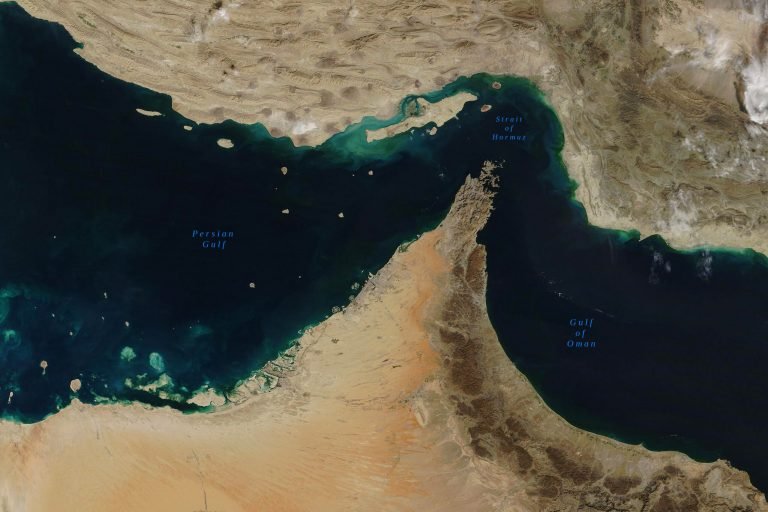
As a Bank of America survey published on 26 May 2026 showed, 44 percent of fund managers surveyed said they expected a reopening of the Strait of Hormuz to commercial traffic by June 2026. The figure reflects a remarkable recalibration of geopolitical risk in global energy markets — and it arrived the same afternoon that a senior American official told Al Jazeera that the United States had not resumed, and would not resume, escort operations for commercial vessels transiting the strait.
The timing makes the disconnect difficult to miss. Market positioning and official policy口径 are pointing in fundamentally different directions, and the gap matters enormously for anyone with exposure to oil prices, tanker rates, or regional stability.
The Market Read
The Bank of America Fund Manager Survey for May 2026 revealed that 44 percent of respondents anticipated a reopening of the Strait of Hormuz — the 21-mile-wide passage through which roughly a fifth of the world's oil flows daily. The expectation was not universal, but it was concentrated enough to register as a structural shift in how professional investors were pricing regional risk.
The thinking runs something like this: after an extended period of elevated tension and intermittent disruptions, signals from diplomatic channels suggested a possible de-escalation. The survey respondents — the fund managers who move actual capital into and out of energy equities, shipping stocks, and related instruments — read those signals as sufficient grounds to position for an easing of the chokepoint blockade or semi-blockade that has constrained traffic through the strait.
The survey data, sourced by the research team at Unusual Whales from the Bank of America May 2026 release, is a snapshot of institutional sentiment at a specific moment. It tells us what the smart money was thinking as of late May 2026. It does not tell us whether that expectation is well-founded.
The Official Denial
Within hours, that foundation was directly undermined.
According to reporting by Tasnim News Agency and Mehr News on 26 May 2026, an American official speaking with Al Jazeera explicitly denied the news of any resumption of commercial ship escort operations in the Strait of Hormuz. The denial, carried in English-language dispatches from two Iranian state-aligned news outlets and corroborated by Al Jazeera's own reporting, was unambiguous: the United States had not changed its posture. Commercial vessels transiting the strait would not receive American naval escort.
The statement is notable in several respects. American officials speaking to Al Jazeera — rather than an American podium — chose a regional outlet with a specific regional audience to deliver a precise, on-the-record denial. The framing was deliberate and targeted, not a general press release that could be absorbed or ignored. The message was addressed as much to regional capitals and energy markets as to diplomatic counterparts.
What Drives the Hormuz Calculus
The Strait of Hormuz is, in structural terms, the world's most consequential maritime chokepoint. Approximately 21 million barrels of oil pass through it daily — roughly 20 percent of global liquid fuel supply, according to the US Energy Information Administration. Any sustained disruption to traffic through the strait produces immediate, measurable effects on global oil prices, shipping insurance rates, and downstream industrial costs.
The regional dynamic is not new. Iran has, over successive administrations, used the strait's geography as leverage — sometimes through literal threats to close or interfere with shipping, sometimes through harassment of commercial vessels, sometimes through a general ambient threat that constrains the behavior of operators without ever producing a trigger event. The United States, under multiple administrations, has maintained a formal freedom-of-navigation posture that does not include escorting commercial vessels — a policy choice that in effect places the risk of transit on private operators rather than the US Navy.
That policy has a strategic logic. Naval escort for commercial traffic would effectively position the US military as a guarantor of private commercial operations in contested waters — a posture that flattens the distinction between military protection and commercial facilitation. It is also, critics note, a posture that invites precisely the kind of incident that escort operations are meant to prevent.
What makes the current moment distinct is the combination of elevated baseline tension and a market that has apparently decided to bet on a resolution. When 44 percent of fund managers in a Bank of America survey position for reopening, they are not simply pricing in a hope — they are making a directional bet on political outcomes that remains unsupported by the American official record.
What Remains Uncertain
The sources do not specify the full diplomatic context surrounding the May 2026 survey or the denial, and the precise trigger for the official readout to Al Jazeera specifically remains unclear. What is clear is that a significant portion of global capital markets were operating under assumptions that Washington had not endorsed.
It is also unclear whether private diplomatic channels — back-channel communications, de-escalation talks mediated by third parties, or informal assurances conveyed through intermediaries — factor into the fund manager calculations in ways that do not appear in public statements. The Bank of America survey does not indicate what informational inputs shaped the respondents' expectations. If fund managers with access to higher-tier intelligence or close client relationships in energy or government moved early, their positioning would appear in the survey data without an accompanying public explanation.
What is not uncertain is the operational record. American naval escort for commercial vessels in the Persian Gulf has not resumed. The official speaking to Al Jazeera said as much on 26 May 2026, and the statement was carried by outlets on both sides of the regional divide.
The Stakes and the Forward View
If the fund managers are right, energy markets are underselling the resolution premium and the strait will operate freely within weeks. Oil prices will ease, tanker stocks that rallied on disruption risk will correct, and Asian refiners — particularly in South Korea, Japan, and China — will see relief in input costs.
If the fund managers are wrong and tensions continue to run high, those positioned for reopening will face a sharp repricing. Oil could rally. Further incidents in or near the strait — the kind of low-level naval pressure Iran has applied intermittently — could escalate without diplomatic off-ramps. The US posture of refusing escort means that commercial operators remain exposed, and that exposure has a way of eventually pricing into insurance markets and freight rates even when tanker stocks have already moved.
The collision between survey sentiment and official denial is not a comfortable place for investors to stand. Markets price probabilities; policy statements are not probabilities. The Bank of America data captured what a meaningful fraction of institutional money believed was likely. The Al Jazeera denial says it is not yet official. The gap between those two positions is the story.
This publication covered the Bank of America survey finding alongside the US denial rather than leading with either. Wire services largely led with the survey data as a market story; Monexus positioned the tension between official posture and market expectation as the editorial lead, because that tension is where the stakes are most concrete.
Wire provenance
This editorial synthesis draws on the following public wire/social posts:
- https://x.com/unusual_whales/status/1943745234276622592
- https://www.eia.gov/todayinenergy/detail.php?id=14911