India-US Minerals Deal Deepens as US-Iran Talks Stall Over Strike Fallout
As US-Iran diplomatic efforts faltered following Washington's self-declared defensive strikes on Iranian nuclear infrastructure, India moved to formalize a strategic supply chain partnership with Washington — a deal whose timing is unlikely to be coincidental.
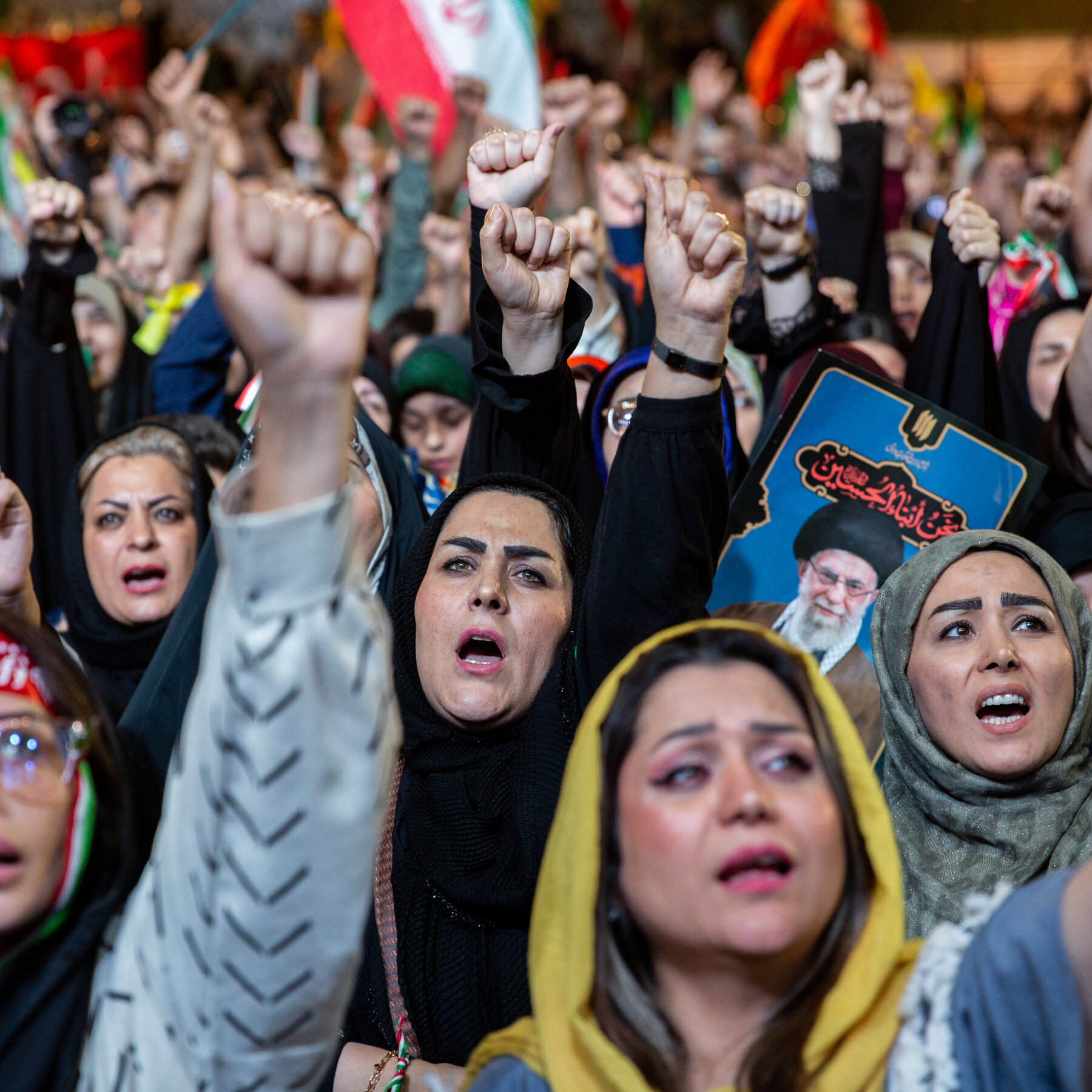
The Trump administration's self-declared "self-defence" strikes against Iranian nuclear infrastructure in late May 2026 have cast a long shadow over diplomatic efforts to de-escalate tensions in the Middle East. Simultaneously — and, officials in New Delhi have made clear, not unrelatedly — India moved to formalize a landmark critical minerals supply agreement with Washington that places the country firmly inside the US-led effort to reduce dependence on Chinese-controlled supply chains. The two developments, announced within twenty-four hours of each other, reflect a broader realignment of strategic relationships across the Indo-Pacific and the Gulf.
The critical minerals pact, details of which were released alongside a joint statement on 26 May 2026, establishes a bilateral framework for joint development and procurement of lithium, cobalt, nickel, and rare earth elements — materials essential for electric vehicles, semiconductor manufacturing, and advanced defense systems. For India, the deal offers a pathway to reduce its dependence on Chinese exports, which currently supply the majority of the country's rare earth requirements according to figures cited in the joint statement. For Washington, it represents another building block in what the administration has described as an "ally-shoring" model of industrial policy. But the broader strategic logic, as Indian officials have acknowledged in background conversations, extends well beyond commercial cooperation.
Diplomatic Fallout from the Strikes
The US strikes, which Pentagon officials described as limited and proportionate, nonetheless disrupted the fragile indirect negotiation channel between Washington and Tehran that had been facilitated by Omani mediators in Muscat. According to reporting by The Indian Express on 26 May 2026, Iran's foreign minister walked out of a session in the Omani capital following news of the strikes, which targeted enrichment-related infrastructure near Natanz. Western diplomats who had privately expressed cautious optimism about a possible negotiated outcome just weeks earlier have since adopted a markedly more guarded tone. European capitals, which had been working to preserve elements of the 2015 Iran nuclear agreement — the JCPOA — have found themselves confronting renewed questions about whether the diplomatic window remains open.
India's external affairs ministry declined to comment specifically on the strikes when reached for clarification. But a statement issued alongside the minerals agreement referenced "shared commitment to a free and open Indo-Pacific" — language Washington has consistently used to signal concern about Chinese assertiveness in the region. The juxtaposition of the two announcements — military escalation on one front, strategic realignment on another — did not go unnoticed in regional capitals.
India's Supply Chain Repositioning
The minerals agreement marks the most concrete expression to date of India's effort to diversify away from Chinese-controlled supply chains in sectors Washington has designated as strategically sensitive. According to data cited in the joint statement, India currently imports approximately 70 percent of its rare earth requirements from China — a dependency that successive Indian governments have identified as a vulnerability, particularly as border tensions with Beijing along the Line of Actual Control have persisted since the 2020 standoff in Ladakh.
The agreement establishes a bilateral framework for co-investment in lithium processing facilities in Karnataka and for joint mining ventures in third countries, including Chile and Australia, where Indian firms have been seeking access to reserves for several years. Industry executives familiar with the negotiations described the framework as removing regulatory barriers that had previously slowed bilateral investment in critical minerals. A senior Indian official briefed on the negotiations, speaking on condition of anonymity to discuss internal deliberations, told this publication that the deal was "not just about minerals" — it reflected a broader question of where India stands in the emerging geopolitical order.
The official declined to specify whether the agreement included any provisions related to military cooperation or intelligence sharing but noted that the US-India strategic partnership had been deepening across multiple fronts simultaneously. The Minerals Security Partnership, a US-led initiative launched in 2022 that aims to ensure supply chains for clean energy transition technologies, has counted India as a key partner in its regional architecture — a fact the joint statement explicitly acknowledged.
The Structural Logic of Supply Chain Politics
The Indian deal fits within a broader pattern of US policy that has moved decisively away from the post-Cold War assumption that globalization would continue to deepen and that supply chain decisions were primarily commercial. Under the current administration, supply chain security has been elevated to a first-order foreign policy concern — one explicitly linked to deterrence and alliance architecture.
Chinese dominance of global refining capacity is the central driver of this shift. Beijing controls roughly 60 percent of global lithium refining capacity, according to industry data, and has demonstrated a willingness to use export restrictions as a diplomatic tool. Chinese graphite export controls imposed in 2023 in response to US sanctions on Chinese technology firms remain a reference point in Washington for the risks of dependence. Those restrictions, which affected semiconductor and battery manufacturing supply chains globally, were cited in internal US government reviews as a case study in the weaponization of industrial dependencies.
India's positioning within this framework represents a meaningful expansion of the US strategic network in the Indo-Pacific. It also raises questions for Beijing about the durability of its own supply chain leverage. A more diversified global market for processed critical minerals, with India as a significant processing node, reduces the degree to which Chinese export policy can be used as coercive leverage against Washington or its partners.
Regional Stakes and the Road Ahead
The immediate stakes are clearest in the Gulf. The collapse of the Muscat negotiation channel does not eliminate the underlying pressures driving both Washington and Tehran toward some form of accommodation — economic isolation is extracting a real cost on Tehran, while the US administration faces domestic political pressure to avoid a wider war. But the window for a negotiated outcome has narrowed, and the strikes have complicated the Omani mediation effort in ways that will take time to assess.
For regional actors watching from the sidelines, the India-US minerals deal adds a new dimension to calculations about alignment and economic interest. Saudi Arabia and the UAE, both of which have their own critical minerals ambitions and their own complex relationships with Washington, will be monitoring how the new framework evolves — particularly if it creates competitive dynamics around access to processing capacity in South Asia.
For Europe, which has sought to preserve the JCPOA as a framework for constraining Iran's nuclear programme, the strikes represent a setback that may accelerate internal debates about whether to reinstate sanctions lifted under the 2015 agreement. That decision — still hypothetical as of late May 2026 — would have significant consequences for European companies with interests in Iran and would further complicate diplomatic coordination with Washington on broader Middle Eastern policy.
India, for its part, has signaled that it intends to move quickly on implementation. The first joint investment vehicle established under the framework is expected to be operationalized within six months, according to officials briefed on the timeline. Whether that timeline survives the broader turbulence in the region remains to be seen.
This desk covered the India-US minerals announcement as a structural geopolitical development rather than a trade story — the timing of the deal, within hours of the US strikes, invited the broader interpretation. Western wire coverage focused on the military dimension; the longer-term realignment in supply chain relationships received less attention than its significance warrants.