Iran's Hormuz Gamble: How Tehran Rebranded Toll Politics as Environmental Stewardship
As ceasefire talks falter, Iran has reframed its Strait of Hormuz levy as an environmental protection fee — a narrative shift that exposes how the old language of economic coercion is giving way to something more durable, and more difficult to sanction.
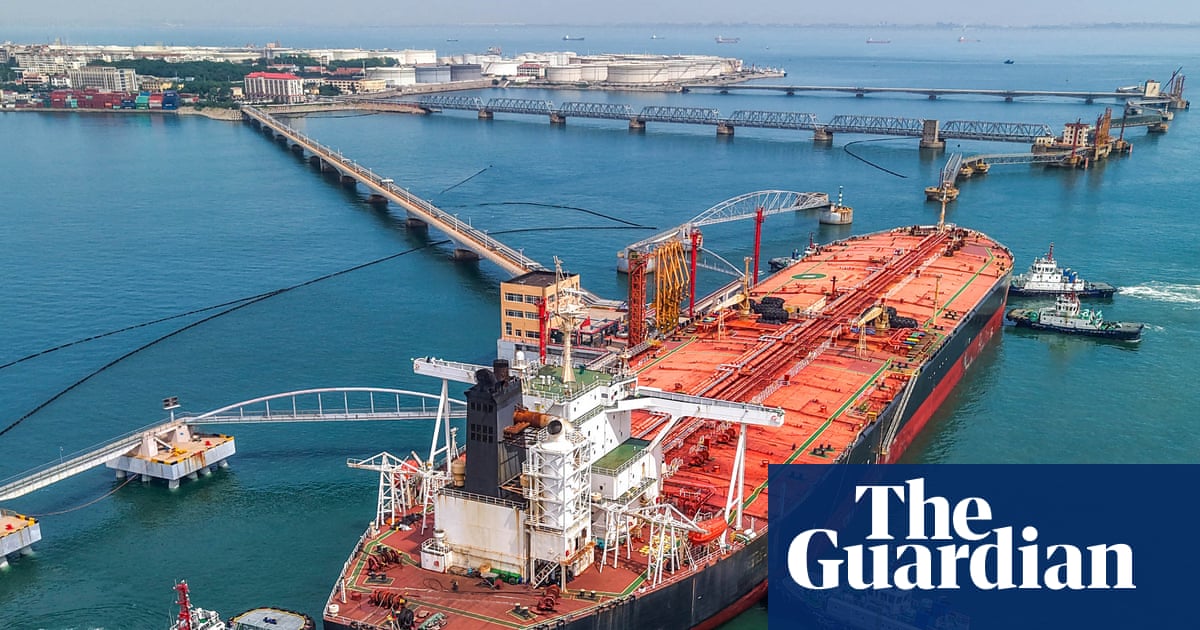
A week after the April ceasefire framework was announced, Iranian commercial vessels have reported harassment by United States naval assets in the Strait of Hormuz, according to a statement from Iran's Ministry of Foreign Affairs issued on 26 May 2026. The MFA described the incidents — occurring within the preceding 48 hours — as a clear violation of the agreed ceasefire terms, and said Washington was acting to undermine the fragile architecture that both sides had committed to building. The statement gave no specifics on which vessels were involved or which US ships were responsible, and the Pentagon had not issued a public response as of publication.
The allegation lands in a context that is already strained. Iranian negotiators arrived in Doha during the week of 19 May 2026 for a third round of talks mediated by Pakistan and Qatar, focused on two outstanding issues: the naval posture around Hormuz and Iran's highly enriched uranium programme. The mediation format — bilateral talks in the Qatari capital with Pakistani and Qatari intermediaries — was itself a concession by Washington, which had initially resisted third-party involvement in what it viewed as a direct bilateral matter. That concession was noted in Tehran as a sign of pressure, and in Washington as a sign of pragmatism. Both readings are probably correct.
The ceasefire that was supposed to reduce that pressure is instead surfacing its contradictions. According to an Iranian journalist whose reporting circulates widely in Tehran's policy-adjacent media ecosystem, the United States has refused to lift its naval blockade of Iranian-flagged commercial shipping, and has insisted that even after a memorandum of understanding is signed and the Strait of Hormuz is formally reopened, Iranian vessels must coordinate their transits with US military assets in the area. Iran has refused that condition. The dispute is not primarily about military positioning — it is about the terms under which a sovereign state moves its own commerce through its own maritime corridor. Tehran's position is that any coordination requirement is a de facto sanctions mechanism dressed in the language of maritime safety. Washington's position — which has not been publicly articulated in detail — appears to be that verification of Iranian compliance with the nuclear terms requires ongoing naval visibility, and that Hormuz is the obvious place to maintain that visibility.
The Fee That Wasn't a Toll
Into this standoff came Iran's 25 May declaration that it would not charge tolls in the Strait of Hormuz, but would instead levy environmental protection fees on transiting vessels. The language matters. "Toll" carries the connotation of a territorial extraction — a levy imposed by one state on the international shipping of others, which is exactly the characterisation Washington and its allies have used to describe Iranian behaviour in the strait over the past decade. "Environmental protection fee" reframes the same economic claim in the vocabulary of multilateral obligation and ecological stewardship.
The reframe is deliberate, and it is doing several things at once. It signals to the Iranian domestic audience that the government has not capitulated to American pressure — no tolls, no humiliation. It signals to the international shipping industry that the strait remains open and that costs will be manageable, designed to prevent insurance premiums from spiking and航运 companies from rerouting. And it signals to the negotiating room in Doha that Iran is still in control of the Hormuz narrative, even as its enrichment programme remains under Western scrutiny and its commercial fleet remains under American surveillance.
The fee reframing also has a structural logic that goes beyond optics. The Strait of Hormuz handles roughly 20-25 percent of the world's oil shipments — a proportion that makes any disruption a matter of immediate global market sensitivity. When Iran frames a potential levy as an environmental charge rather than a navigational toll, it shifts the legal and reputational terrain. Environmental obligations are harder to sanction under existing frameworks; they are easier to present to international bodies as legitimate cost-recovery measures; and they are easier to sustain after a ceasefire agreement, because they do not require the formal reopening of a naval standoff to become operational. Iran is building a revenue mechanism that survives the negotiation, not one that depends on winning it.
The reframing also exposes something broader about how the language of economic coercion is shifting in the Gulf. For decades, the dominant frame for Iranian behaviour in Hormuz was sanctions-evasion and regional intimidation. That frame served a clear policy purpose — it kept Western public opinion aligned with maximum pressure and made any Iranian economic activity in the strait look like a security threat. But the ceasefire process has disrupted that frame. If Iran is complying with nuclear terms, and if the strait is technically open, then the old language no longer fits the facts on the water. Tehran is adapting by finding new language that preserves its leverage without triggering the old sanctions triggers — and by doing so, it is forcing Washington to either accept the new framing or explain why environmental charges are somehow more threatening than navigational tolls.
Doha and the Disputes That Linger
The talks in Doha are operating on two parallel tracks. The first is the naval question — what the US presence looks like, what coordination requirementsIran accepts, and what verification mechanisms are put in place. The second is the nuclear question — the status of Iran's highly enriched uranium programme, which Western intelligence assessments have described as reaching levels sufficient for a weapons breakout timeline measured in weeks rather than months. Both tracks are linked in the negotiating architecture, but they are not moving at the same pace. The nuclear track has benefited from the direct engagement of Iranian technical teams and a relatively clear menu of options — fuel swap arrangements, monitoring protocols, temporary enrichment caps. The naval track is murkier, because it touches on Iran's broader strategic self-conception as a regional power with legitimate security interests in its own maritime approaches, not merely a nuclear interlocutor subject to verification demands.
Pakistan's involvement as a mediator reflects its longstanding relationships with both Tehran and Washington, and its interest in seeing the Gulf stable enough to keep its own energy imports flowing. Qatar's role is more directly connected to its hosting of US Central Command's forward logistics and its broader ambition to be seen as a constructive neutral actor in regional security — a status that Doha values particularly after the reputational damage of the 2017-2021 isolation period. Both mediators are pushing for a framework that gives both sides a face-saving exit from the current standoff, and both are aware that failure in Doha risks returning the situation to the pre-ceasefire dynamic of tit-for-tat military incidents that periodically threatened to escalate.
The Polymarket data circulating in the week of 25 May reflects a market assessment that is neither confident in a deal nor confident in a breakdown. Odds imply that even if a memorandum of understanding is signed, Iran could maintain its operational capacity to close the strait for thirty days — a timeframe that would be sufficient to spike global oil prices, trigger emergency releases from the Strategic Petroleum Reserve, and create significant political pressure on the White House before the mid-year Congressional window closed. That thirty-day capability is itself a negotiating asset, regardless of whether Iran intends to use it. It means that any agreement reached in Doha is being priced by the market as a temporary suspension of an underlying threat, not as its permanent resolution.
The Strait, the Dollar, and the Architecture Beneath
The Strait of Hormuz is, structurally, one of the clearest expressions of how global energy infrastructure intersects with geopolitical power. Roughly 21 million barrels of oil equivalent pass through it daily — a volume that means disruption here registers faster in global commodity markets than almost any other chokepoint on earth. The strait is also narrow enough that it can be monitored and, in theory, blocked: the shipping channel itself is only about three kilometres wide at its narrowest point, and the approaches are within range of Iran's anti-ship missile systems deployed along the northern coast.
That asymmetry — a narrow waterway, an adversary with denial capability, and an irreplaceable flow of oil — has defined Gulf security thinking for fifty years. The US Navy's Fifth Fleet presence in Bahrain is, at its core, a guarantee mechanism: the credible threat of naval response to any attempt to close the strait by force. But the guarantee has limits. It deterred a full closure, but it did not prevent the low-intensity friction — harassment incidents, interdiction of vessels, informal pressure on flag operators — that has characterised the US-Iran naval relationship throughout the sanctions era.
The ceasefire has not resolved that underlying asymmetry. It has given it a different surface. Where the pre-ceasefire dynamic was characterised by overt military posturing and periodic incidents at sea, the current dynamic is characterised by legal and administrative friction: coordination requirements, fee structures, monitoring protocols, verification language. The substance is the same — both sides are trying to establish the terms under which Iran moves its commerce and the United States maintains its presence — but the language has changed, and the change is significant.
What the Hormuz dispute reveals, in the end, is how little the ceasefire has done to alter the structural relationships beneath it. Iran remains a sovereign state with legitimate security interests in its maritime approaches, a nuclear programme that will require ongoing monitoring regardless of any agreement reached in Doha, and an economic incentive to extract whatever value it can from its position at the throat of global oil transit. The United States remains a Pacific-facing power with a Middle Eastern alliance architecture built on the assumption that Gulf stability is a core interest, and a domestic political environment in which any concession to Iran is immediately characterised as weakness by critics who view the very act of negotiating as a trap. The ceasefire has paused the kinetic conflict. It has not changed the logic that produced it.
What Comes Next
Iran's environmental protection fee, if it survives the Doha talks in anything resembling its current form, will be the first concrete economic arrangement to emerge from the ceasefire process — and it will exist outside the nuclear framework entirely, governed by its own logic and its own enforcement mechanism. That is not a small thing. It means that the ceasefire architecture is already bifurcating: one track dealing with enrichment and monitoring under direct US-Iran technical engagement, another dealing with Hormuz navigation and revenue extraction under a more ambiguous legal regime. The bifurcation creates flexibility, but it also creates the conditions for future disputes to arise in the gaps between the tracks.
For global energy markets, the fee is so far a paper proposal — announced, but not yet implemented, and contingent on the outcome of the Doha talks. Shipowners and charterers will be watching for any sign that the fee is being enforced selectively, or that Iranian naval assets are using the fee as a pretext for inspections of commercial vessels that have not paid. Either outcome would reprice the political risk premium in Gulf shipping insurance, and would likely trigger a response from Lloyd's underwriters before any diplomatic reaction could be assembled.
For Washington, the fee presents a jurisdictional puzzle: if Iran is charging an environmental levy rather than a navigational toll, on what legal basis does the United States object? Sanctions law applies to tolls and transit fees imposed as instruments of economic coercion. It is less clear how it applies to environmental charges levied by a state within its own territorial waters — even if those waters are the approaches to an internationally critical chokepoint. The answer may come from the Doha negotiators, or it may come from a US federal court asked to rule on whether the fee violates existing sanctions orders. Either way, the fee — and the language Iran has chosen to attach to it — has already changed the frame through which the world understands what is happening in the Strait of Hormuz.
This article was filed from London on 26 May 2026. Monexus covered the ceasefire announcement as a diplomatic breakthrough; the wire framed the subsequent talks as routine follow-up. This piece frames the environmental fee pivot as a structural move by Tehran to embed its leverage into the post-ceasefire architecture, not simply as a negotiating tactic.
Wire provenance
This editorial synthesis draws on the following public wire/social posts:
- https://t.me/FotrosResistancee/5847
- https://t.me/FotrosResistancee/5846
- https://en.wikipedia.org/wiki/Strait_of_Hormuz
- https://en.wikipedia.org/wiki/Joint_Comprehensive_Plan_of_Action