Iran's Hormuz Gambit: Fees, Not Tolls
Tehran reframes its Hormuz threat as a 'security contribution' — and a new fee structure aimed at framing the strategic waterway as a revenue-generating asset rather than a weapon.
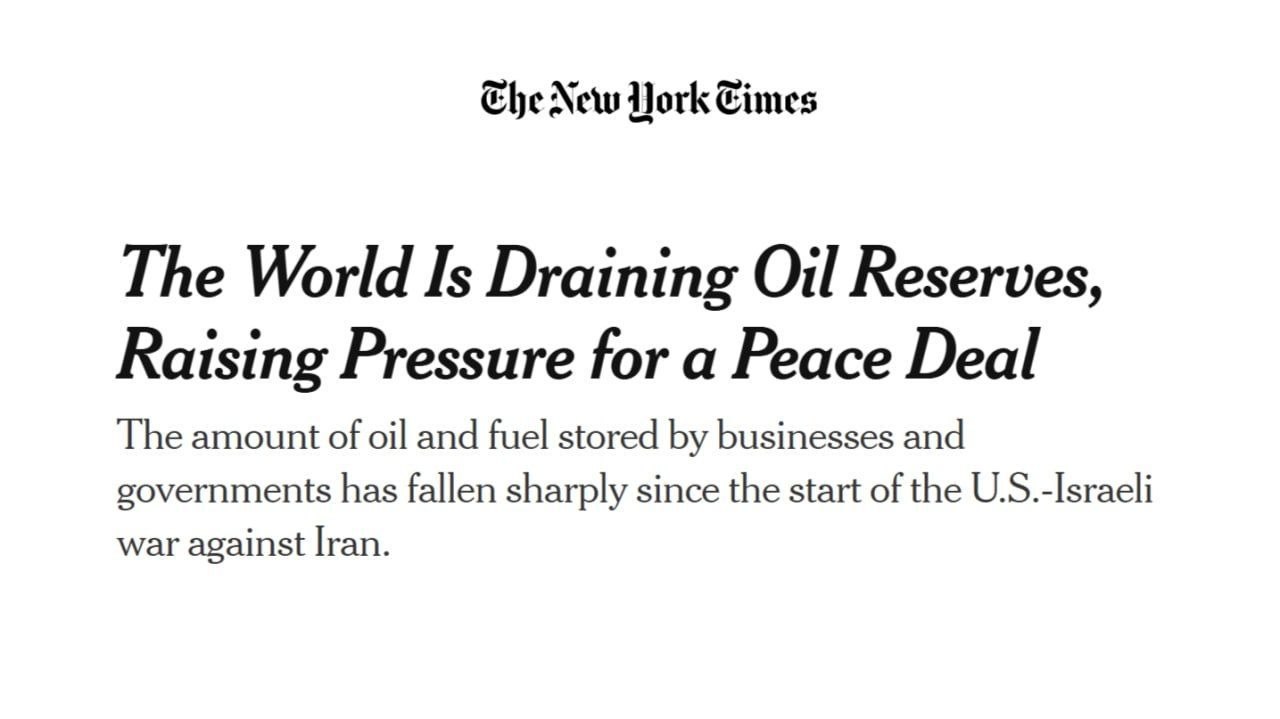
On 26 May 2026, Iran's Foreign Ministry spokesperson Abbas Araqchi told Tasnim News that Tehran would manage the Strait of Hormuz "firmly and decisively" with the stated aim of protecting international trade and the global economy. The declaration landed hours after the waterway — through which roughly a fifth of the world's oil passes annually — had been effectively closed to commercial traffic following a night attack by an unmanned aerial vehicle, Ukrainian Telegram channel TSN_ua reported. The closing, and the diplomatic choreography surrounding it, amount to the most significant Hormuz escalation in years.
The immediate question is not whether Iran can close the strait — it demonstrably can. The question is how Tehran will communicate the closure to a world watching energy markets. And the answer, according to Iranian state communications and corroborated by Polymarket's X account citing market intelligence, is that Iran has settled on a particular framing: fees, not tolls. "Iran could reportedly keep the Strait of Hormuz shut for 30 days even after a U.S. deal is reached," one Polymarket post noted. "Iran declares it will not charge tolls in the Strait of Hormuz, will instead charge 'environmental protection fees'," read another.
Protecting Trade, Extracting Fees
The Araqchi statement is precise in its contradiction. He frames the strait's management as a contribution to global commerce — "security and protecting international trade and economy" — while the operational reality of the closure does the opposite. Iranian officials appear to understand that the optics of blockade are politically toxic in a way that a fee structure is not. The word "toll" carries connotations of coercion and extraction; "environmental protection fee" carries connotations of legitimate state revenue, almost akin to a carbon-pricing mechanism. It is a communications strategy as much as a financial one.
What is less clear is whether the fee framework has been internally agreed upon within Tehran's fractured political establishment, or whether it represents a negotiating position that hardliners are using to extract concessions from the United States as nuclear talks proceed. The 30-day scenario Polymarket cited suggests Tehran may be prepared to sustain the closure as a bargaining chip — keeping the strait shut even if an agreement is struck on the nuclear file, in order to maintain leverage on the economic and sanctions track.
The Corridor as Leverage
The Hormuz passage is where American naval doctrine meets its most persistent test. The United States has maintained a deliberate security presence in the Persian Gulf — a posture that Washington frames as ensuring freedom of navigation. Tehran frames the same presence as an act of pressure and containment. Both readings are accurate from the respective institutional vantage points. What Iran appears to be doing now is not challenging the U.S. naval presence directly — which would carry unacceptable escalation risk — but rather reshaping the terms of the conversation around the strait itself.
If Iran succeeds in establishing "environmental protection fees" as a legitimate revenue line, it normalises an arrangement in which a non-Western state charges money for passage through a waterway it claims jurisdiction over. The precedent matters beyond Hormuz. Global shipping routes — the Suez Canal, the Bab-el-Mandeb, the Malacca Strait — all function on assumptions about freedom of navigation that are backed, ultimately, by American military capacity. As that capacity faces growing challenges from multipolar realignment, and as alternative financial messaging infrastructure — Chinese yuan oil contracts, bilateral payment systems bypassing SWIFT — reduces the leverage of dollar-denominated sanctions, the question of who controls corridor access takes on new economic and diplomatic dimensions.
The fee-versus-toll distinction is therefore not just semantic. It is an attempt to reclassify an act of corridor control as something that resembles a legitimate regulatory practice rather than a geopolitical provocation. Whether international shipping insurers, flag-state operators, and energy markets accept that reclassification will determine whether the fees become a structural feature of the Hormuz landscape or a short-lived negotiating demand.
What Remains Uncertain
The sources do not specify whether Iranian vessels would physically intercept ships declining to pay the proposed fees, or whether the fee structure would operate on a voluntary or de facto basis — with non-compliance producing bureaucratic delays rather than naval confrontation. The domestic political calculus inside Iran, which sources describe in fragmentary terms only, also remains unclear: it is uncertain whether the fee proposal reflects a coherent strategy agreed at the highest levels of government, or whether it represents competing institutional signals from different parts of the Iranian state, including hardliners who may view the nuclear talks as an opportunity to extract concessions on peripheral issues. The broader question — whether Tehran actually wants a long-term normalisation of Hormuz as a revenue-generating corridor or whether it wants the strait to function normally as a commerce artery — is also unanswerable from the available sources. What is clear is that the language being used is designed to make the latter goal compatible with the former. Whether the world accepts that framing is the contest now under way.
Wire provenance
This editorial synthesis draws on the following public wire/social posts:
- https://t.me/tasnimnews_en
- https://t.me/TSN_ua
- https://x.com/polymarket/status/1951828912345676801
- https://x.com/polymarket/status/1951825432109875200