Iran's Internet Reversal: Why Tehran Is Opening the Gates Now
Tehran's unexpected order to restore global internet access raises urgent questions about the regime's strategic calculus — and whether Iran, after years of cutting its population off from the world, is genuinely softening or simply recalculating.
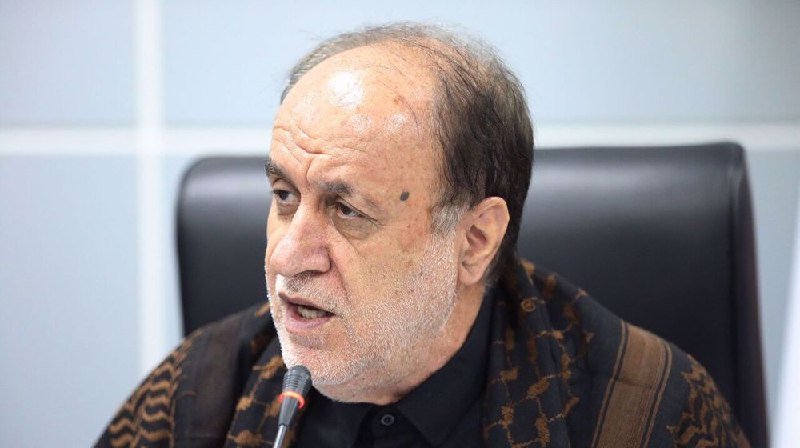
On 26 May 2026, Iranian state media reported that President Masoud Pezeshkian had ordered the restoration of international internet access — a move that, if implemented as described, would reverse years of systematic disconnections that have periodically isolated Iran's domestic network from the global web.
The announcement landed alongside a separate disclosure: Pezeshkian had spoken by phone with Iraqi Prime Minister Nizar Amidi, a conversation Iranian state outlets cited without elaboration on its substance, though the timing suggested a broader diplomatic calibration underway in the Gulf.
The immediate reaction ranges from cautious optimism to deep skepticism. To understand why, one must first account for what those years of darkness actually looked like — and what they were designed to accomplish.
The Architecture of Disconnection
Iran's relationship with the global internet has never been passive. The Islamic Republic operates what is arguably the most sophisticated national internet filtering infrastructure outside China, layering legal prohibitions on politically sensitive content inside Iran with technical blocks on international platforms that might organise dissent or transmit uncensored information.
These disconnections have been deliberately cyclical. During the protests that followed the disputed 2009 election, during the Green Movement, and most recently during the Woman, Life, Freedom uprisings that followed the death in custody of Mahsa Amini in 2022, the regime moved swiftly to throttle or sever access entirely. The stated rationale — protecting national security — has remained consistent across administrations. The practical effect has been to deny Iran-based users reliable access to foreign news services, encrypted messaging platforms, and the open web's information commons.
What Iranian state media reported on Monday is the formal reversal of at least one tier of those restrictions. The order, attributed directly to Pezeshkian, envisions reopening international access for Iranian users. Initial accounts did not specify which platforms would be unblocked, what technical mechanisms would govern the restoration, or whether existing domestic filtering infrastructure would remain in place alongside any new access corridors.
The Regime's Calculus: Concession or Calculation?
Three broad explanations circulate in available reporting, and none can be cleanly dismissed.
The first frames this as a domestic political signal. Pezeshkian — whose presidency has navigated persistent tensions with hardline institutional factions — may be positioning himself as a pragmatic moderate willing to negotiate with the West, using internet access as a visible gesture of cultural openness. The Iranian president ran on a campaign platform that included commitments to reducing social restrictions; delivering on connectivity, at least partially, would be legible progress to an urban, educated constituency.
The second explanation looks outward. Iran is currently navigating complex indirect negotiations with the United States over its nuclear programme, against a backdrop of renewed American sanctions pressure and regional military deployments. Restoring internet access could function as a confidence-building measure — a signal to Western counterparts that Iran is willing to take visible, verifiable steps toward normalisation. Whether Washington would read it that way, or whether it would be dismissed as cosmetic given that domestic filtering infrastructure would likely remain operational, is a question the sources do not resolve.
The third explanation is more prosaic: economic necessity. Iranian enterprises operating in sectors ranging from technology services to trade logistics have long complained that the disconnection imposes real costs — limiting access to global financial messaging systems, cloud infrastructure, and international business通讯. Reopening the international internet might be less a political gesture than a response to pressure from an Iranian business community whose support the regime still requires.
All three readings share a common element: they centre the regime's interests, not the Iranian population's information rights. No available source suggests that civil society groups were consulted before the order was issued.
Baghdad's Hand: Why the Iraqi Call Matters
The phone conversation with Nizar Amidi — the Iraqi prime minister — adds a layer that Western wire coverage has been slow to contextualise. Iraq sits between Iran and its primary Gulf interlocutors, and Baghdad has historically functioned as an informal diplomatic channel between Tehran and Washington. That two officials whose countries share a long and contested border spoke on the same day Tehran announced a significant domestic policy reversal is unlikely to be coincidental.
Iraq also hosts its own domestic political contestation around Iranian influence; Amidi, whose political positioning is distinct from figures more closely aligned with Tehran-aligned militias, may be using the channel cautiously rather than as a conduit for normalisation signals. The sources do not provide the substance of what was discussed. The broader inference — that regional diplomacy and domestic internet policy are moving on parallel tracks — is one this publication draws from the available pattern, but cannot confirm from any single source.
What Remains Open
The most important questions are the ones the Iranian state media dispatches do not answer. Will the restoration be unconditional and complete, or will it proceed through a series of technical carve-outs that preserve the regime's capacity to disconnect again at will? What platforms will be included — or excluded? Is there an enforcement mechanism, or is this a revocable executive gesture rather than a structural policy commitment?
The regime has made promises of greater openness before. The record of prior Iranian administrations on digital rights does not inspire uncritical confidence.
What can be said is this: any restoration of international internet access inside Iran is a development with implications far beyond the country's borders. It would affect how Iranian citizens experience information, how diaspora communities maintain contact with family inside the Islamic Republic, and how the information landscape surrounding Iran's nuclear programme — and any resulting diplomacy — is shaped in the weeks ahead.
The gates are opening. Whether that is a genuine thaw, or a carefully managed illusion of one, will become apparent in the details that Tehran has not yet released.
This publication's framing differs from standard wire accounts in declining to treat the announcement as a straightforwardly positive development. Iran's history of cyclical disconnections, and the regime's demonstrated capacity to weaponise connectivity, warrant an explicit note that reversal is not equivalent to normalisation — and that the specific terms of implementation will determine what this actually means for Iranian users.
Wire provenance
This editorial synthesis draws on the following public wire/social posts:
- https://t.me/thecradlemedia
- https://t.me/alalamarabic