Iran's Revolutionary Guard Navy Coordinates Passage of 25 Ships Through Strait of Hormuz
Iran's Islamic Revolutionary Guard Corps Navy announced on 26 May 2026 that it coordinated the passage of 25 vessels, including oil tankers and container ships, through the Strait of Hormuz over the preceding 24 hours, presenting the operation as routine maritime governance at a moment of heightened regional tension.
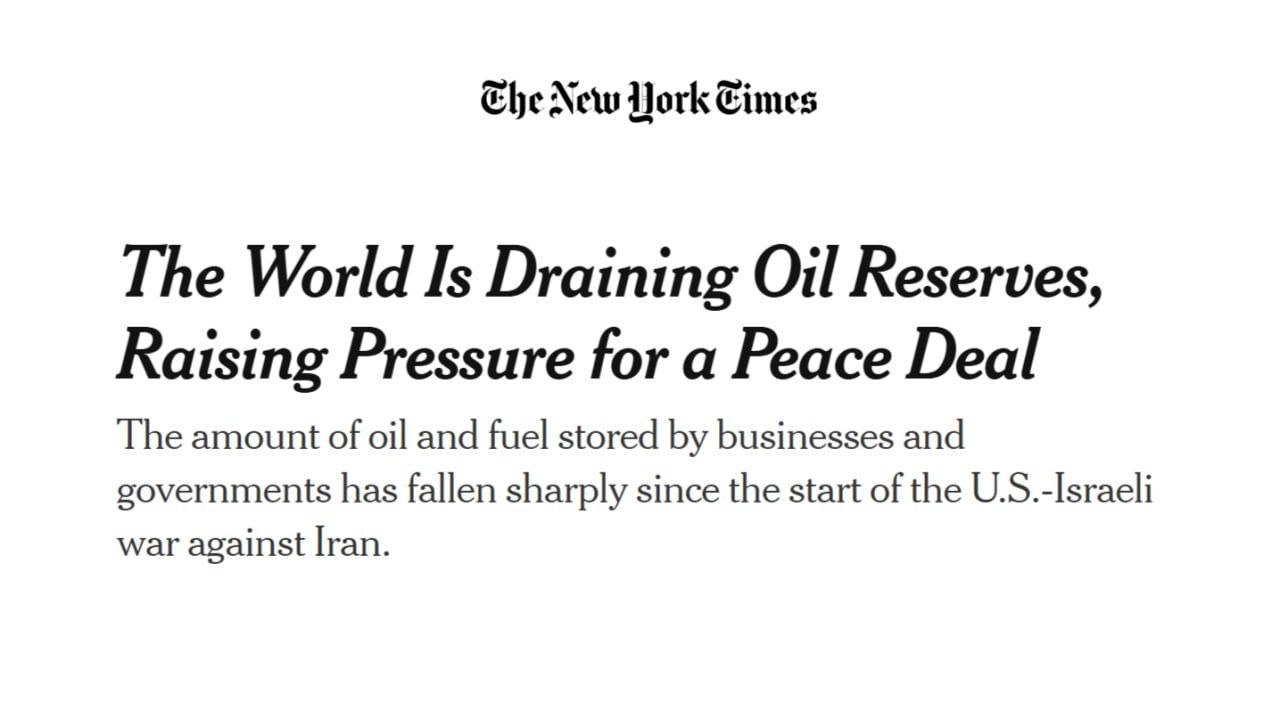
On 26 May 2026, the Islamic Revolutionary Guard Corps Navy announced that it had coordinated the safe passage of 25 vessels — oil tankers, container carriers, and other commercial ships — through the Strait of Hormuz over the preceding 24 hours. The statement, carried by Iran's Tasnim News Agency, FARS News Agency, and Press TV, described the operation as a routine act of maritime authority exercised under the IRGC's naval mandate. No collisions, interdictions, or incidents were reported.
The announcement arrives at a moment when the strategic waterway — through which roughly one-fifth of global oil trade passes — has become a focal point in the broader contest between Tehran and its regional adversaries. The Trump administration re-imposed maximum-pressure sanctions on Iran's oil sector in April 2026, and the US Fifth Fleet has maintained an elevated presence in the northern Arabian Gulf in recent weeks, according to publicly available naval tracking data and Western defense briefings. Iran's decision to publicly frame its role as a coordinator of commercial shipping, rather than a disruptor of it, is a deliberate signal — one that requires careful parsing.
Routine operation or calculated messaging?
The Guard Corps framed the passage as proof of Iran's capacity to govern a critical chokepoint. The statement highlighted the involvement of oil tankers and container carriers specifically — commercial vessels whose safe transit through a contested corridor carries obvious economic weight. This is not incidental. Iranian officials have long argued that the Islamic Republic is the only power capable of guaranteeing transit through the Strait, a claim periodically weaponised in diplomatic negotiations with European and Asian energy buyers who depend on Gulf stability.
Western defense analysts have noted that the IRGC Navy has, on multiple occasions over the past two years, used the Hormuz passage operation as a pressure lever — temporarily delaying or redirecting commercial traffic during periods of heightened tension with Washington or with Gulf states aligned with US security architecture. The fact that Tuesday's announcement emphasised smooth, permitted passage — rather than disruption — is therefore a meaningful departure from recent patterns.
Iranian state media has not commented on what mechanism vessels used to obtain IRGC permission, nor has it specified which flag-states or shipping companies operated the 25 ships. The absence of these details makes independent verification difficult. Nonetheless, the announcement's timing, relative calm in the Gulf, and the specific language of "coordination" rather than "interdiction" suggests a deliberate effort to present Tehran as a responsible maritime actor — an image the Islamic Republic has found difficult to sustain in Western capitals over the past five years.
The Hormuz corridor and its geopolitical weight
The Strait of Hormuz is among the world's most consequential maritime chokepoints. Approximately 21 million barrels of oil transit the narrow passage daily — roughly 20 to 30 percent of global oil trade by volume, depending on the reporting source. Any disruption, even temporary, reverberates through tanker markets, LNG contracts, and the energy pricing that shapes inflation expectations in importing economies from Europe to South Asia.
Iran has historically used this leverage strategically. The 2019 mining of commercial vessels in the Gulf, attributed to Iran by the US and its allies, and the temporary seizure of tankers in earlier cycles, demonstrated Tehran's capacity to close or harass the corridor at will. The current US administration, having restored a hardline sanctions posture, faces a version of the same dilemma that bedevilled its predecessors: maximum pressure risks provoking exactly the behaviour the sanctions are intended to suppress.
What complicates the picture in 2026 is the emergence of parallel shipping routes — Russian-flagged vessels operating under new bilateral agreements with Tehran, and a growing volume of non-dollar energy contracts between Gulf producers and Asian buyers. These structural shifts mean that the Hormuz leverage Tehran deploys operates in a more fragmented geopolitical environment than it did a decade ago.
Reading the announcement against the wider context
The Guard Corps's statement came hours after the International Atomic Energy Agency confirmed that Iran's uranium enrichment stockpile had reached levels inconsistent with civilian energy use under the 2015 nuclear agreement, which the US unilaterally withdrew from in 2018. The timing is unlikely to be coincidental. Iranian institutions — the IRGC, the Foreign Ministry, the Atomic Energy Organisation — have a documented practice of coordinating announcements to present a unified front during periods of Western diplomatic pressure. A demonstration of maritime normalcy at the Strait of Hormuz can function as a counterweight to narratives of Iranian isolation.
US Central Command has not commented on Tuesday's passage announcement as of publication. The Fifth Fleet's public affairs office, when queried by Monexus, said it had no immediate information on the reported passage. Naval observers in the region noted that the absence of a US response does not indicate acceptance — CENTCOM's standard posture is to avoid validating Iranian maritime governance claims by treating them as routine.
The broader question is whether Tuesday's announcement signals a shift in IRGC posture or simply reflects the operational rhythms of a corridor that functions, in the main, through exactly this kind of coordination. The Guard Corps governs Hormuz because no other state has the legal authority to do so unilaterally. That functional fact gives Tehran leverage that survives any individual diplomatic setback.
What comes next
The passage of 25 vessels in 24 hours does not, by itself, change the strategic calculus in the Gulf. But the framing matters. Tehran has demonstrated, once again, that it can present itself as a provider of stability — or a generator of disruption — at a time and in a manner of its own choosing. The diplomatic utility of that ambiguity is precisely what makes the Strait of Hormuz central to the calculus of every major power operating in the region.
For European and Asian energy buyers, the message is straightforward: the corridor functions only if Iran permits it. For Washington, the paradox remains intact — maximum-pressure sanctions designed to constrain Iranian oil revenues simultaneously sharpen Tehran's incentive to weaponise the one asset that makes those revenues possible. The Guard Corps understands this dynamic with precision, and Tuesday's carefully choreographed announcement is the latest reminder.
This publication compared the IRGC Navy's framing — a direct coordination operation — against publicly available Western naval tracking data and CENTCOM briefing language. The tone in Western wire reporting on Strait of Hormuz activity tends toward threat-framing when Iranian assets are involved; this article treats the announcement on its stated terms while noting the operational context that shapes how such statements are received in Washington and allied capitals.
Wire provenance
This editorial synthesis draws on the following public wire/social posts:
- https://t.me/presstv
- https://t.me/farsna
- https://t.me/tasnimnews_en