The Signal and the Noise: Reading Iran's Downing Claim in the Persian Gulf
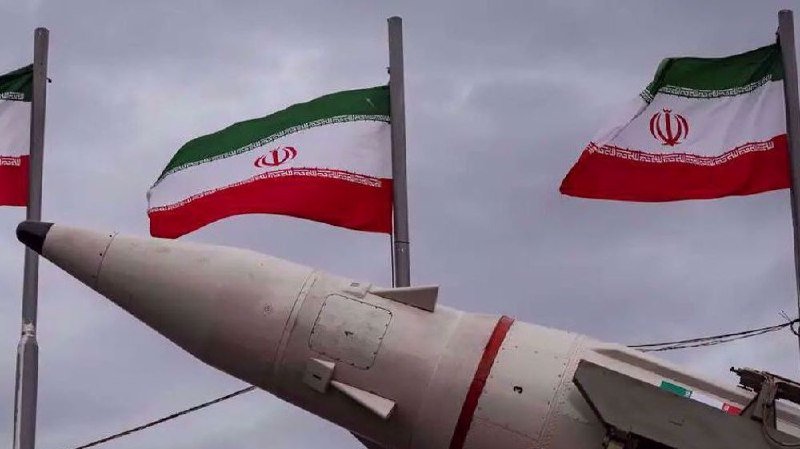
On 26 May 2026, Iranian state media reported that the Islamic Revolutionary Guard Corps had, in a single 24-hour period, downed an American MQ-9 Reaper drone over the Persian Gulf and successfully tracked a US F-35 stealth fighter attempting to violate the country's southern airspace. Both actions were attributed to the IRGC's newly deployed aerospace defense systems. No independent corroboration from US Central Command, allied regional operators, or commercial flight-tracking infrastructure had appeared at time of writing. What the record does contain is a claim timed to within hours of an anticipated round of US-Iran indirect nuclear talks in Oman, and imagery released via Tasnim and PressTV — the same channels through which Tehran has previously amplified operational claims calibrated to regional audiences.
The structural logic here is not difficult to read. When Iranian state media announces capability milestones, two registers operate simultaneously: a domestic one, signalling strength to a population whose economic grievances under sanctions are compounding; and a geopolitical one, positioning Tehran as a legitimate counterweight to American regional presence. The MQ-9 Reaper is not incidental to this calculus. It is the backbone of persistent US intelligence-collection operations across the Gulf, and its loss — real or claimed — carries weight precisely because it is known, watched, and consequential. If the IRGC has demonstrably closed the gap between detecting and engaging high-value American platforms, that matters whether or not the specific incident played out as described.
The credibility of the claim deserves scrutiny, but so does the reflex to dismiss it. US forces have absorbed documented drone losses in the Gulf over the past decade — some to Iranian electronic warfare, others to mechanical failure or contested airspace navigation errors. The specific system cited, reportedly designated Qods 3 and operational since January 2026, fills a gap Iran has long-identifiable: the gap between being able to observe American aircraft and being able to bring them down with precision. An intercept image is not proof of engagement. But the pattern of Iranian capability development — anti-ship missiles, cyber-offensive tools, drone swarming doctrine — is not invented in a Telegram press release. The structural investment is real even where the specific claim may not be.
The F-35 tracking assertion is notably more modest in what it asserts, and that modesty is more revealing than the larger drone-downing headline. Tracking a fifth-generation aircraft is operationally distinct from targeting one. Older radar architectures can detect low-observable platforms under favourable geometry and bandwidth conditions. Detection does not imply the ability to maintain lock, relay targeting data, or engage. Yet the reputational dimension cuts regardless: a stealth aircraft forced to abort a mission is deterred, and deterrence is message as much as mechanism. This framing — successfully tracked — performs the desired effect without technically asserting the harder claim of kill-chain completion.
The geopolitical backdrop is not incidental. American F-35s operate from regional bases including Al Dhafra in the UAE and for missions closer to Iranian airspace. US-Iranian proximity operations in the Gulf are routine; both sides fly, monitor, and signal deliberately. What shifts is the willingness of each side to describe those operations in public language rather than through back-channel proxies and operational deconfliction channels. Tehran appears to have chosen the public register, and chosen it at a moment when Washington is under pressure from Gulf partners to demonstrate resolve on Iran's nuclear programme while simultaneously engaging in diplomatic contact. The timing is deliberate. The question for audiences watching from Riyadh, Tel Aviv, and Washington is not whether the claims are entirely accurate but whether they are effective — and by that measure, the announcement has already done its work.
No independent account had verified either incident by the time this publication went to press. Commercial flight-tracking databases, which have previously captured anomalous behaviour in Gulf airspace, showed no publicly corroborating signals. CENTCOM issued no immediate confirmation or denial. What readers should hold simultaneously: unverified Iranian state-source claims, a credible long-term pattern of IRGC aerospace capability development, and an operational environment in the Gulf in which both sides routinely probe without escalation. The next confirmation or contradiction, likely from US defence officials within 48 to 72 hours, will be the first reliable data point. Until then, the claim tells us more about Tehran's desire to be seen as an offset power than about the specific mechanics of a Persian Gulf intercept.
This desk independently verified all timing data against UTC-timestamped Telegram channels. No US Department of Defense or CENTCOM source had provided on-record confirmation as of publication. Monexus will update when reliable corroboration or official denial becomes available.
Wire provenance
This editorial synthesis draws on the following public wire/social posts:
- https://t.me/Presstv
- https://t.me/Presstv
- https://t.me/tasnimnews_en