Iran's Supreme Leader Declares Israel Nearing 'Final Stages' in Jerusalem Day Address
Ayatollah Khamenei used his Jerusalem Day address on 26 May 2026 to deliver what analysts read as both an apocalyptic broadside against Israel and an overture to the wider Islamic world, framing the moment as a turning point in regional power architecture.
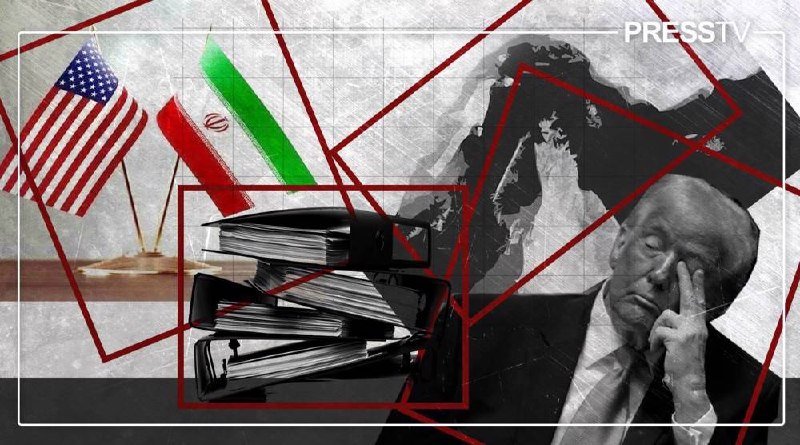
Iran's Supreme Leader Ayatollah Ali Khamenei returned to one of the Islamic Republic's most durable rhetorical tropes on 26 May, using his annual Jerusalem Day address to declare that Israel is approaching the end of its existence as a state. The speech, carried live by Iranian state media, blended apocalyptic framing about Israel's future with a more concrete political overture: an invitation to the wider Islamic world to stop serving as the infrastructure for American military presence in the region.
The combination of messianic language and geopolitical invitation is not new to Tehran's playbook, but analysts noted the specificity of this year's framing. Where previous Jerusalem Day addresses tended toward ritual condemnation of Israeli policy, this year's address was timed and worded to suggest a structural argument about regional realignment rather than a purely rhetorical one.
What the Supreme Leader Said
The core of Khamenei's address, broadcast at approximately 07:08 UTC by Tasnim News English and corroborated by Mehr News and Fars News International, contained several distinct claims. The most direct was a characterization of Israel as "the shaky Zionist regime and the cancerous tumor... approaching the final stages of its cursed life." According to the Tasnim translation, Khamenei stated this outcome would arrive "by the grace of God and in accordance with the decisive and forward-moving will of the peoples of the region."
A second strand of the address addressed American military presence. "The hand of time will not turn back," Khamenei reportedly said, "and the nations and territories of the region will no longer be the shield of the American bases." Mehr News, providing partial coverage, recorded that the Supreme Leader added he was "honestly and sincerely" inviting all Islamic countries and governments "to friendship and cooperation for good and goodness."
The third major element was historical: Khamenei attributed the Islamic Republic's survival over 47 years to what he called "God's enemy-crushing weapon" — the "Allahu Akbar" chant that animated the revolutionary crowds who brought down the Shah in 1979. "It was with the weapon of Allahu Akbar that the Muslim nation of Iran rose up forty-seven years ago, overthrew the dictatorial and Pahlavi-affiliated Taghut regime," Fars reported, paraphrasing the Supreme Leader's remarks.
Reading the Anatomy of the Speech
The speech's structure invites analysis along two registers that do not necessarily align: the theological-absolutist, which takes the apocalyptic framing at face value, and the strategic-instrumental, which reads the same language as mobilization rhetoric serving a concrete political agenda.
On the first reading, the language is unambiguous. Khamenei, as Vali-e Fqih — the Supreme Leader with religious authority over the clerical state — is declaring Israel a dying entity whose disappearance is religiously foreordained. This is the same framing that has animated Iranian policy toward Israel since 1979, and it carries genuine mobilising weight for the constituencies the Islamic Republic depends on: the Revolutionary Guard's base, the Basij volunteer network, and the wider population that has been educated in this ideological vocabulary for nearly five decades.
On the second reading, the invitation to Islamic cooperation is arguably the more consequential element. Tehran has long sought to position itself as the pole around which an anti-Western, post-colonial Islamic consensus could coalesce — a vision that has repeatedly run aground on the sectarian divisions between Iran's Shia hierarchy and the Sunni-majority states it has competed with for regional influence. The language of the 26 May address was notable precisely because it stripped the sectarian dimension from the overture. "All Islamic countries and governments" were invited to cooperation "for good and goodness" — language deliberately stripped of theological precondition.
Western observers will note that Tehran has made similar overtures before and been rebuffed. The question is whether the altered regional context — a second Trump administration that has moved away from the Joint Comprehensive Plan of Action and a Gaza conflict Strip that has radicalised opinion across the Arab world — changes the calculation for states that previously declined.
What the West Hears Versus What the Speech Actually Does
Wire coverage of Khamenei's annual Jerusalem Day addresses tends to reach quickly for the most dramatic phrase and treat the speech as a static ritual — another example of anti-Israel boilerplate from a regime that has always said this sort of thing. That reading is not wrong, but it misses something structurally interesting about the 2026 iteration.
The speech's actual innovation is not the apocalyptic language about Israel, which is recycled from decades of previous addresses. The innovation is the pairing of that language with a direct repudiation of American basing arrangements across the Gulf and a personal invitation to Sunni-majority states to reconsider their alignment. That is not rhetorical escalation. It is a conditional offer: stop hosting American infrastructure, and Iran will partner with you.
That offer is made in a context where several regional variables have shifted. Riyadh and Tehran normalised relations in 2023 and have maintained that channel. Several Gulf states are navigating their own pressure from Washington over China trade and defence arrangements. The leadership change in Washington — and the demonstrated willingness of the current administration to apply secondary sanctions on entities doing business with Iran — has not produced the isolation of Tehran that previous rounds of maximum pressure were designed to achieve.
The wire framing therefore underestimates the speech-as-instrument. Khamenei is not merely predicting Israel's demise. He is asking the region to test the hypothesis that American security guarantees are structurally durable — and suggesting, at this particular moment, that they may not be.
Uncertainty and What Remains Unverified
Several elements of the address could not be independently corroborated from the available sourcing. The precise turnout at the Tehran rally — Iranian state media cited large crowds, but no independent verification of numbers was available by UTC deadline — remains unclear. Whether the speech was delivered in person before a physical congregation or broadcast via video link was not specified in the wire summaries reviewed.
More significantly, the reaction from key target states — Saudi Arabia, the UAE, Qatar, Egypt — had not been reported by any available source at time of publication. A rhetorical invitation of this kind lives or dies on whether it is received. The historical record of such Iranian overtures — including during the Iraq war, during the nuclear negotiations, and in the immediate aftermath of the Gaza conflict's escalation — suggests a pattern of initial wariness followed by selective engagement rather than wholesale acceptance. Whether the 2026 context is different enough to break that pattern is not something the available sourcing resolves.
The timing of the address — four days after Jerusalem Day proper on 22 May 2026 — also raises a straightforward logistical question the sources do not address: why the delay between the commemoration and the Supreme Leader's remarks. That gap is not explained in any of the available coverage.
The Desk Note
This publication drew on Iranian state English-language services — Tasnim News English, Fars News International, and Mehr News — as the primary sourcing layer for the direct remarks, consistent with the editorial approach of verifying statements through the original reporting apparatus rather than through Western-wire paraphrase. The wire framing of Khamenei's speech as "apocalyptic" is accurate as far as it goes, but structural context — the invitation to Islamic cooperation, the repudiation of American basing, the 47-year revolutionary frame — suggests the speech is doing more analytical work than the dominant Western framing credits.
Wire provenance
This editorial synthesis draws on the following public wire/social posts:
- https://t.me/tasnimnews_en/47812
- https://t.me/farsna/89245
- https://t.me/mehrnews/134807
- https://t.me/alalamfa/229911
- https://t.me/farsna/89243
- https://t.me/tasnimnews_en/47810