The Hundred-Dollar Question: Iran Talks Collapse and the Limits of Dollar Diplomacy
Brent crude crossed $100 on 26 May 2026 after US-Iran negotiations broke down in Doha, exposing the structural deadlock at the heart of any nuclear deal: who moves first, and who controls the money.
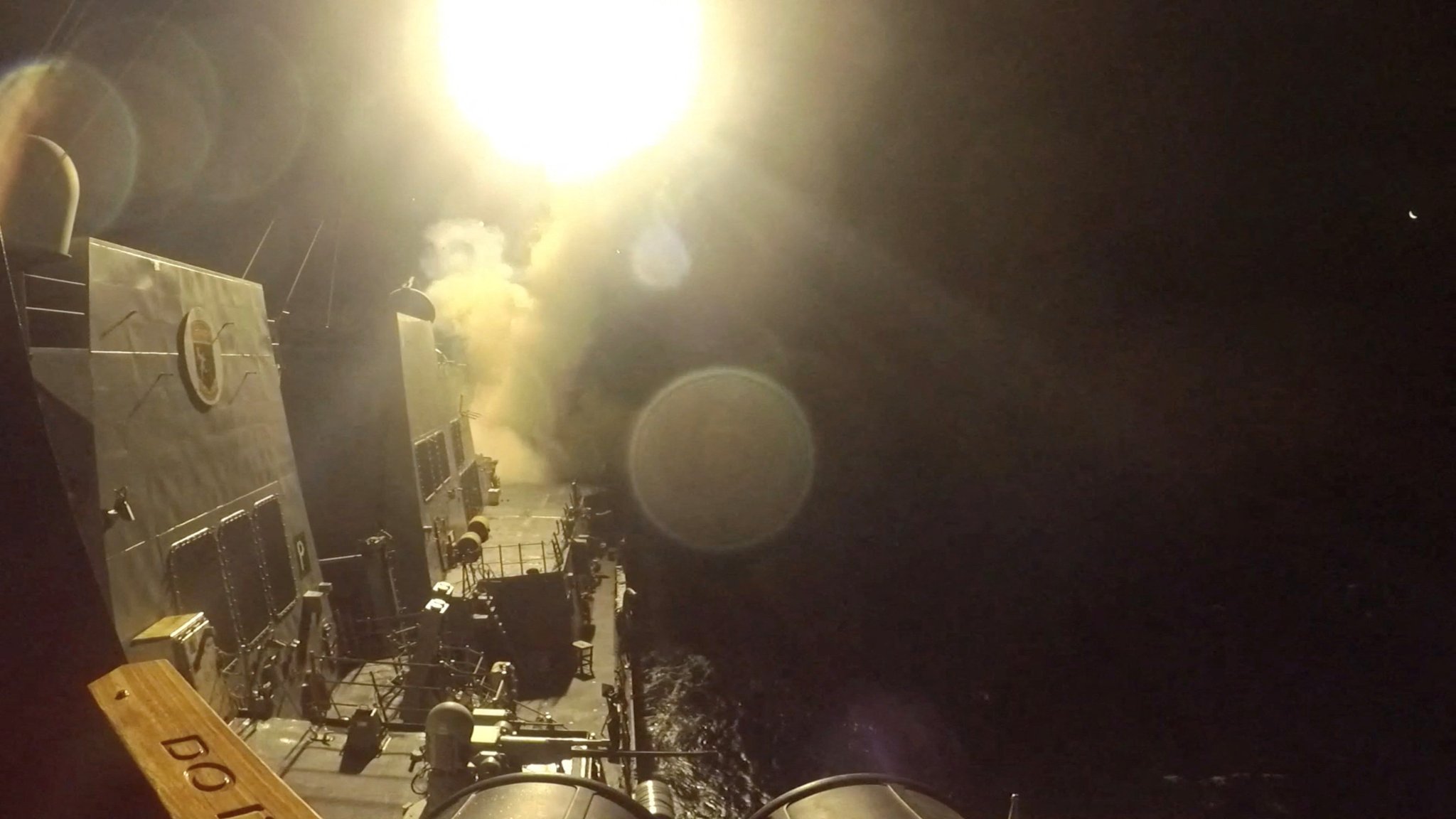
On 26 May 2026, Brent crude crossed the psychologically significant $100 threshold for the first time since the initial months of the Ukraine invasion. The proximate cause, according to oil-market analysts tracking the development, was the breakdown in Qatar-mediated negotiations between the United States and Iran over the Islamic Republic's nuclear programme and the repatriation of billions of dollars in frozen oil revenues. Markets had priced a deal as the base case; the collapse sent shockwaves through energy futures within hours.
The negotiations themselves were not unexpected. Qatar has served as the primary back-channel between Washington and Tehran since the original JCPOA unravelled, a role Doha has cultivated deliberately — the small Gulf state has long understood that proximity to every party's adversary is itself a form of diplomatic capital. What surprised observers was the speed of the rupture. Iranian state media reported on 26 May that the sticking point centred on the sequencing of concessions: Iran insists on immediate access to its frozen funds held in accounts abroad, while the United States demands verifiable nuclear rollbacks before any financial sanctions are lifted. Neither side, according to sources cited by Iran's Fars news agency, was prepared to move first. The result is a stalemate that leaves Iran's oil revenues locked in intermediary accounts, the nuclear programme continuing its parallel advance, and global energy markets factoring in a prolonged period of elevated risk premiums.
The Sequencing Trap
The core impasse is not new. It has defined every iteration of US-Iran nuclear diplomacy since the original 2015 agreement was struck and then abandoned by the Trump administration in 2018. What has changed in 2026 is the political context on both sides.
On the American side, the Trump administration has maintained — and in some cases intensified — the "maximum pressure" posture that characterised its first term. The President's public position remains that no deal is possible without a comprehensive dismantling of Iran's enrichment infrastructure. That is a position designed for a domestic audience. In practice, the administration faces a structural contradiction: the President has simultaneously pledged to reduce energy prices for American consumers and to squeeze Iran through secondary sanctions. These objectives are in direct tension. The Doha breakdown suggests the administration was not prepared to offer the partial sanctions relief that Iran has signalled it would accept in exchange for verified curbs on enrichment at the 84% purity level — the weapons-grade threshold that has alarmed Western intelligence agencies.
On the Iranian side, the calculus is equally constrained. The current government in Tehran came to power on a platform that blends nationalist pride with economic pragmatism. Accepting a deal that requires first-movement on the nuclear side — rather than the financial side — would expose the administration to accusations of capitulation from hardliners who have spent years arguing that the United States cannot be trusted to honour commitments. Iranian state media has framed the current negotiations explicitly in those terms: a test of American good faith, with frozen funds as the measure.
This creates what negotiators describe as a "sequencing trap" — neither party can move without losing face domestically, and neither party can afford to absorb that loss ahead of its own political calendar. For the United States, the midterms loom. For Iran, the next cycle of leadership transitions within the next two years introduces its own variables.
The Dollar Architecture
What the Doha breakdown lays bare is a structural feature of American diplomatic leverage that is often described in academic literature but rarely examined in its operational specifics: the dollar's role in international finance grants the United States a form of coercive reach that does not depend on the presence of American troops.
Iran's frozen funds are not held in Iranian bank accounts in Tehran. They are held in intermediary accounts — primarily in Gulf states and European jurisdictions — denominated in dollars and euros, and routed through the SWIFT messaging system and its successor architectures. To unfreeze those funds in any meaningful sense is to move them through a financial infrastructure that remains subject to American oversight and, ultimately, American veto. Even the most generous interpretation of a sanctions-relief agreement leaves Iran's access contingent on continued American goodwill. Tehran understands this. It is why the demand for immediate fund repatriation is non-negotiable for the Iranian side — any deferred arrangement is, in their framing, no arrangement at all.
This is the dollar's structural power in practice. The United States does not need to threaten military action to constrain Iran; it needs only to maintain the architecture of the international financial system as it currently exists. A ceasefire extension — which Polymarket's betting markets currently price at 31% probability by the end of May 2026 — would represent a pause, not a resolution, because it does not alter the underlying financial architecture that gives Washington its leverage. A genuine breakthrough would require the United States to offer Iran access to funds in a form that Tehran could actually use — a concession that American domestic politics currently makes almost impossible to sell.
What the Markets Are Saying
The Polymarket data offers a useful (if imperfect) mirror of how informed traders are reading the situation. As of 25 May 2026, the probability assigned to a ceasefire extension was 31%. The probability assigned to the United States obtaining Iran's enriched uranium — a far more ambitious demand that would involve physical transfer of fissile material — stood at just 10%. These numbers reflect deep scepticism about the prospects for a durable deal.
The scepticism is warranted. The history of US-Iran negotiations since 2018 is a history of near-misses and collapses. Each round that ends without agreement hardens the positions on both sides. It also provides political oxygen to the hardestliners in each camp — in Washington and in Tehran — who benefit from the failure of diplomacy as evidence that the other side was never serious. The betting markets capture this dynamic: they are not predicting what should happen given rational incentives on both sides, but what will happen given the political constraints that make rationality inaccessible.
There is a secondary market signal worth noting. The Financial Times reported on 25 May 2026 that modelling conducted within US policy circles estimates an Iran war scenario could add billions of dollars in additional interest payments to American federal debt. The calculation runs through the mechanism of commodity price spikes, reduced Saudi cooperation on output management, and the fiscal cost of sustained military operations without allied burden-sharing. That estimate is, by definition, highly uncertain. But its existence in the policy conversation reflects a recognition at the level of fiscal modelling that the options available to the United States are not cost-free — and that military escalation carries a price tag that its proponents rarely acknowledge in public.
The Gulf Dimension
What is largely absent from the public framing of the Doha breakdown is the role of American allies in the region — and the tensions that the current stalemate creates within the Gulf alliance structure.
Saudi Arabia, the UAE, and Qatar all have interests that diverge from a straightforward alignment with maximum pressure on Iran. Elevated oil prices benefit the Gulf monarchies in the short term, but the longer-term risk — instability on their northern borders, disruption to the Strait of Hormuz transit corridor, and the prospect of a broader regional conflict that they would be expected to absorb politically and economically — is not in their interest. Qatar's mediation role is not altruistic. Doha sits on a geopolitical knife-edge: it hosts the US military's Central Command forward headquarters, while maintaining open channels with Tehran that no other American ally can replicate. That dual position has value only as long as the region remains at least nominally stable. A breakdown of the ceasefire architecture and a return to open hostilities would eliminate the space in which Qatar's mediating utility exists.
The internet access question that surfaced in Iranian state media reports on 26 May — that Iran's mobile internet would be fully connected on the same day as the Doha collapse — adds a secondary dimension. The restrictions that had been placed on Iranian connectivity were, in part, a reflection of the negotiating posture: a signal of tension, perhaps, or a domestic security measure in anticipation of a hardline response to diplomatic failure. Their restoration, announced on the same day the talks collapsed, suggests that both sides are preparing for a period in which the domestic political imperative to demonstrate strength outweighs the economic imperative to reach an accommodation.
What Remains Uncertain
The sources available to this publication at time of writing do not include the full text of any formal US or Iranian government statement on the Doha breakdown. The Iranian framing reported by Fars is one-sided by definition — it reflects Tehran's interpretation of the sequencing disagreement, not Washington's. It is possible that private channels have produced formulations that bridge the gap more effectively than the public positions suggest. It is also possible that the 31% ceasefire probability on Polymarket reflects a market that has overlearned the lesson of past failures and is now underpricing the possibility of a surprise breakthrough engineered by Qatari intermediaries. The history of Middle East diplomacy is littered with deals that observers believed impossible until the moment they were signed.
What is not uncertain is that the structural conditions that produced the Doha breakdown have not changed. The dollar's role in the international financial system, the domestic political constraints on both American and Iranian leadership, the lack of a credible guarantor willing to take on the counterparty risk of a deferred arrangement — all of these remain in place. Until they shift, any ceasefire extension will be a pause in a conflict whose underlying logic is financial, not military. And oil markets, which do not have the patience for diplomatic theatre, have priced accordingly.
Wire provenance
This editorial synthesis draws on the following public wire/social posts:
- https://t.me/Middle_East_Spectator/4521
- https://x.com/unusual_whales/status/1923456789012345678
- https://x.com/unusual_whales/status/1923441234567890123
- https://x.com/sprinterpress/status/1923467890123456789
- https://t.me/Middle_East_Spectator/4519
- https://t.me/Middle_East_Spectator/4520