Iran's Yuan Pivot and the Privacy Gambit: Two Cracks, One Direction
Barry Silbert's claim of a crypto "privacy era" and Robert Kiyosaki's dollar-collapse warning arrived the same day Iran moved oil payments to Chinese Yuan. Neither should be dismissed — but neither should be taken at face value.
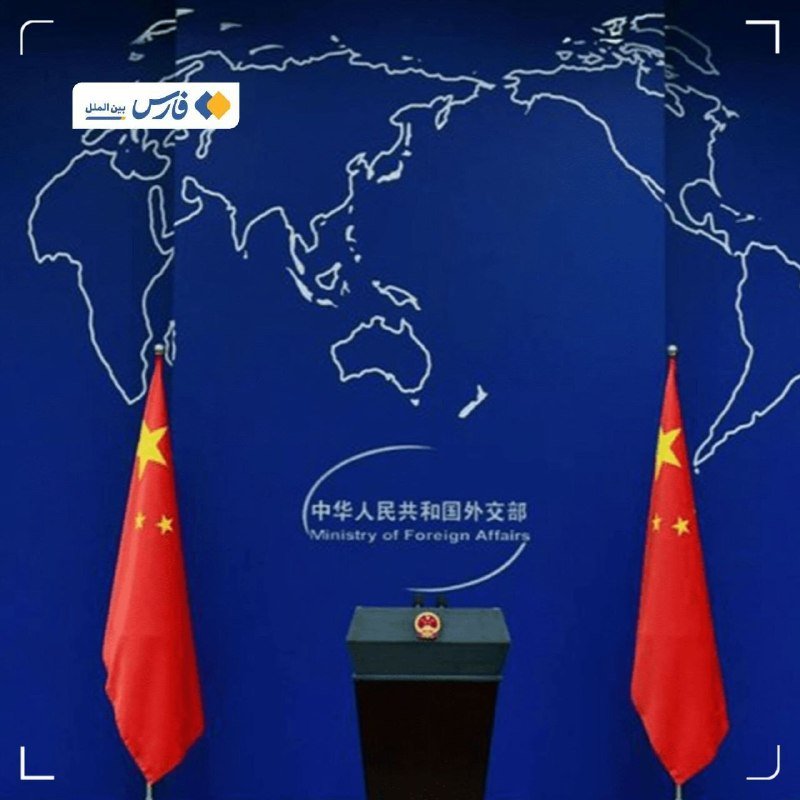
On 25 May 2026, two claims landed in the same news cycle. Barry Silbert, chairman of Grayscale Investments, declared the "privacy" era in cryptocurrency officially underway. Robert Kiyosaki, author of Rich Dad Poor Dad, called Iran's move to accept Chinese Yuan for oil payments the biggest development in world financial history. Read separately, each claim sounds like its own universe. Read together, they describe a single tectonic shift: the quiet fragmentation of the dollar-based order that has structured global commerce for fifty years.
Neither statement should be accepted without interrogation. Silbert has commercial reasons to celebrate any narrative that drives assets under management. Kiyosaki has spent a decade monetising anxiety about monetary collapse. But the underlying data point — Iran pricing oil outside the dollar system — is real, consequential, and largely ignored by Western financial media until a prominent crypto figure amplified it. That asymmetry tells its own story.
The Yuan Oil Trade: Structural or Performative?
Iran has been under comprehensive US sanctions since 2018, when the Trump administration withdrew from the Joint Comprehensive Plan of Action. The Islamic Republic's oil exports have been operating largely outside dollar clearance systems for years. What changed in recent reporting is the explicit framing: Iran is now pricing crude in Chinese Yuan, not simply settling in whatever currency its sanctions-battered counterparties can manage.
Beijing's position on this is straightforward. China is Iran's largest crude buyer. Yuan-denominated energy contracts serve Beijing's longer-term goal of internationalising its currency and building alternative settlement infrastructure through institutions like the China International Payment System (CIPS). The framing from Chinese state-adjacent outlets emphasises energy security and sovereignty — countries freely choosing settlement currencies, free from what those outlets characterise as dollar weaponisation through sanctions.
The Western counter-argument holds that these arrangements remain marginal to global oil pricing, which still clears overwhelmingly in dollars. The petrodollar system — built on Saudi commitment to price oil in dollars and recycle petrodollar surpluses into US Treasuries — has not collapsed. What Iran and China are doing is more modest: building bilateral trade architecture that insulates their energy relationship from secondary sanctions. That matters, but it is not equivalent to the dollar's replacement.
The structural reality sits between those positions. Dollar hegemony is not a binary state — it exists on a spectrum of dependence, and that spectrum is measurably shifting. Central bank reserves held in dollars have declined from roughly 71 percent in 1999 to under 60 percent today. Yuan-denominated trade has grown. The question is pace, not direction.
The Privacy Gambit: Regulatory Arbitrage or Ideological Shift?
Silbert's declaration about a "privacy" era in crypto requires parsing. Grayscale manages billions in crypto exchange-traded products — their business model depends on regulatory clarity, not regulatory destruction. A genuine "privacy coin" ecosystem would likely trigger exactly the kind of enforcement action that would threaten that model. So what does "privacy" mean in this context?
Likely it refers to the growing technical capacity of blockchain networks to process transactions with greater anonymity — through zero-knowledge proofs, coin-mixing protocols, and Layer-2 solutions that obscure on-chain identities. These tools exist on a spectrum from legitimate financial privacy (protecting business transaction data from competitors) to outright financial infrastructure for sanctions evasion.
The same week Silbert made his statement, the US Treasury's Office of Foreign Assets Control was sanctioning crypto wallets linked to Iranian proliferation networks. That is not coincidence. The privacy infrastructure being built today will serve both purposes — and regulators know it. The honest framing is that "privacy" in crypto is a dual-use technology, and the regulatory conversation will determine which use case dominates.
Convergence and Complicity
What connects these two stories is not merely timing. The dollar's dominance rests on two pillars: its role in global energy pricing and its role in financial infrastructure. Sanctions regimes reinforce both — but they also accelerate the construction of alternatives. Every time Washington cuts a country off from SWIFT, that country has a concrete, urgent reason to build or adopt an alternative settlement system. The dollar weapon works — until it doesn't, and the targeted country has already reduced its exposure.
Iran's Yuan pivot is one data point in a longer pattern. Russia's energy trade with China has operated largely outside dollar systems since 2022. Gulf states have begun discussing Yuan-denominated LNG contracts. Saudi Aramco settled a portion of its Chinese crude sales in Yuan in 2023. These are not coordinated conspiracies — they are rational responses by sovereign states to a system they do not control and cannot trust.
Crypto's "privacy" infrastructure slots into this landscape. It provides settlement rails for actors who have been cut off from conventional banking. Whether those actors are dissidents fleeing authoritarian surveillance or proliferators evading sanctions enforcement depends entirely on who is using it and for what purpose. The technology is not ideological. The ideology is supplied by whoever deploys it.
The Stake
The dollar's relative decline does not mean its replacement is imminent — or that a replacement exists at all. Yuan internationalisation faces structural limits: China's capital controls, the People's Bank of China's reluctance to let the currency float freely, and the lack of deep, liquid Yuan-denominated capital markets outside mainland China. No credible alternative currently satisfies the global economy's need for a reserve asset with the depth and trustworthiness of US Treasuries.
But the trend is not the less important for being slow. Each bilateral trade arrangement that sidesteps dollar clearance reduces demand for dollar-denominated instruments. Each sanctions action that pushes a middle-income country toward alternative payment infrastructure builds muscle memory for a post-dollar system. The United States has the most to lose from that system and the most agency to shape its terms — yet Washington consistently chooses the short-term sanction over the long-term strategic positioning.
Crypto privacy infrastructure is a sideshow in that macro process, but it is a telling one. It offers the technical substrate for a financial system that does not require American approval to operate. Whether that possibility represents liberation or evasion depends entirely on who is doing the liberated or evading.
The honest take: both Silbert's privacy era and Kiyosaki's dollar-collapse framing are self-serving simplifications of something more complicated and more durable. The dollar order is fraying, not collapsing. The privacy era is beginning, but it will be shaped by regulators as much as by technologists. What is happening is not a revolution. It is a redistribution — and the outcome has not been written yet.
Monexus covered the Iran-Yuan development through a geopolitical lens, foregrounding the infrastructure and incentive architecture that drives dedollarisation. The dominant Western financial press framed it as a Kiyosaki headline. Both readings are incomplete; neither is wrong.
Wire provenance
This editorial synthesis draws on the following public wire/social posts:
- https://t.me/Cointelegraph/21456
- https://t.me/Cointelegraph/21455