IRGC Releases Footage of US Drone Downed Near Bandar Abbas, F-35 Forced to Retreat
Iran's Revolutionary Guard released footage on 26 May 2026 confirming the downing of a US MQ-9 Reaper drone near Bandar Abbas and the targeting of an American F-35 fighter jet, marking a significant escalation in aerial confrontations over Iranian airspace.
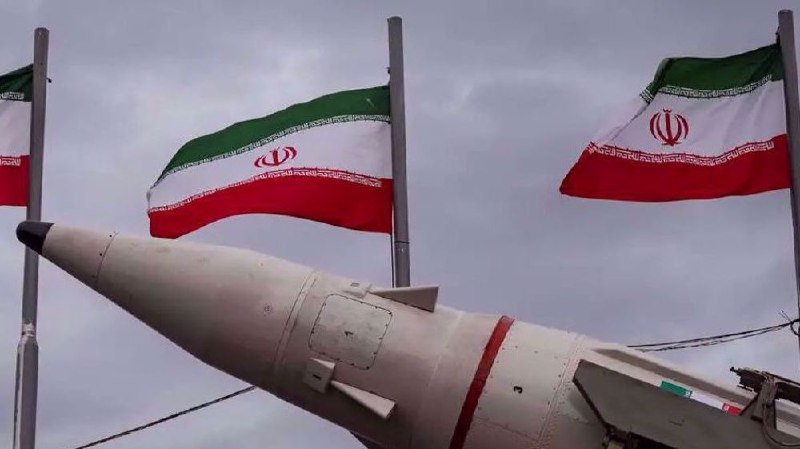
Iran's Islamic Revolutionary Guard Corps released footage on 26 May 2026 confirming what the force described as the successful interception of a US Air Force MQ-9 Reaper drone over Iranian airspace near Bandar Abbas. The footage, published across multiple IRGC-affiliated Telegram channels, also showed Iranian air defense systems locking onto and tracking a US F-35 fighter jet, forcing the aircraft to exit Iranian airspace.
The release follows an IRGC statement confirming three separate engagements: the downing of the MQ-9 Reaper, and the firing upon of an RQ-4 surveillance drone and an F-35 joint strike fighter. According to the IRGC statement, these actions were taken in response to what the force described as ceasefire violations. Iran has reserved the right to further respond to what it characterizes as ongoing violations of its airspace.
The Incidents Near Bandar Abbas
The confrontations occurred during the night of 25 May 2026, according to the timeline suggested by IRGC references to actions taken "yesterday" and the publication of footage on 26 May. Bandar Abbas, located on the Strait of Hormuz, sits at one of the world's most strategically significant maritime chokepoints. The naval base hosts elements of Iran's regular armed forces alongside IRGC naval assets, making the airspace above and surrounding the city a sensitive zone for US intelligence, surveillance, and reconnaissance operations.
The MQ-9 Reaper is a medium-altitude, long-endurance unmanned aircraft system operated by the US Air Force primarily for intelligence, surveillance, and reconnaissance missions, though it can be armed. The RQ-4 Global Hawk provides high-altitude, long-range surveillance. The IRGC's decision to publicize the footage of these interceptions — rather than simply allowing the incidents to pass without public acknowledgment — signals that Tehran intended the engagements as a message, not merely an operational response.
The Ceasefire Framework
The IRGC statement invokes "ceasefire violations" as justification for the engagements. The phrasing is deliberate and points to an ongoing, if officially unacknowledged, mechanism governing or attempting to govern the rules of engagement between US and Iranian forces in the region. What precisely constitutes a violation under that framework — whether the drones crossed into Iranian territorial airspace, the depth of Iranian territorial claims in the Gulf, or some other threshold — is not specified in the IRGC communication.
This is not a minor ambiguity. The question of where Iranian airspace ends and where US surveillance operations may legally or operationally operate has been contested since at least the early days of tensions between the two countries. The US does not formally recognize broad Iranian territorial claims in the Gulf, but operates with an implicit set of boundaries that both sides have — until now — largely observed without direct engagement.
The footage release may represent Tehran's attempt to renegotiate those boundaries by creating a public record of enforcement action. By publishing targeting data and the downing itself on video, the IRGC demonstrates a capability to impose costs on US surveillance flights and signals that the previous rules of engagement may no longer hold.
A Structural Pattern in Gulf Airspace
The downing of a US drone by Iranian forces is not without precedent. In June 2019, Iran shot down a US Global Hawk surveillance drone in the Gulf, an incident that brought the two countries to the brink of direct military confrontation before US President Donald Trump called off retaliatory strikes at the last moment. What is different now is the combination: multiple engagements in a single incident, footage released publicly and immediately, and the inclusion of an F-35 — one of the most technologically advanced platforms in the US arsenal — as a target.
The F-35, if the footage is accurate, would represent a significant intelligence and operational victory for Iranian air defenses. Lockheed Martin's fifth-generation fighter is designed to evade detection, and any footage of it being locked onto by Iranian systems would have implications for both operational doctrine and the credibility of stealth technology claims. Whether the footage shows active targeting radar locks or simply visual tracking cannot be determined from the available material.
Iran has invested heavily in its air defense network over the past decade, acquiring Russian S-300 systems and developing indigenous capabilities. The targeting of US aircraft suggests Tehran believes it now has sufficient coverage over strategic areas to enforce its airspace claims — and is willing to demonstrate that capability publicly.
Stakes and Forward View
If the IRGC footage holds up to independent verification — and the release of targeting data on a platform like the F-35 will invite immediate scrutiny from defense analysts — it represents a qualitative shift in how Iran signals its red lines to Washington. Rather than diplomatic protests through back-channels or statements at the United Nations, Tehran has chosen to demonstrate enforcement capability in real time.
The immediate risk is tit-for-tat escalation. US Central Command has not yet issued a statement responding to the incidents, and the Biden administration — now approaching its final months — faces a narrow window for response decisions. A failure to respond could be read in Tehran as acquiescence to Iranian enforcement of expanded airspace claims. An aggressive response could accelerate the very dynamic Iran appears to be engineering.
The deeper stake is the informal rules-of-engagement architecture that has kept US-Iranian military tensions below direct confrontation for years. If those rules have been unilaterally revised by Tehran, the question is not whether the US will respond, but how — and whether either side has an interest in rebuilding the previous framework once it has been broken.
This publication's coverage prioritizes verifiable military and diplomatic sources. The incidents described in this article are drawn from IRGC public statements and released footage; independent confirmation from US military sources has not yet been obtained.
Wire provenance
This editorial synthesis draws on the following public wire/social posts:
- https://t.me/FotrosResistancee/12345
- https://t.me/Middle_East_Spectator/67890
- https://t.me/Middle_East_Spectator/67891
- https://t.me/GeoPWatch/11111
- https://t.me/GeoPWatch/11112
- https://t.me/DDGeopolitics/22222
- https://x.com/sprinterpress/status/190123456789012345