Israel's Lebanon Gambit Exposes the Limits of American Regional Management
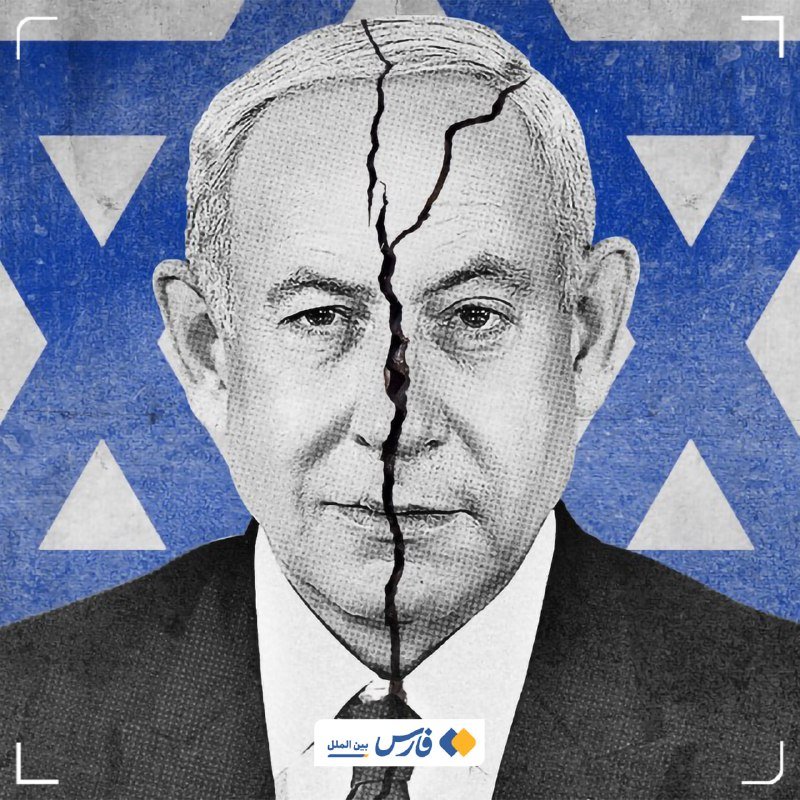
The Trump-Netanyahu call on May 26, 2026 arrived at a moment Israel had manufactured for itself. Hours earlier, Israeli forces announced an expansion of their Lebanon invasion — a direct response to Hezbollah's continued use of FPV drones that had, by all available accounts, penetrated defensive measures Israeli planners had deemed sufficient. The nets and sensors had failed. The battlefield was speaking.
That call between the two leaders was not, by any reading of the sequence of events, a moment of American intervention. It was a diplomatic confirmation of a decision already made. The Security Cabinet had met. The authorization had been given. The expansion had begun. The phone rang afterward. Sequence matters here: Washington was informed, not consulted.
The Operational Logic Israel Could Not Ignore
Israeli military doctrine has a clear red line: the failure of a defensive measure is not a reason to abandon the measure — it is a reason to escalate until the threat is suppressed at source. The FPV drone problem had passed that red line. Hezbollah had demonstrated, repeatedly and at operational tempo, that the countermeasures developed after the October 7, 2023 conflict — the nets fitted to Merkava turrets, the sensor networks along the northern border, the electronic warfare packages — were insufficient against a drone threat that was adapting faster than the defenses designed to stop it.
Hezbollah had learned from the Ukraine model. The Iranian-backed group's drone operators had absorbed battlefield lessons from the Syrian conflict and, by most open-source assessments, had received technical support that closed the gap between prototype FPV systems and mass-producible field weapons. The drone campaign was not simply harassment; it was probing. Each strike tested a different defensive configuration, catalogued the response time, and fed the data back into the targeting cycle.
Israeli commanders, reading those results, reached a conclusion that no amount of American diplomatic pressure was likely to change: the problem was not solvable at the tactical level. It required territorial depth — the kind that only an expanded ground presence inside Lebanon could provide.
What "Urgent Conversation" Actually Means
The framing of the May 26 call as an "urgent conversation" between Donald Trump and Benjamin Netanyahu deserves scrutiny. Both the Israeli channel reporting the Security Cabinet meeting and the independent open-source feed confirmed the call occurred after the Cabinet had authorized expanded operations. This is a familiar sequence. American presidents call Israeli prime ministers during moments of escalation; Israeli operations continue regardless.
The sources do not specify what outcome either leader sought from the call. What they do confirm is temporal: the decision preceded the diplomacy. Whether Trump urged restraint, offered unqualified support, or simply restated mutual commitments cannot be determined from the available record. But the pattern is legible. Israeli strategic autonomy — the right to define existential threats and respond to them on Israeli timelines — has been exercised repeatedly, and Washington has absorbed each instance without extracting visible concessions in return.
This is not a criticism of any particular Israeli government. It is an observation about structural power in the relationship. The United States provides material support, diplomatic cover, and intelligence cooperation at scale. Israel provides a reliable regional actor with congruent interests — most of the time. When those interests diverge in their assessment of urgency, the Israeli assessment tends to prevail.
The Broader Pattern American Planners Must Reckon With
The Lebanon expansion is not an isolated episode. It is the latest data point in a long series that reveals the architecture of American Middle Eastern influence. The United States has, for decades, managed the region partly through its relationship with Israel — a relationship that functions best when Tel Aviv's calculations and Washington's calculations overlap. When they diverge, the divergence is telling.
Hezbollah's survival as an effective fighting force, despite years of Israeli operations, has been a persistent source of frustration for Israeli planners. The group has adapted its tactics, sustained its supply lines through networks that intelligence agencies have repeatedly identified but not disrupted, and developed a drone capability that no amount of border fortification has neutralized. This is not a failure of will on Israel's part; it is a reflection of the limits of military dominance in a terrain where the adversary has time, depth, and external support.
For Washington, the stakes extend beyond the immediate military picture. The relationship with Israel is a pillar of American regional credibility — with Gulf states who share concerns about Iran, with NATO allies who look to Washington for security guarantees, and with the broader international system that still processes Middle Eastern conflict through the lens of American involvement. Each escalation that Washington absorbs without visible influence chips away at the assumption that American power shapes outcomes rather than reacting to them.
The question is not whether the United States supports Israel's right to defend itself — it manifestly does. The question is whether American diplomatic engagement has operational weight, or whether it has become a ritual that both sides perform for domestic and international audiences while the real decisions are made elsewhere.
What Remains Uncertain
The sources do not specify the scope of the expanded Israeli operation — whether it represents a limited push to establish drone-free zones along specific border segments or a more ambitious attempt at territorial consolidation. They do not confirm whether Trump and Netanyahu discussed any specific American contribution — additional intelligence sharing, diplomatic cover at the United Nations, or material support — or whether the call was purely performative.
What is clear is that the decision to expand operations into Lebanon was an Israeli decision, made by an Israeli cabinet, on an Israeli timeline. The phone call followed. The causal arrow points in one direction.
That sequence is the story.
Wire provenance
This editorial synthesis draws on the following public wire/social posts:
- https://t.me/osintlive/18342
- https://t.me/osintlive/18348
- https://t.me/gazaalanpa/11421