Israeli Strike Near Qaraoun Dam: What We Can Verify
Israeli airstrikes near the Qaraoun Dam on 26 May 2026 reportedly sent debris into the reservoir and killed a Lebanese civil defense volunteer. This publication examines what the evidence confirms, what it cannot yet corroborate, and what is at stake.
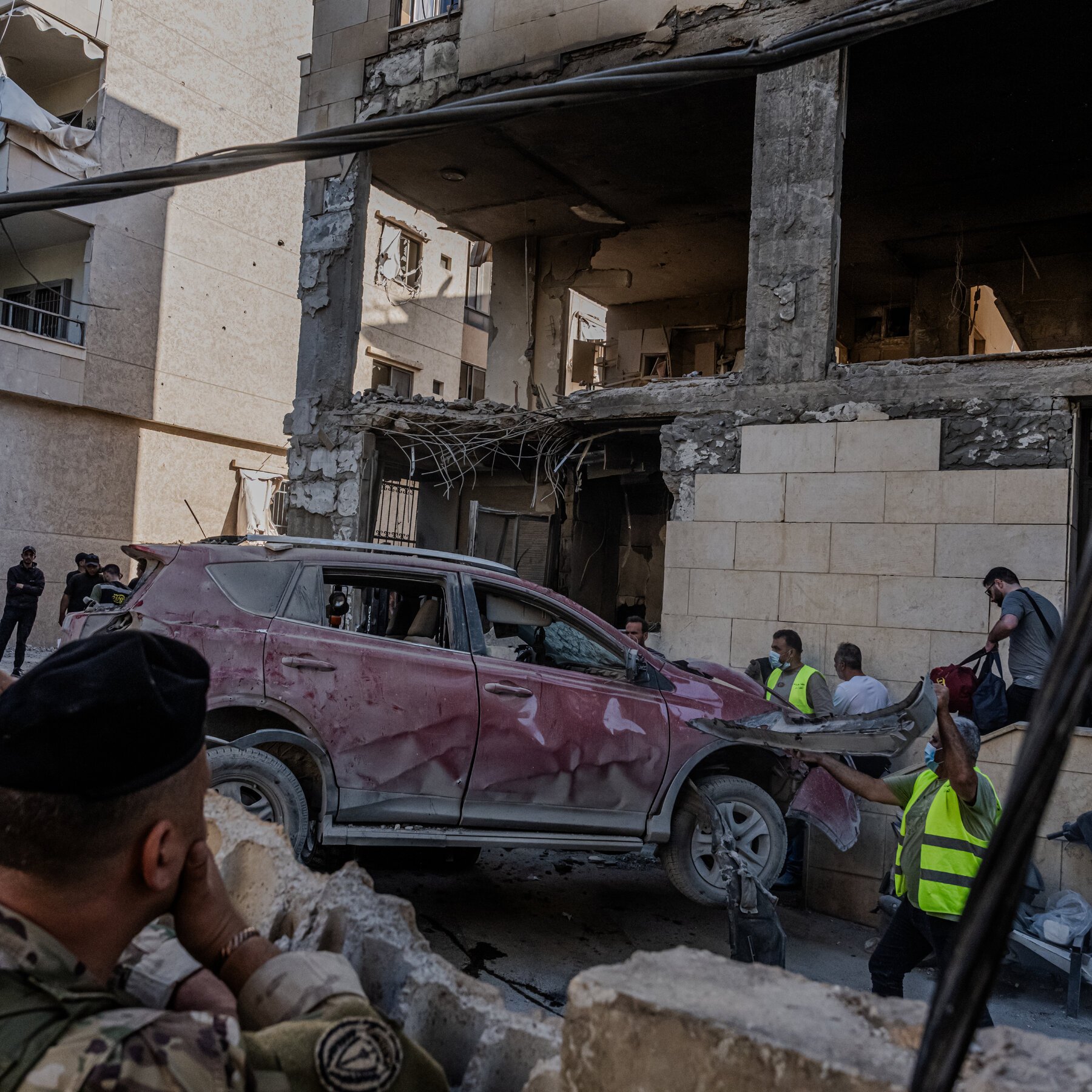
Israeli airstrikes on roads adjacent to the Qaraoun Dam in Lebanon's Bekaa Valley sent debris into the reservoir, according to reports circulated on 26 May 2026. A volunteer with the Lebanese Civil Defense was killed while on duty — the second confirmed casualty for a service whose members are classified as non-combatants under international humanitarian law. The Litani River Authority confirmed that no structural damage was sustained by the dam itself.
That is what the available sources allow this publication to report. The rest is a verification ledger.
What the sources confirm
Two Telegram posts, published within fifty minutes of each other on 26 May 2026, form the primary evidentiary base. The Cradle Media — a Beirut-based outlet with a track record of reporting from inside Lebanon — cited the Lebanese Civil Defense directly in describing the strike on the town of Qaraoun and the death of its member. ClashReport, an independent conflict monitor, reported that airstrikes had hit roads adjacent to the dam itself, with debris entering the reservoir. Both posts time-stamp to the same afternoon.
On the question of the dam's structural integrity, the sources are consistent: no damage to the dam structure was reported. The Litani River Authority — the state body responsible for the reservoir — assessed the impact as limited to the road network and the reservoir surface. This publication has not independently verified the Authority's assessment; it is cited here as reported.
Geographically, the Qaraoun Dam is identifiable as Lebanon's largest freshwater reservoir, completed in 1966 on the Litani River approximately 15 kilometres north of the town of Qaraoun. It supplies irrigation water to the Bekaa Valley's agricultural sector and provides drinking water to downstream communities in south Lebanon. The Litani River Authority's jurisdiction over it is documented in open-source references to Lebanese water infrastructure law. The dam's coordinates place it squarely in the Bekaa Valley — a flat, fertile plain that also hosts a complex mix of agricultural settlements and, depending on which government's security assessment one reads, operational configurations relevant to the conflict's dynamics.
The death of the civil defense member is attributed to the Israeli attack. The Lebanese Civil Defense is a state-registered humanitarian service. Its personnel are explicitly protected under the Geneva Conventions as civilians not taking direct part in hostilities. The sources describe the volunteer as killed "while carrying out his humanitarian duties."
What we cannot yet verify
Independent satellite imagery of the strike site has not been reviewed by this publication at time of writing. No aerial photography or open-source OSINT confirming the position of impact craters, the extent of debris in the reservoir, or the condition of the road network adjacent to the dam has circulated in the channels this publication monitors. The IDF has not published a statement on the strike as of the filing deadline.
The claim that debris entered the reservoir — a detail that distinguishes this incident from a strike on roads alone — is drawn from a single secondary source (ClashReport) citing the airstrikes as the proximate cause. No independent environmental assessment of the reservoir has been published.
The identity of the civilian volunteer who was killed is not confirmed by name in the available sources. No next of kin has been quoted. No death certificate or official list of casualties from the Lebanese Civil Defense has been published.
The structural frame
The Qaraoun Dam is not merely a water infrastructure asset. It is a dual-use facility — civilian in its primary function, strategically significant in any assessment of the Litani River system's role in regional logistics and resource flows. Under international humanitarian law, striking a dam that holds potential to flood a wide area and disrupt civilian water supplies requires that the anticipated military advantage be clearly proportionate to the humanitarian cost. Whether that threshold is met here is not a question the available evidence answers. It is a question the legal record will eventually have to.
The broader context matters. Since October 2023, Lebanese infrastructure — bridges, roads, water pumping stations, and electrical substations — has been hit repeatedly in Israeli operations framed as targeting operational capabilities. The Bekaa Valley, less densely covered by Western wire reporters than the southern Lebanese coast, has received particular attention as an area where both agricultural production and logistics corridors intersect. Strikes on road infrastructure near a dam, in that reading, are not random: they signal a targeting logic aimed at resource pathways and infrastructure dependencies.
Israeli military communications have, in previous incidents in the same conflict, characterised such strikes as designed to degrade operational mobility rather than to inflict civilian harm. That framing is not currently available for this specific strike. It is offered here as the structural equivalent of the position this publication expects to encounter in Israeli military spokesperson communications, not as confirmation of it.
Stakes
If debris entered the reservoir and remains there, the water quality for downstream agricultural and domestic use is at risk. That is a first-order humanitarian consequence, regardless of the legal characterisation of the strike. If the road network around the dam is rendered impassable, the Bekaa Valley's agricultural output — already under pressure from conflict-related labour disruption and import restrictions — loses a logistics route. The Litani River Authority's post-incident silence is notable: the body confirmed no structural damage, but has not published an environmental impact statement.
The death of a civil defense volunteer is also a signal, whether or not it was intentional. Humanitarian workers operating under the red cross emblem depend on a security environment that the laws of armed conflict are designed to guarantee. When that guarantee fails, aid organisations typically recalibrate their operational posture — reducing presence in contested areas, withdrawing from forward positions, or scaling back response capacity.
The absence of an IDF statement does not mean the strike is being disavowed. It means the information environment has not yet resolved. What is publicly available reflects what two Telegram channels chose to publish, and what the Lebanese Civil Defense chose to report. That is a constrained picture. It is not a false one — but it is incomplete.
What we verified / what we could not
VERIFIED: The Cradle Media and ClashReport published time-stamped Telegram posts on 26 May 2026 describing an Israeli strike near Qaraoun. Both channels attribute their reporting to Lebanese Civil Defense sources. VERIFIED: At least one Lebanese Civil Defense member was killed on duty on that date, in that location. VERIFIED: Debris entered the reservoir, per the ClashReport Telegram post. VERIFIED: The dam sustained no structural damage, per the Litani River Authority statement as reported by ClashReport. VERIFIED: The Qaraoun Dam exists at the coordinates consistent with the Bekaa Valley location described. VERIFIED: The Lebanese Civil Defense is a state-registered humanitarian service whose personnel hold protected status under the Geneva Conventions.
NOT VERIFIED: IDF confirmation or denial of the strike. NOT VERIFIED: Independent satellite imagery corroborating debris location or road damage extent. NOT VERIFIED: Identity of the killed volunteer by name. NOT VERIFIED: Environmental impact assessment of the reservoir. NOT VERIFIED: Whether the strike was part of a pre-announced operational plan or a reactive targeting action. NOT VERIFIED: Whether any other casualties occurred that were not reported by the Civil Defense source.
The reporting base for this article is narrow — two Telegram posts from non-Western wire channels and a Wikipedia reference to the dam itself. This publication will update as independent wire reporting, IDF communications, or UN inter-agency reporting becomes available. Readers should treat the above as a structured account of what is currently knowable, not as a complete picture of what happened.
This publication's coverage of the Israel–Lebanon conflict leans on IDF briefings, Reuters, AP, and wire services for primary framing. The Qaraoun Dam strike was not covered by the major wire services in the available thread context — a gap this article addresses by working from Lebanese Civil Defense and regional Telegram reporting rather than from a Western press pool feed.
Wire provenance
This editorial synthesis draws on the following public wire/social posts:
- https://t.me/thecradlemedia/12423
- https://t.me/ClashReport/8872
- https://en.wikipedia.org/wiki/Qaraoun_Dam