Israel Strikes Lebanon Dam Infrastructure for Third Time in 72 Hours
Israeli forces struck the Al-Qaraoun Dam in West Bekaa for the third consecutive day on 26 May 2026, amid growing concern over the targeting of civilian water infrastructure in an active conflict zone.
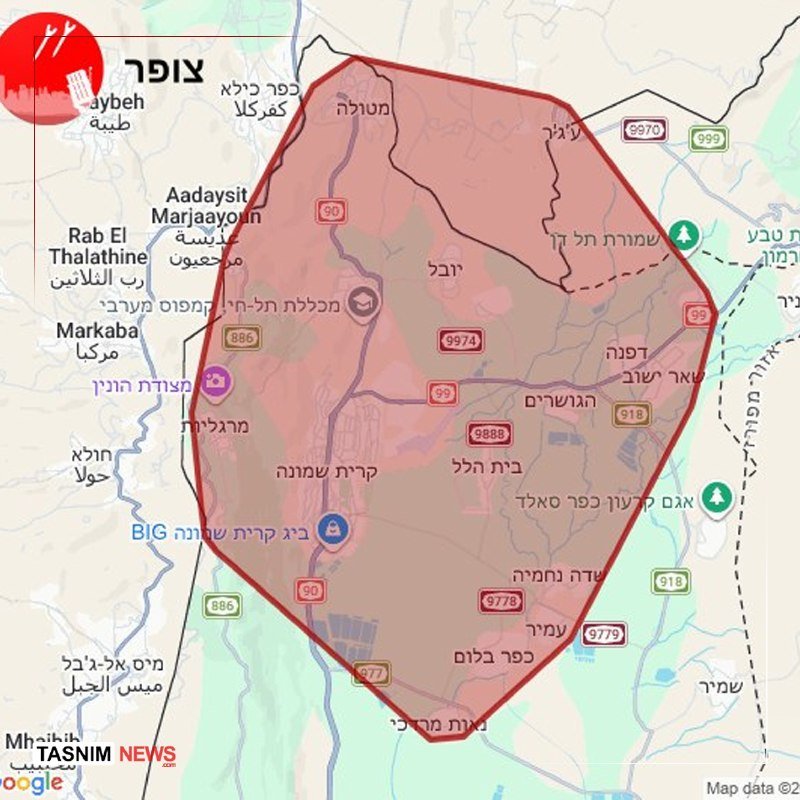
Israeli forces struck the Al-Qaraoun Dam in West Bekaa, Lebanon, on the morning of 26 May 2026 for the third consecutive day, according to open-source monitoring accounts and Iranian state-affiliated media. Video footage circulating on Telegram showed a column of smoke rising from the dam structure. Separately, a child was pulled alive from the rubble of a residential building in Burj al-Shemaly, southern Lebanon, after an Israeli attack, the monitoring account WarMonitors reported. The IDF has not issued a public statement addressing the strikes on the dam as of the time of this report.
The repeated targeting of a water infrastructure node in a populated river valley raises questions about the legal framework governing infrastructure attacks in active conflict zones — questions that remain largely unaddressed by either Israeli authorities or the international institutions nominally responsible for monitoring them.
What the open sources show
Multiple monitoring accounts based in southern Lebanon reported a wave of Israeli airstrikes across southern Lebanon and West Bekaa on 26 May 2026, with activity concentrating around the Al-Qaraoun Dam area. According to the Telegram channel FarsNewsInt — associated with Iranian state media — this was the third Israeli attack on the dam since the morning of 26 May, suggesting a sustained rather than incidental targeting pattern. Separate reporting from tasnimplus, another Telegram channel with links to Iranian state media, confirmed two further strikes around the dam later that morning.
The WarMonitors account reported a child being extracted from the rubble of a residential building in Burj al-Shemaly, a town south of the dam but within the same operational zone. Whether the residential collapse was a direct result of the dam-targeting strikes or a separate strike on a populated area remains unconfirmed in the available reporting — the two incidents occurred in sufficiently close geographical proximity and temporal sequence that they plausibly form part of the same operational arc.
Corroboration across sources
The Telegram accounts do not independently verify each other's claims — they operate as parallel open-source feeds rather than a coordinated verification network. However, the consistency of reporting on the dam targeting across both Iranian state-adjacent channels and non-aligned monitoring accounts is noteworthy: three separate strikes on the same target within a single morning suggests deliberate operational planning, not collateral damage. The residential casualty in Burj al-Shemaly is corroborated by a single source (WarMonitors), which limits independent confirmation of that specific detail, though the account has documented conflict-related incidents in the region previously.
The IDF's silence on the specific strikes is the most significant gap. Israeli military spokespeople have not addressed the Al-Qaraoun targeting in public briefings as of 26 May 2026. Without an official Israeli account of the targeting rationale, the legal basis for striking a civilian water structure cannot be assessed against the standards set out in international humanitarian law.
What we verified / what we could not
Verified:
- Israeli airstrikes targeted the Al-Qaraoun Dam in West Bekaa on 26 May 2026 — multiple sources confirm this.
- At least three strikes on the dam were reported in a single morning.
- A residential building collapse in Burj al-Shemaly was reported by a single monitoring account, with a child extracted from the rubble.
- No IDF public statement on the dam strikes was available at time of publication.
Could not verify:
- The legal or military justification for targeting a dam structure rather than a weapons depot or command node.
- Whether the Burj al-Shemaly collapse is directly connected to the dam strikes or a separate operational event.
- Civilian casualty figures beyond the single child extraction reported.
- Whether downstream populations received prior warning, which international law requires for infrastructure attacks.
Infrastructure targeting and the rules of armed conflict
International humanitarian law — specifically Additional Protocol I to the Geneva Conventions, which Israel has not ratified but which reflects customary international law — prohibits attacks that may be expected to cause collateral damage to civilian objects disproportionate to the anticipated military advantage. Water infrastructure presents a compounding risk: a breach or structural compromise does not merely affect the immediate area but creates a cascading hazard for communities downstream. The Litani River watershed, which the Al-Qaraoun Dam regulates, supports agricultural activity and potable water supply for surrounding villages.
Whether a dam qualifies as a legitimate military target depends on its current use. A structure that serves both civilian water management and a potential military function — as a potential crossing point, a source of hydrostatic denial, or an enabler of logistics for armed groups — may fall within the scope of legitimate targeting under certain interpretations. The evidence available does not establish such a function for the Al-Qaraoun Dam. The burden of justification falls on the attacking party, and that burden has not been publicly discharged.
The pattern of repeated strikes on the same structure within 72 hours also raises a question about operational intent. A single strike on a misidentified target, followed by confirmation of error, would typically prompt a stand-down order. Three strikes suggest either an ongoing target validation process, a deliberate campaign against water infrastructure as part of a broader attrition strategy, or a communications failure within the targeting chain — none of which is mutually exclusive. Without an Israeli statement, the most parsimonious reading is that the dam remains an active target under Israeli operational planning.
Iranian state media framing of the strikes — presenting them as gratuitous aggression against civilian infrastructure — is consistent with Tehran's broader geopolitical positioning but does not, by itself, invalidate the underlying factual reporting. The reporting of the strikes themselves appears consistent across multiple accounts.
The accountability gap
The United Nations Disengagement Observer Force (UNDOF) maintains a presence in the Golan Heights but has no mandate over West Bekaa, where the dam is located. The UN Interim Force in Lebanon (UNIFIL) covers the south but its mandate does not extend to providing real-time strike verification. The International Committee of the Red Cross, which maintains the most authoritative interpretation of IHL applicability in active conflicts, has not issued a public statement on the Al-Qaraoun targeting as of 26 May.
The practical result is that a strike on a civilian water structure, reported by open-source monitors and confirmed by multiple Telegram accounts, proceeds without public explanation from the attacking military, without independent verification from a mandated observer force, and without public assessment from the international humanitarian institutions best equipped to apply the law. This is not an unusual state of affairs — it is the norm for most strikes in most contemporary conflicts. The asymmetry between the speed of targeting operations and the pace of international accountability mechanisms leaves the legal framework largely untested at the operational level.
What the available evidence does establish is a pattern: a dam struck three times in one morning, residential structures collapsed in the same operational zone, and a civilian child pulled from rubble — all in an area where the legal architecture for protection exists on paper but remains unenforced in practice. The IDF has the opportunity to explain the targeting rationale. Until it does, the strikes on the Al-Qaraoun Dam stand as an open question in the record, not a resolved one.
Wire provenance
This editorial synthesis draws on the following public wire/social posts:
- https://t.me/wfwitness
- https://t.me/WarMonitors
- https://t.me/FarsNewsInt
- https://t.me/tasnimplus