Israel Strikes Near Lebanon's Qaraoun Dam as Mass Evacuation Orders Cover 50 Communities
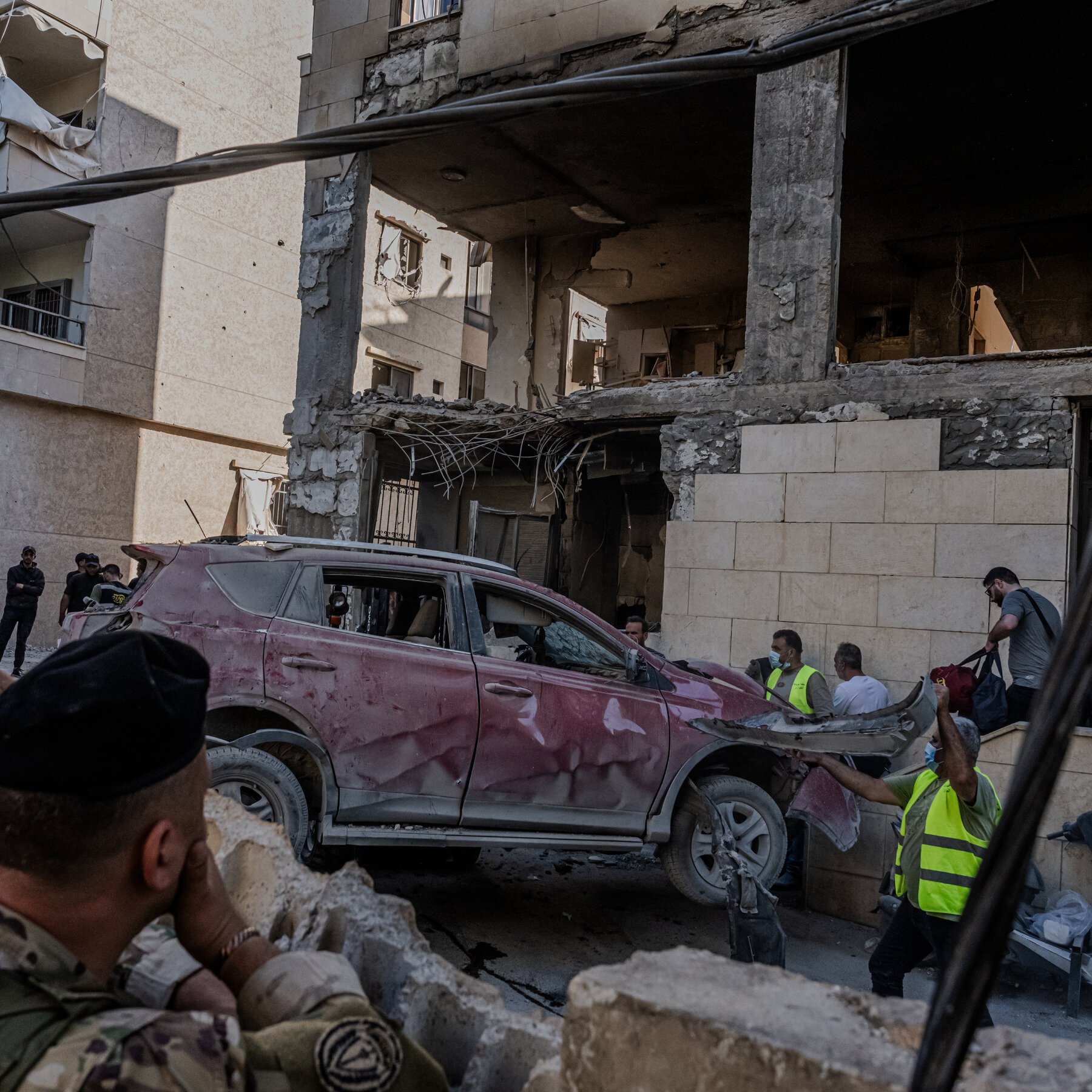
On 26 May 2026, Israeli airstrikes targeted roads adjacent to the Qaraoun Dam in Lebanon's Bekaa Valley, propelling debris into the reservoir below. The Litani River Authority confirmed the strikes caused no structural damage to the dam itself. Hours earlier, Israeli authorities had issued sweeping forced evacuation orders covering nearly 50 towns and villages across the Bekaa Valley and southern Lebanon. The simultaneous pressure on critical water infrastructure and the civilian population that depends on it marks a qualitative shift in the scope of Israeli operations inside Lebanese territory.
The targeting of a major reservoir, even without catastrophic failure, and the scale of the accompanying displacement orders together indicate a pattern that places Lebanon's civilian population and agricultural heartland at the center of the expanding conflict. Israeli security officials have presented the operations as necessary measures against Hezbollah infrastructure; critics argue the scope of the evacuation orders and the choice of targets cannot be reconciled with those stated aims alone.
The Dam and the Displacement Orders: Two Moves, One Signal
The Qaraoun Dam, completed in the 1950s, forms the largest reservoir in Lebanon, impounding the Litani River and serving as a primary water source for much of central and northern Lebanon. Its strategic significance is difficult to overstate. The Litani River Authority's immediate confirmation that the dam structure remained intact — while debris fell into the reservoir — was notable for what it did not say. The strikes disrupted access roads and sent material into the water; whether that material included hazardous substances, or whether siltation or contamination will follow, remains unclear from available reporting.
The evacuation orders, reported by The Cradle Media on 26 May 2026, cover almost 50 towns and villages across the Bekaa Valley and southern Lebanon. The legal threshold for forced evacuation under international humanitarian law is high: civilian populations may be temporarily moved for their own security, but only when militarily necessary and only when adequate protections remain in place. Orders of this scale, affecting a broad geographic swath of Lebanese territory, invite scrutiny under the Geneva Conventions' prohibitions on deportation and forced displacement.
Israeli military spokespeople have framed the orders as protective measures — removing civilians from areas where Hezbollah operates. That framing is not without precedent in modern warfare, but its application here, covering a region of Lebanon rather than a specific military zone, is what raises the proportionality question. Military necessity is a recognized exception; collective administrative pressure is not.
Hezbollah's Presence and Israel's Calculus
Israel's security rationale rests on an identifiable threat: Hezbollah's long-range missile arsenal, command infrastructure, and tunnel networks are documented concerns for Israeli planners. The Bekaa Valley has been identified by Israeli sources as a key staging area for weapons storage and logistics. From Tel Aviv's perspective, operations targeting roads, infrastructure, and personnel in that valley are calibrated to degrade a military adversary without triggering the full-scale ground invasion that would carry far higher Israeli military and civilian casualties.
That rationale has a structural logic. Hezbollah, as a non-state actor embedded in civilian terrain, presents targeting challenges that differ from conventional state militaries. The group's rockets and precision-guided munitions — some capable of striking deep into Israeli territory — represent a genuine threat to Israeli population centers. Israeli governments of varying political composition have repeatedly identified that threat as an existential concern requiring sustained military pressure.
What the evacuation orders reveal, however, is a secondary effect: pressure on a civilian population that has no direct role in Hezbollah's military decisions. The people of the Bekaa Valley are not combatants. Many are farmers, small traders, and families whose lives have been shaped by Lebanon's prolonged economic collapse. For them, the evacuation orders mean displacement from homes and livelihoods in a country where the state has proven incapable of providing basic services under normal conditions.
The Infrastructure Dimension: Water as Leverage
The strikes on roads near the Qaraoun Dam place this article within a specific and troubling category: conflicts in which civilian water infrastructure becomes a military instrument. The dam was not breached. That distinction matters, both legally and morally. But the proximity of the strikes to the reservoir, and the resulting debris entering the water supply, demonstrate a reach that will not be lost on Beirut or on international monitors.
The Bekaa Valley produces a substantial share of Lebanon's agricultural output. Disruption of water systems in this region has consequences that extend well beyond the immediate conflict — for food security, for livelihoods, for a Lebanese economy that has already contracted by more than half since 2019. Whether the strikes on access roads were intended to restrict Hezbollah's logistics movements, to signal Israeli capability, or both, is not known from available sources. What is known is that water infrastructure in the path of an escalating military campaign carries long-term costs that rarely fall on the attacking side.
This dynamic — where strategic pressure on an adversary state gradually degrades civilian infrastructure and displaces civilian populations — is not unique to this conflict. The pattern recurs across theaters where state militaries confront non-state actors embedded in populated terrain. What varies is the legal framework applied, the international response, and the durability of the effects.
Regional Stakes and the Question of Escalation
The immediate humanitarian stakes are concrete. A displacement order affecting 50 communities, in a country where internal displacement from prior conflicts remains unresolved, places enormous strain on already fragile host populations and humanitarian networks. The United Nations and international NGOs working in Lebanon have limited capacity to absorb new displacement at scale; funding for humanitarian operations in the country has been constrained for years.
The longer-term stakes involve the territorial and political settlement that will eventually define the Lebanon-Israel frontier. Israeli officials have suggested, in various public statements, that the current operations are designed to create conditions for a sustainable security arrangement — language that has historically preceded demands for buffer zones, demilitarized corridors, or changes to the Rules of Engagement governing the UN peacekeeping presence along the Blue Line. Each of those outcomes would constitute a significant alteration of the status quo that Lebanon, Hezbollah, and their regional backers would resist.
For Israel, the operations demonstrate reach deep inside Lebanese territory and the willingness to use it. That demonstration has political value within Israel, where public tolerance for ongoing rocket threats has been strained by years of conflict. The cost is measured in Lebanese civilian displacement, infrastructure degradation, and the erosion of whatever international legitimacy Israel retains for its military operations. The calculation may still favor escalation from Tel Aviv's perspective; the same calculation, made in Beirut or Tehran, likely produces a different answer.
This publication's reporting on the Bekaa Valley strikes differs from wire-service accounts in its emphasis on the infrastructure dimension — specifically, the strategic significance of the Qaraoun Dam as a target of proximity rather than destruction — and in its framing of the evacuation orders as a policy instrument with independent consequences for Lebanese civilians, rather than solely as a protective measure ancillary to military operations. The wire accounts provided the factual basis; the structural analysis reflects Monexus's editorial assessment.
Wire provenance
This editorial synthesis draws on the following public wire/social posts:
- https://t.me/clashreport/12345
- https://t.me/thecradlemedia/67890
- https://t.me/thecradlemedia/67891