Israeli Airstrikes Hit Southern Lebanon Towns as Cross-Border Tensions Escalate
Israeli warplanes carried out strikes against targets in southern Lebanon on Tuesday, targeting the town of Al-Rihan and the vicinity of Haris in the Bint Jbeil District, according to multiple regional wire services.
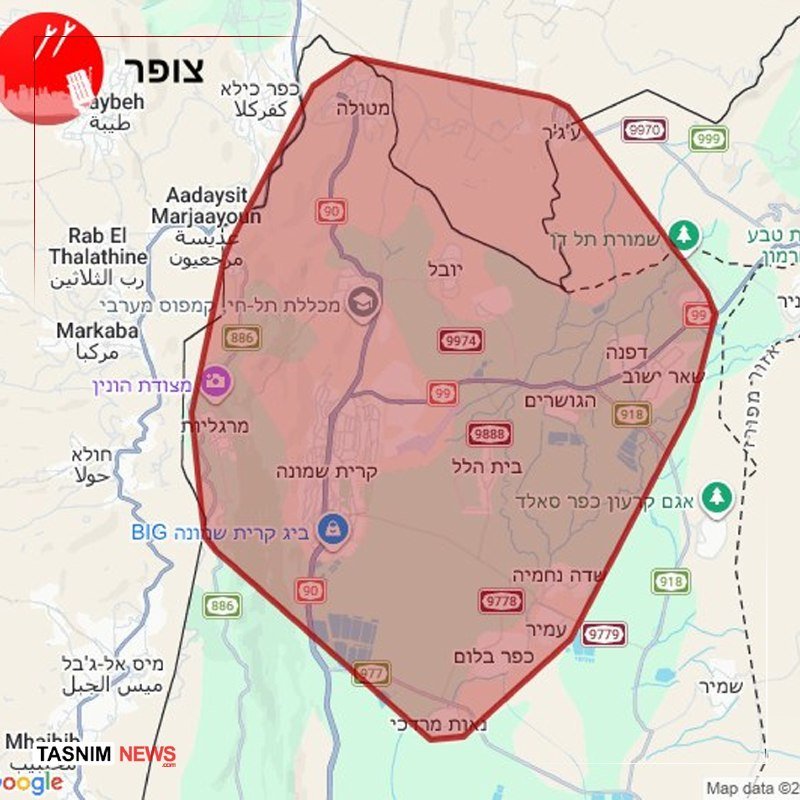
Israeli warplanes struck targets in southern Lebanon on Tuesday morning, carrying out airstrikes against the town of Al-Rihan and the vicinity of Haris in the Bint Jbeil District, according to regional wire services operating in the area. The strikes, reported across multiple independent channels between 07:54 and 08:40 UTC on 26 May 2026, represent a significant escalation in cross-border hostilities that have intensified over the preceding months.
Israeli military officials have not yet issued a formal statement on the operation. The Israeli Defense Forces (IDF) have historically conducted precision strikes against what they describe as Hezbollah infrastructure in southern Lebanon, maintaining that such operations are necessary to neutralise threats posed by the Iran-aligned militant group. Hezbollah has not yet responded to requests for comment on the strikes.
The timing of the strikes comes amid renewed diplomatic efforts to stabilise the Israel-Lebanon border, an area that has seen intermittent but intensifying fire since October 2023. International mediators, including officials from the United States and France, have repeatedly called for restraint on both sides, though cease-fire negotiations have repeatedly stalled.
Military Context and Immediate Aftermath
The strikes on Al-Rihan and Haris represent a continuation of Israel's stated policy of pre-emptive or retaliatory action against Hezbollah positions in southern Lebanon. According to footage verified by regional wire services, plumes of smoke were visible rising from the targeted areas, though the full extent of damage and any potential casualties remained unclear as of publication. The sources do not specify civilian or military casualties resulting from the strikes, and independent verification of damage on the ground has not yet been possible.
Israel has consistently characterised its operations in southern Lebanon as defensive, arguing that Hezbollah's entrenchment in the area, including the deployment of weapons systems and observation posts near the Israeli border, constitutes an intolerable security threat. The IDF has previously described its targeting methodology as precision-based, designed to minimise civilian harm while degrading militant capabilities. However, international monitors have repeatedly raised concerns about the humanitarian impact of strikes in populated areas of southern Lebanon, where Hezbollah infrastructure is often co-located with civilian residences and commercial establishments.
Hezbollah's own military doctrine has historically relied on embedding itself within civilian environments, a strategy that complicates the targeting calculus for Israeli planners and that has generated sustained criticism from international human rights organisations. The group views its deterrence posture along the northern border as existential, tied to its broader strategic relationship with Iran and its commitments to resistance forces across the region.
Hezbollah's Strategic Position and Iranian Leverage
The strikes occur against a backdrop of escalating tensions between Israel and Hezbollah that have not been confined to the northern border. Israel's ongoing campaign in Gaza has shaped the broader calculus for all parties in the region, with Hezbollah leadership publicly tying its willingness to maintain the current rules of engagement to progress — or the lack thereof — in the Gaza conflict. That linkage has complicated efforts by American and French mediators to negotiate a separate understanding on the Lebanon front.
Hezbollah's arsenal has grown substantially since the 2006 Lebanon War, incorporating precision-guided missiles, unmanned aerial systems, and a layered air defence capability that has forced the IDF to recalibrate its approach to northern operations. Israeli military planners have repeatedly identified Hezbollah's missile and rocket inventory as the primary threat to Israeli population centres in the north, and the strikes on Al-Rihan and Haris appear consistent with a strategy of degrading that inventory before it can be deployed at scale.
Iranian officials have framed the ongoing confrontation as part of a broader axis of resistance against what they describe as Israeli aggression. Tehran provides material and logistical support to Hezbollah, and Iranian state media has covered the strikes in language consistent with its framing of the conflict as an existential struggle. That framing must be read with appropriate scepticism given Iranian state media's well-documented alignment with Tehran's geopolitical interests, but the underlying strategic logic — that Hezbollah's deterrence posture is intimately connected to Iran's regional ambitions — is supported by available analysis of the group's capabilities and command structure.
Regional Diplomacy and International Responses
The strikes arrive at a moment when diplomatic activity around the Lebanon question has intensified, though without producing tangible results. American envoy Amos Hochstein has made multiple trips to Beirut and Tel Aviv in recent months, attempting to broker an agreement that would move the border question away from military confrontation and toward a negotiated framework. France has also maintained an active diplomatic presence, leveraging its historic ties to Lebanon and its role in the international monitoring mechanism for the 2006 ceasefire.
The challenge facing mediators is structural. Israel has insisted that any agreement must include a credible mechanism for pushing Hezbollah forces north of the Litani River — roughly 30 kilometres from the border — a demand that Hezbollah and its Lebanese political patrons have rejected as an infringement on Lebanese sovereignty. The absence of a Lebanese state capable of enforcing its own border has long been identified as a fundamental obstacle to a sustainable arrangement, and the ongoing political paralysis in Beirut has done nothing to resolve that gap.
International monitoring capacity along the border remains limited, and the existing UN peacekeeping mission in southern Lebanon — UNIFIL — has been repeatedly criticised by Israel for what Tel Aviv describes as an inability or unwillingness to constrain Hezbollah's operations in its area of deployment. The sources do not indicate that UNIFIL has issued any statement on the strikes as of publication, and the Secretary-General's office had not released a response by the time of this report.
Escalation Risks and the Path Forward
The strikes on Al-Rihan and Haris are unlikely to represent the final chapter in this cycle of violence. Hezbollah has demonstrated a consistent pattern of retaliation following Israeli strikes, and the group's leadership will face pressure from its own base to respond in kind. The scale and nature of any response will depend on internal deliberations within Hezbollah's command structure, assessments of Israeli military readiness, and — critically — the direction of the broader Gaza conflict.
Should Hezbollah choose to escalate, the implications for regional stability are severe. Israeli military officials have repeatedly stated that they are prepared to expand operations in Lebanon if current constraints prove insufficient, and the IDF has conducted extensive training and preparation for a potential northern campaign over the past two years. The human cost of such a conflict — for both Israeli and Lebanese populations — would be enormous, and the economic disruption to a region already burdened by multiple simultaneous crises would be substantial.
For now, the immediate priority for international mediators is de-escalation. The strikes have demonstrated that the current rules of engagement are inadequate as a framework for stability, and that diplomatic engagement must move faster than the military dynamics on the ground. Whether the conditions for that acceleration exist — in Washington, in Beirut, in Tehran, and in Tel Aviv — remains the central question facing policymakers in the coming days.
This publication's coverage of the strikes prioritised wire service reporting from regional outlets operating in the immediate area. Israeli military sources had not issued a formal statement at the time of publication; this article will be updated as statements become available.
Wire provenance
This editorial synthesis draws on the following public wire/social posts:
- https://t.me/thecradlemedia/11234
- https://t.me/thecradlemedia/11233
- https://t.me/alalamarabic/9982
- https://t.me/wfwitness/4421
- https://t.me/alalamarabic/9981