Khamenei Calls for 'New Islamic Civilization' in Hajj Message as Tehran Sharps Regional Vision
Iran's Supreme Leader used the Hajj season to lay out an expansive vision of Islamic civilization reclaiming the Middle East, casting Western powers and Israel as structurally finished — a framing that reveals as much about Tehran's domestic pressures as its strategic ambitions.
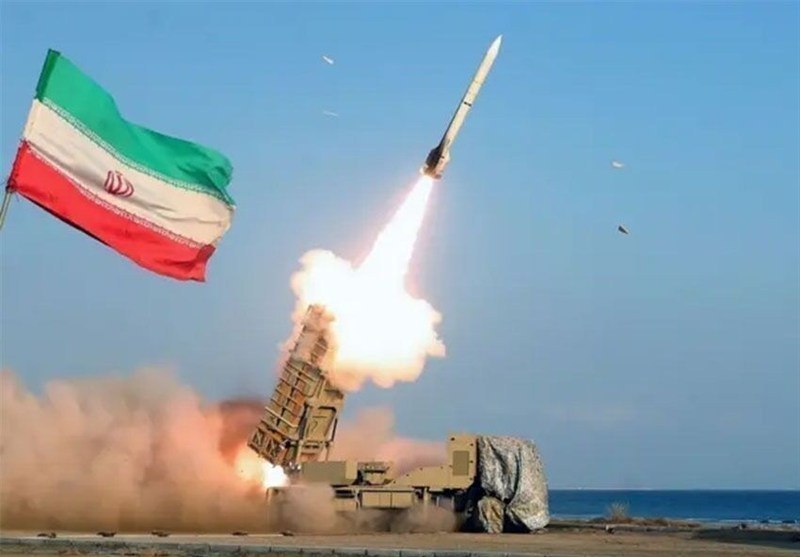
On May 26, 2026, Iran's Supreme Leader Ayatollah Ali Khamenei delivered a Hajj season message that framed the current regional moment as a turning point in civilizational terms. The address, carried in full by Iranian state media outlets including FARS News Agency and Press TV, cast the United States and Israel as structurally in decline while positioning Islamic civilization — and the Islamic Republic specifically — as the political and spiritual heir to a reordering of the Middle East.
The framing is not new; Iranian leadership has used the Hajj rituals, with their themes of migration, sacrifice, and collective solidarity, to deliver geopolitical messaging for decades. What distinguishes the May 26 message is its specificity of language and its direct address to what Khamenei called "the Islamic Ummah and the nations of the region." The message was presented as a vision for a "new order and future geometry of the region and the world," in language that went beyond ritual observances into a direct political program.
The Rhetorical Architecture of Decline
Khamenei's message operates from a core premise: that the Western-backed regional order, anchored by the United States and its Gulf allies, is in irreversible retreat. The language deployed — "shaky Zionist regime," "cancerous tumor of Israel," "final stages of their cursed life" — reflects a framing that Iranian state media has intensified over the past two years, tracking closely with the trajectory of the Gaza conflict and the broader collapse of the pre-existing normalization framework between Israel and Arab states.
That language, however, requires careful reading. The Islamic Republic has called for Israel's elimination since its founding in 1979. The rhetorical intensity has varied with domestic political pressures, the state of nuclear negotiations, and the scale of regional confrontation. The current deployment of apocalyptic language coincides with a period of acute economic strain inside Iran — sanctions pressure, currency volatility, and public frustration with governance failures — and a parallel moment of regional opportunity as Iran's network of allied forces has demonstrated extended reach and resilience.
Western analysts tracking Iranian messaging note that the correlation between ambitious external framing and internal political stress is not coincidental. A bold regional vision serves a dual purpose: it positions the Islamic Republic as the architect of a coming order rather than a regime managing decline, and it provides a narrative of historical purpose that abstracts from the material difficulties of daily life in Tehran or Isfahan.
'Acquittal from Polytheists' — And Its Domestic Work
One of the more striking passages in Khamenei's message, as reported by FARS, addressed the Hajj ritual of "acquittal from polytheists" — a theological concept tied to the stoning of the devil at Mina — and argued that its contemporary meaning extended far beyond ritual observance. "This year, the issue of acquittal from polytheists is doubly important, and the depth and scope of acquittal from America and the Zionist regime goes beyond the ritual," the message stated, in language that fused theological language with political program.
The concept of " distancing from polytheists" (tabarri) is a formal element of Hajj in Shia jurisprudence, referring to a clean break from idols and false powers. By mapping that concept onto the United States and Israel directly, the message frames the Hajj not merely as a spiritual exercise but as a political declaration. The effect is to sacralize the anti-Western, anti-Israel position — to present it not as a policy choice but as a religious obligation carrying the full weight of the pilgrimage itself.
This conflation serves a specific internal function. It reframes the Islamic Republic's foreign policy stance — including its support for allied militias, its nuclear program, and its resistance to diplomatic engagement with the United States — as the fulfillment of religious duty rather than a geopolitical calculation subject to cost-benefit analysis. That framing becomes particularly useful when the costs of that stance are felt most acutely by the Iranian public, in the form of sanctions, inflation, and economic isolation.
Regional Context: The Axis and Its Limits
The message lands against a backdrop of significant regional reconfiguration. The Gaza conflict has reshaped the political landscape across the Arab world, with popular sentiment running sharply against Israel and, by extension, against the United States' unconditional support for its operations. Iran's network of allied forces — Hezbollah in Lebanon, Hamas in Gaza, the Houthis in Yemen, and allied militias in Iraq and Syria — has demonstrated both reach and tolerance for sustained confrontation.
Tehran's position has benefited from the discrediting of the Abraham Accords normalization framework, which suggested that Arab states were moving toward quiet accommodation with Israel. That process has effectively been suspended, and Iran's regional positioning has strengthened accordingly. The message from Khamenei is, in part, an attempt to consolidate that advantage — to present the current moment as a vindication of Tehran's long-held position rather than a consequence of events beyond anyone's control.
But the structural limits of Iran's position remain significant. The Islamic Republic lacks the conventional military capacity to threaten Israel's existence directly; its leverage operates through proxy networks and asymmetric capabilities. Economic pressure — the sanctions regime tightened under successive US administrations — continues to constrain Tehran's ability to convert political capital into material strength. And the domestic political map remains complex, with factional disputes over how aggressively to press the current moment.
The Stakes: Narrative and Reality
What Khamenei's message reveals most clearly is the importance of narrative management in a period of regional flux. The "new Islamic civilization" framing is designed to do several things simultaneously: to signal to allied forces that Iran remains the central pole of the resistance axis, to reassure domestic constituencies that the regime's long-term vision is intact, and to project forward a future in which Tehran's position is ascending rather than defensive.
Whether that narrative reflects strategic reality or serves as a compensatory fiction for a regime under pressure is the central analytical question. The evidence cuts both ways. Iran has demonstrably expanded its regional footprint over the past decade; its allied networks are more capable and more geographically distributed than at any point since the 1980s. But the Islamic Republic also faces genuine structural constraints — economic, demographic, and institutional — that the triumphant language of civilizational renewal does not resolve.
The message also addresses the United States directly. "Americans should know: time will not go back," Khamenei stated in the section reported by FARS. The phrase is a clear signal of refusal — a rejection of any US expectation that the regional order can be restored to its pre-2003 configuration, or that Iran's position can be rolled back through pressure. Whether that refusal is grounded in genuine strategic leverage or in a need to maintain a posture of defiance for domestic and allied audiences is not a question the message itself answers.
What is clear is that the Hajj message sets the terms for the next phase of Iranian messaging, both internally and toward the region. The language of civilizational replacement — Islamic Ummah, new order, final stages — will define the rhetorical framework through which Tehran frames every subsequent development: diplomatic offers, military escalation, economic hardship, or political change. The message is a program as much as a statement.
Desk note: The wire framed Khamenei's address as a major policy statement. Monexus notes that the message was carried in full by Iranian state media, which has a clear interest in presenting the Supreme Leader's vision as authoritative and unchallenged. Western and Gulf Arab responses were not available in the thread at time of publication.
Wire provenance
This editorial synthesis draws on the following public wire/social posts:
- https://t.me/Farsna/38421
- https://t.me/Farsna/38419
- https://t.me/Farsna/38417
- https://t.me/Farsna/38415
- https://t.me/presstv/11792
- https://t.me/alalamfa/58123