Khamenei declares 'weapon of God' propelled Iran's regional ascendancy as US base Shield doctrine crumbles
Tehran's first public accounting of what it calls a transformative military achievement reframes four decades of US regional architecture as contingent — and now obsolete.
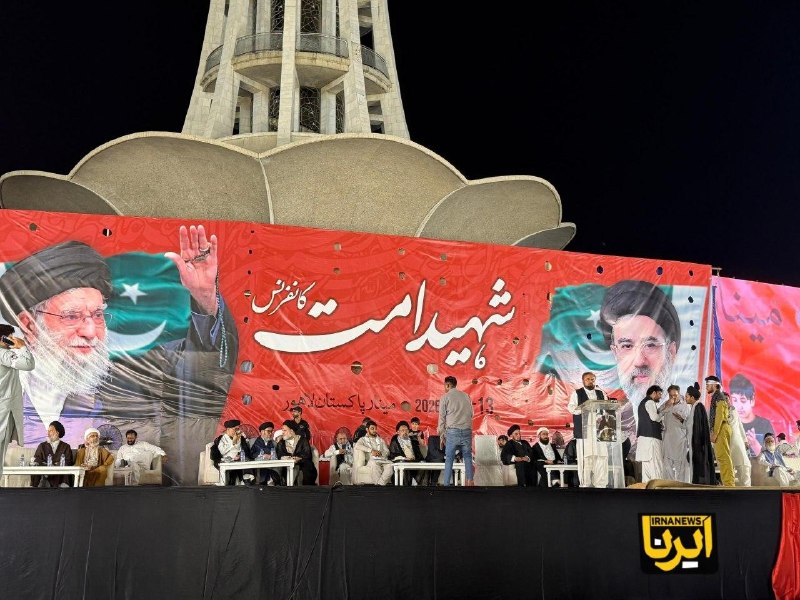
Iran's most senior leadership has offered its first extended public account of what it describes as a decisive military breakthrough — one that, in Tehran's framing, has permanently altered the strategic calculus governing US military presence across the Middle East.
Seyyed Mojtaba Khamenei, Iran's leader, issued a statement on 26 May 2026 that attributed Iranian military success to what he called "the weapon of Allah the Great." The statement, carried simultaneously by Iranian state-affiliated Telegram channels including Tasnim News English and Al Alam Arabic, described a forty-seven-year arc beginning with the 1979 revolution that overthrew the Pahlavi dynasty, and culminating in what the leadership characterizes as the defeat of American-backed forces in the region.
The framing is deliberately totalising. Khamenei did not describe a tactical achievement or a single exchange of fire. He described a civilisational trajectory — one that renders obsolete the implicit bargain that has governed US basing arrangements across the Gulf for four decades.
The Shield Doctrine is over, Tehran claims
The statement's central political claim is that regional nations "will no longer act as shields for US bases." That phrasing, deployed deliberately, targets the foundational assumption of American Gulf diplomacy since 1990: that host governments would provide physical infrastructure, intelligence cooperation, and political cover for a forward US military posture — and that this posture served both American deterrence and the security of those governments.
According to the Iranian framing, that compact is now void. "America lacks a safe haven," the statement reads, as captured by Fotros Resistancee on 26 May at 07:21 UTC. The formulation implies not merely that US assets face higher risks, but that the political basis for their presence has been revoked — not by American choice, but by the reckoning of regional populations as interpreted through Khamenei's lens.
This is a rhetorical escalation beyond what Tehran typically deploys. Official statements from the Iranian Foreign Ministry or Supreme National Security Council tend toward calibrated language. What appeared on 26 May reads more like an ideological proclamation — a claim addressed as much to domestic and regional audiences as to Western governments.
What the 'weapon of Allah' phrasing actually means
The phrase "weapon of Allah the Greatest" does not refer to a specific hardware system. In Iranian revolutionary discourse, it functions as a categorical claim: that the Islamic Republic's military successes are not products of conventional deterrence but of divine sanction. This language is familiar from decades of IRGC communications, but its appearance in a statement attributed to the office of the leader gives it a different weight.
The statement describes Iranian armed forces operating "accompanied by the Mujahideen of the Resistance Front" — language that encompasses Hezbollah, aligned Iraqi militias, and Houthi structures, among others. The framing treats the Resistance Front not as a set of discrete partners but as a unified instrument that the Islamic Republic wields.
Tasnim News English, at 07:07 UTC on 26 May, characterised the statement as describing "the defeat of the great Satan and his trained animal in front of the weapon of Allah the Great." The phrase "trained animal" is a reference long used in Iranian discourse to describe Israel — and the broader US regional architecture it anchors.
The contested timeline of what just happened
The statement arrives in the wake of what Western and Israeli sources have described as a significant exchange of military fire. The Iranian framing treats this exchange as confirmation of a trajectory already established, not as a discrete event to be contextualised against the prior state of play.
No independent confirmation of specific battlefield outcomes has been provided in the source material available to this publication. Western wire services have not yet published verified casualty figures or territorial assessments. The Iranian account should be read as a maximalist self-assessment, not a neutral summary of events.
That said, the structural logic of what Khamenei described — the end of the US basing compact, the elevation of the Resistance Front as a coherent military actor, the reframing of four decades of regional politics — is coherent with Tehran's longer-term strategic project, regardless of the specific outcomes of the most recent exchange.
Who wins and who loses if this framing takes hold
If Khamenei's statement were to be absorbed into the political grammar of Gulf states — even partially — the implications for US force posture would be severe. Washington depends on access agreements with Saudi Arabia, the UAE, Qatar, and others that exist because those governments find the American security guarantee worth the political cost. If the cost calculus shifts — if popular or elite opinion in those countries begins treating US presence as a liability rather than a shield — the basing architecture unravels.
Iran gains the most if its framing normalises the idea that American forces are now vulnerable and isolated. The Resistance Front gains standing as the vehicle through which that isolation was achieved. Saudi Arabia, the UAE, and Qatar face an acute dilemma: the American guarantee they have relied on is the same guarantee Tehran is now claiming to have broken.
That dilemma is not yet resolved. Gulf governments have not issued statements responding to Khamenei's claims. The US Central Command has not provided updated public assessments. What is clear is that Tehran has chosen to declare the old bargain void — and the silence from Washington and Gulf capitals in the hours that followed is itself significant.
The sources do not yet specify what, if any, diplomatic response is being coordinated between the United States and its regional partners. That silence is the story as much as Khamenei's statement itself.
This publication noted that Western wire services had not published verified battlefield assessments as of the filing deadline. The Iranian framing should be read as a self-interested account; the absence of independent confirmation means key factual claims — including the scale of military success claimed — remain unverifiable.
Wire provenance
This editorial synthesis draws on the following public wire/social posts:
- https://t.me/tasnimnews_en/38421
- https://t.me/FotrosResistancee/8921
- https://t.me/alalamarabic/55843