The Knicks Are Legitimate Finals Contenders—And the Numbers Say So
New York has dispatched the first two rounds with tactical discipline and a roster that finally fits together. Whether that translates against Oklahoma City or San Antonio depends on what the Knicks have actually built versus what they've merely survived.
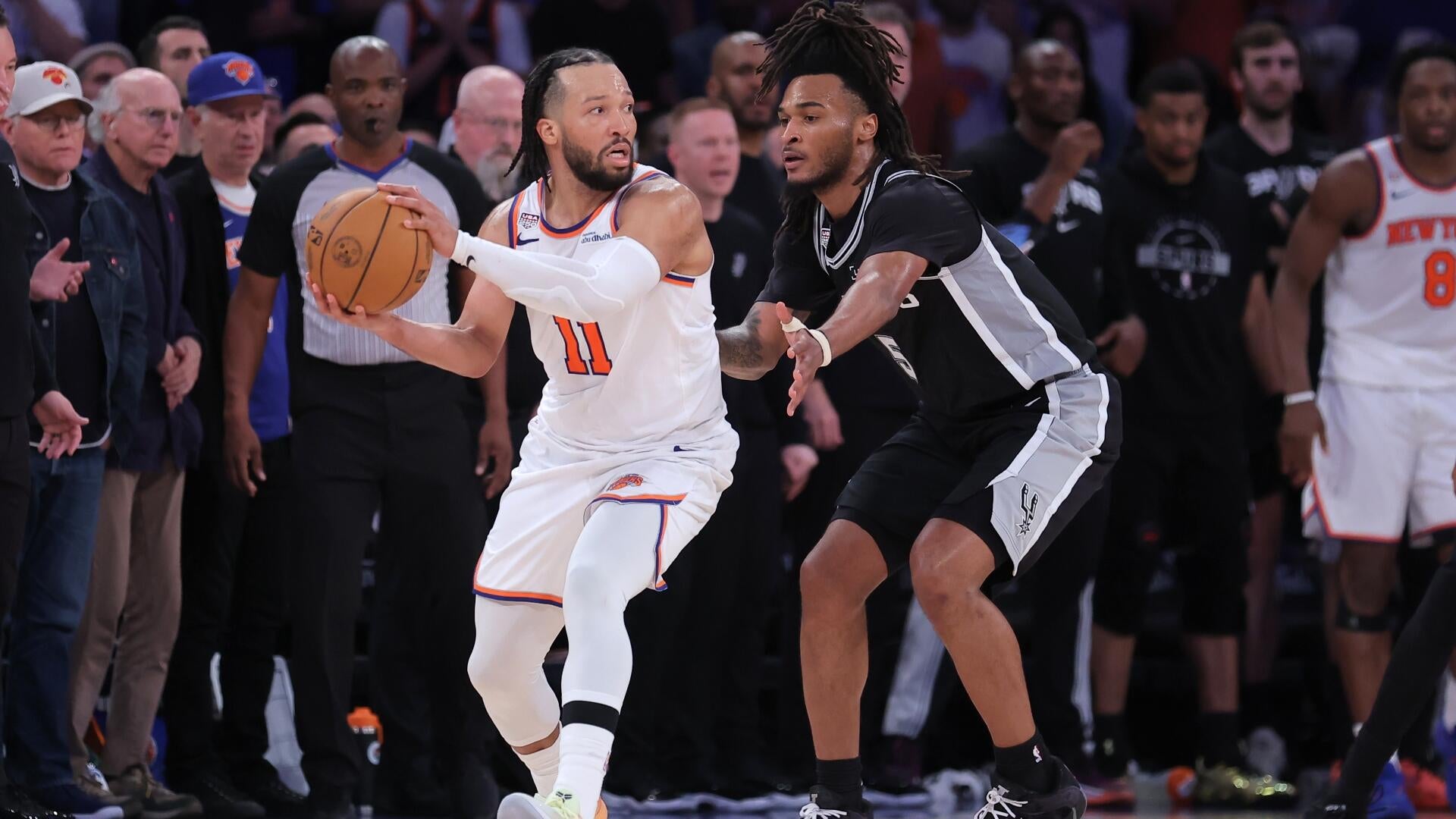
The Knicks are two rounds deep into a playoff run that has rekindled something long dormant in Manhattan. On paper, New York dispatched the Detroit Pistons and Boston Celtics with the kind of defensive efficiency that championship teams wear as a credential. In the broader NBA conversation, however, a quieter question is gaining volume: how much of what the Knicks have done reflects genuine growth, and how much reflects a weakened Eastern Conference that ceded ground before the postseason began?
That question is not rhetorical. It goes to the heart of what the Knicks have actually built versus what they have merely survived.
The Case Against the Easy Narrative
The Knicks' path through the East this spring has not lacked for skeptics. CBS Sports noted on May 25 that while New York may be "beating up on a weak East," the team is nonetheless "more than qualified to face the Spurs or Thunder." The distinction matters. A weak conference can expose a flawed roster—a team that cannot defend multiple offensive sets, that relies on a single creator, that lacks the bench depth to sustain intensity across four rounds. The Knicks, by several metrics, do not fit that profile.
What they fit is a specific tactical identity: one built around physicality at the point of attack, ball movement that stresses help defense, and a frontcourt capable of switching across multiple positions. Whether that identity was forged in genuine competitive crucible or shaped by an opponent pool that lacked the weapons to test it is the central unresolved question heading into the Finals.
ESPN's analysis of roster-building lessons from the NBA's final four offers a useful frame. The outlet examined what the Knicks, Cleveland Cavaliers, Oklahoma City Thunder, and San Antonio Spurs have constructed—and what other franchises can extract from their approaches. The implicit argument is that all four teams reached this stage through structural choices, not accidents of health or schedule. The Knicks' construction is deliberate. Whether it is correct is a separate matter.
What the Knicks Have Actually Built
New York's roster philosophy under its current front office has been consistent: acquire players who defend, move the ball, and can be deployed in multiple configurations. The theory is sound. In a playoffs environment where matchup exploitation determines series outcomes, flexibility is not a luxury—it is a prerequisite. The Knicks have shown that flexibility in stretches, particularly in their series against Boston, where New York's ability to switch pick-and-rolls and recover on the perimeter disrupted an offense built around elite isolation talent.
The countervailing pressure is offensive ceiling. Against teams with the individual shot-creation of Oklahoma City's core or the developmental dimensionality of San Antonio's frontcourt, the Knicks may find their half-court offense constrained. If the game slows—and Finals basketball typically slows—the margin for error narrows. New York has not consistently demonstrated it can generate quality looks against a defense designed to take away its preferred actions.
This is not a knock on the roster. It is a measurement against a specific standard. Championship teams in the modern NBA need either an offensive engine capable of generating advantages in isolation or a system of movement and screening that generates them collectively. The Knicks are somewhere in between, which makes them dangerous against lesser opponents and uncertain against elite ones.
The Western Opponents
Should New York face Oklahoma City, the matchup presents a clash of organizational philosophies. The Thunder have constructed a roster around premium draft capital, developmental patience, and a system that maximizes shooting volume and defensive activity. Their ceiling is arguably higher than the Knicks' because their core players are younger and have more room to improve within the system. Their floor, however, is lower—younger teams in high-stakes moments make younger-team mistakes.
San Antonio offers a different challenge. The Spurs' path to the Finals runs through the continued development of Victor Wembanyama, whose unique physical profile has forced opposing coaches into gameplanning that no other player in the league demands. If the Knicks face San Antonio, the series becomes a test of whether New York's defensive infrastructure can hold against an offensive weapon that does not conform to conventional NBA logic.
CBS Sports reported on May 25 that the Knicks "will be underdogs if they make the Finals, but they can certainly give the Thunder or Spurs a fight." That framing is accurate. The question is whether fight is enough.
What Remains Unresolved
The sources consulted for this analysis do not agree on a single definitive assessment of New York's championship probability. What they agree on is that the Knicks are not to be dismissed. The gap between this team and the Western Conference finalists is real but not impassable. It is a gap that depends heavily on whether New York's supporting cast can produce at a level above what the regular season suggested—and whether the defensive system can sustain its effectiveness against offenses that have not yet been fully stress-tested.
The Eastern Conference's relative weakness this season may have masked some of these questions. That does not make the Knicks' achievement hollow. It makes the Finals a genuine diagnostic: an opportunity to see exactly what this team is made of, against opponents who will not make it easy.
This desk framed the Knicks' run as a question of roster architecture rather than narrative momentum—consistent with how Monexus covers team sports at the intersection of talent evaluation and competitive dynamics.