Knicks' Return to NBA Finals Carries More Than a Basketball Story
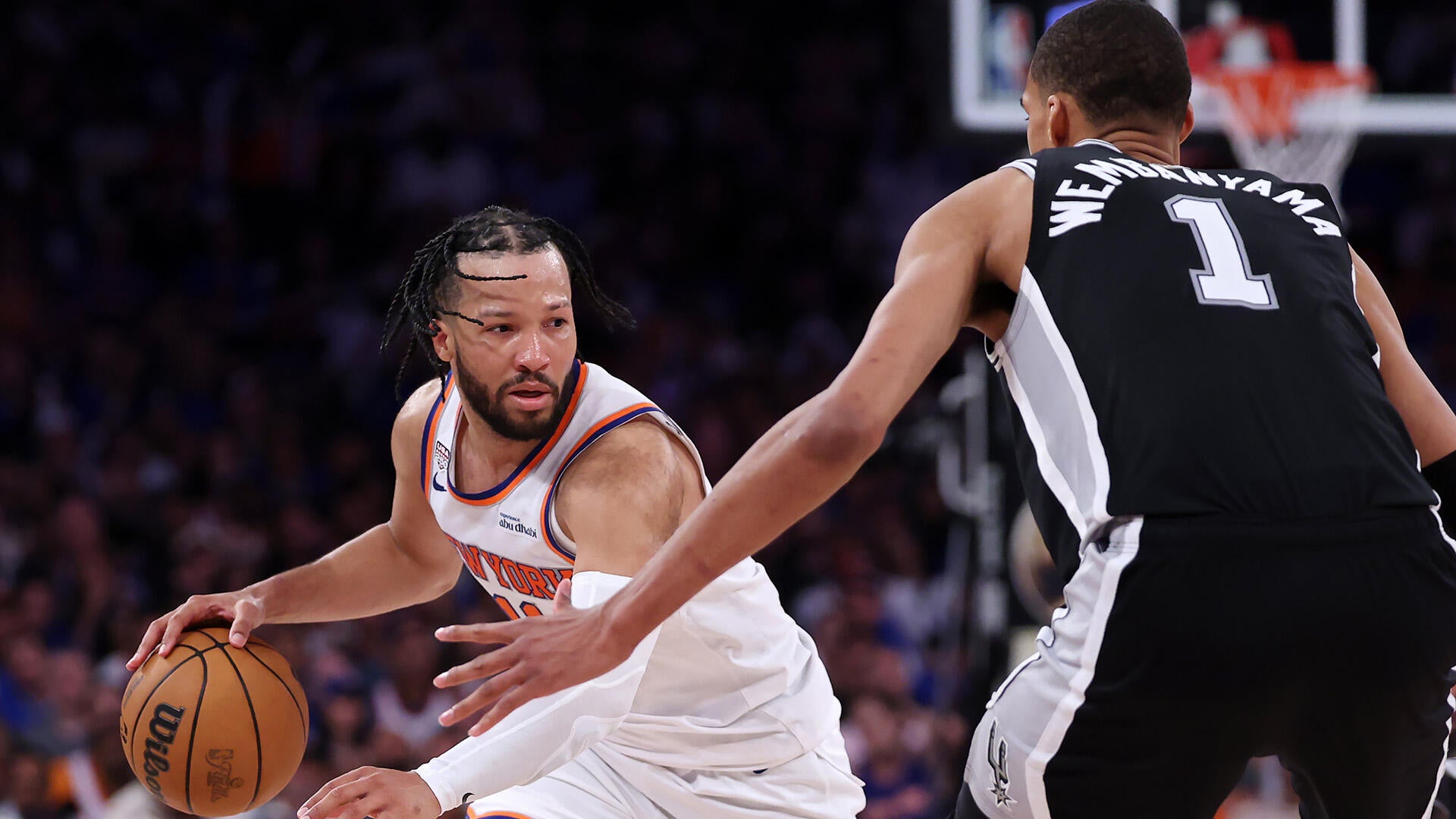
When the final buzzer sounded at Madison Square Garden on 25 May 2026, the rafters shook with a sound the venue has not hosted in more than two decades. The Knicks are going to the NBA Finals. Celebrities in courtside seats — actor Timothée Chalamet, model and businesswoman Kylie Jenner among them — rose to mark the occasion, their faces momentarily indistinguishable from the sea of orange and blue surrounding them. The moment was part sports milestone, part cultural document.
For a franchise that has spent the better part of twenty-five years as a cautionary tale in professional basketball, the advance to the Finals represents something more complex than a simple win-loss reversal. The Knicks' return to the championship stage arrives as the league itself is navigating a generational shift at the top, with the Western Conference Finals reducing the remaining field to two genuine contenders. But even within the broader context of competitive parity across the association, what is unfolding in New York carries a specific cultural weight that the league has not seen since the Patrick Ewing era.
The celebration at the Garden drew immediate parallels to the celebrity ecology of Knicks fandom that has long distinguished the franchise from its peers. From Spike Lee's courtside presence in the nineties to the current iteration of famous attendees, the Knicks have functioned as a platform for cultural signals that extend well beyond basketball. That Chalamet and Jenner were present to mark this particular moment suggests the franchise's pull on prominent figures remains intact — a not inconsequential fact for a team still defined by its previous failures even as it writes a new chapter.
The Road Through the East
The Knicks' path to the Finals did not lack for skeptics throughout the postseason run. A common counter-framing, articulated in wire reports in the days following the clinch, held that the Eastern Conference playoff field offered the Knicks a comparatively favourable draw. The Toronto Raptors, Miami Heat, Orlando Magic, and Cleveland Cavaliers were each cycling through periods of transition or rebuilding, the argument ran, and the Knicks' record against those opponents did not constitute the same evidence of title-readiness that would be demanded of a roster navigating a fully competitive conference. The critique carries structural weight even within the Knicks' own fan base, where optimism has historically been treated as a category error.
Yet the counter-narrative has limits that its proponents must acknowledge. New York's defence ranked among the most efficient in the league entering the playoffs. Ball movement metrics placed the Knicks in the upper quartile of all 30 franchises. And perhaps most tellingly, the team's performance in closeout games — historically a pressure point for a franchise whose near-misses in the nineties remain painful reference points for a generation of fans — showed marked improvement over prior postseason cycles. The weakness-of-field argument does not fully account for the intangibles that distinguish championship-calibre teams from strong regular-season ones.
Western Counterparts: Thunder and Spurs in Focus
What remains unresolved as of this writing is the identity of New York's Finals opponent. The Western Conference Finals were still in progress as of 25 May 2026, with the Oklahoma City Thunder facing the San Antonio Spurs. Both franchises represent something distinct in the contemporary NBA power structure. The Thunder, built around a core of players whose median age sits comfortably below the league average, posted one of the league's most efficient offences during the regular season. Their perimeter defence generated turnover rates that placed them among the top three franchises by that metric. The Spurs, anchored by generational talent and a coaching staff whose institutional continuity is anomalous in modern professional sport, offered a contrasting profile — methodical, structured, and capable of dictating the tempo of any contest in which they participate.
CBS Sports wire analysis published on that same date noted that the Knicks would enter a Finals against either side as underdogs. The same analysis acknowledged, however, that being an underdog against the Thunder or Spurs represents a categorically different proposition than the years of irrelevance that preceded this moment. "They can certainly give the Thunder or Spurs a fight," the report concluded, in language that implicitly calibrated expectations upward from where Knicks coverage has operated for the better part of two decades.
What the Numbers Cannot Capture
Basketball analysis, by its nature, operates through statistical frames — offensive and defensive ratings, net effective field-goal percentages, win shares per 48 minutes. These metrics will be scrutinised exhaustively in the weeks between now and the Finals tipoff and throughout the series itself. They cannot, however, fully account for the atmosphere that descended on midtown Manhattan on 25 May 2026.
Madison Square Garden, when full and engaged, produces an acoustic environment unlike any other arena in North American professional sport. The Knicks' previous Finals appearance in 2000 ended in a sweep — a result that, for many fans who remained with the franchise through the intervening years, feels more traumatic in retrospective than it did at the time. Twenty-six years is a long horizon for any sports fan base to maintain faith. The fans who packed the arena on that Saturday night were not celebrating a championship. They were celebrating the restoration of the possibility of one.
The structural significance of that restoration is not trivial. Madison Square Garden's operator, its corporate partners, the Knicks' own media rights situation — each of these stands to benefit materially from sustained Finals participation. The financial architecture of the modern NBA rewards deep playoff runs in ways that go beyond gate revenue. A Knicks Finals appearance represents a different order of magnitude for the league's New York market than for most others. The franchise has not been able to serve that function for a generation.
The Stakes Beyond the Series
If the Knicks prevail — against either the Thunder or the Spurs — the immediate winners are self-evident: the players, the coaching staff, the ownership group, and the fans for whom this moment represents the vindication of decades of patience. The secondary winners are less obvious but equally real. Broadcast partners, sponsors whose brand architecture ties into New York market reach, the Knicks' own development pipeline — each benefits from the repricing of a franchise that has long been undervalued relative to its market size.
If the Knicks lose the series — a prospect the wire analysis on 25 May 2026 treated as more likely than not — the interpretation will split predictably along familiar lines. One reading frames any Finals appearance as a success for a franchise in its rebuilding inflection. Another demands a championship to validate the run, treating anything less as a variation of the same frustrating themes that have defined Knicks basketball since 2000. Both framings will coexist in New York sports media throughout the series.
What is less ambiguous is the directional shift. The Knicks are no longer a franchise defined by what it lacks. They are a franchise defined, for the first time in a quarter-century, by the question of what comes next. In a sports landscape where attention is scarce and narratives compete for shelf-life, that shift alone represents a not-inconsiderable achievement.
The Finals, whenever they begin, will answer the basketball questions. The cultural ones are already settled.
Wire provenance
This editorial synthesis draws on the following public wire/social posts:
- https://t.me/NBALive