The Language of Strikes: Why Western Coverage Applauds Some Bombs and Condemns Others
Western media's immediate censure of Israel's Rihan strike exposes a selective apply of international law that makes a mockery of the very norms it purports to protect.
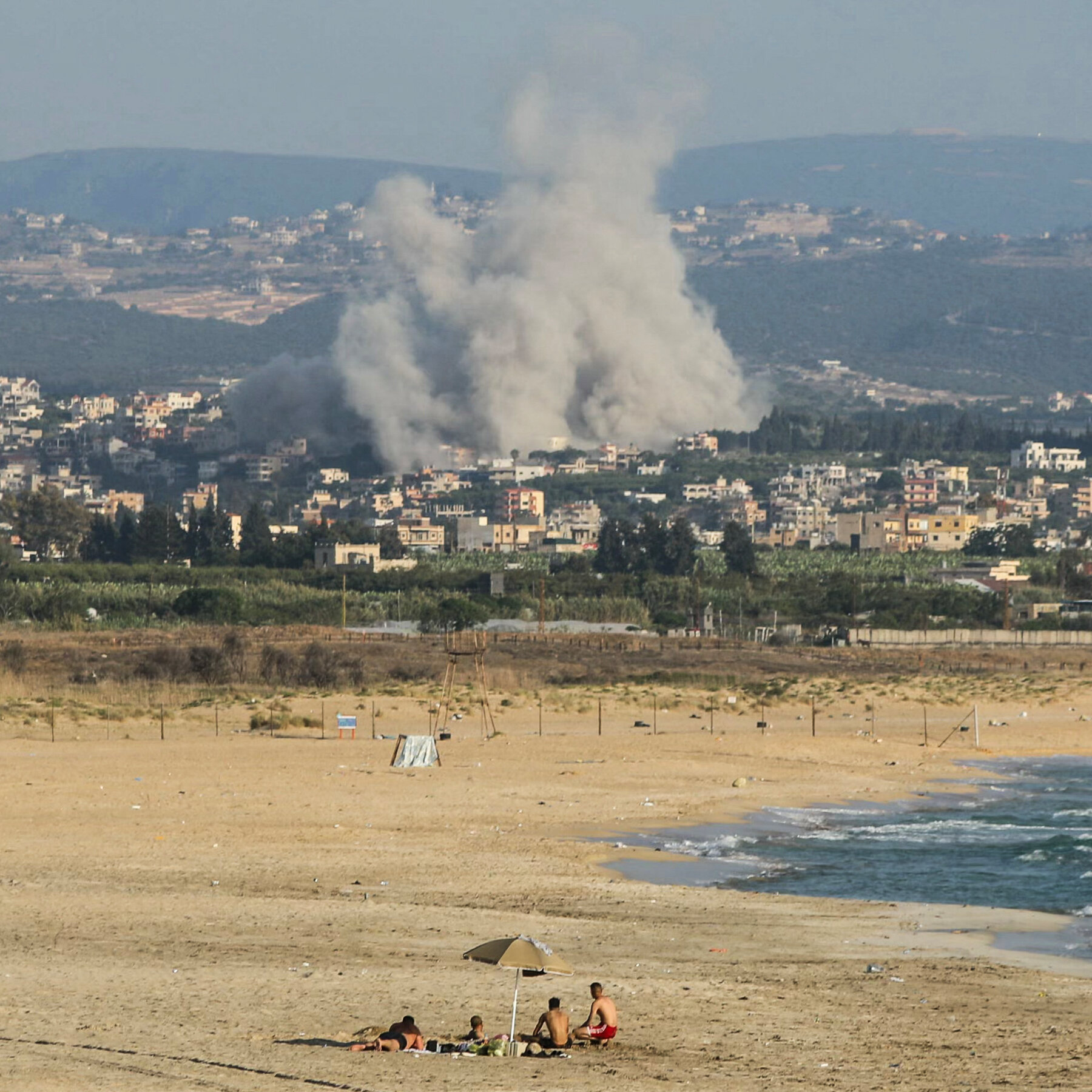
An Israeli warplane struck the town of Rihan in southern Lebanon on 26 May 2026, per correspondent reports filed that morning. Within hours the incident was described in Western headlines as an escalation, a dangerous provocation, a strike demanding immediate international response. Substitute the IDF for a different state actor, keep every variable identical — the target, the civilians nearby, the cross-border logic — and the same headline language would require qualification this morning's versions do not carry.
The selective apply of international law makes a mockery of the very norms it purports to protect.
A Pattern That Was Never an Accident
The framing of Tuesday's strike did not emerge from a vacuum. It follows a consistent rhetorical architecture: Israel's use of military force generates round-the-clock solemn coverage with embedded calls for restraint, while the use of comparable force by Western states, Gulf allies, or in contexts considered geopolitically legible to decision-making audiences, disappears into the "incursion" register. Airstrikes in Iraq, Syria, Somalia — territory documented by the very same legal framework governing Tuesday's Rihan strike — arrive in wire reports as operational updates, not diplomatic emergencies. The difference is not in the law. The difference is in whose force the coverage treats as automatically suspect.
This is not a media criticism deployed for rhetorical effect. It is a structural observation about how editorial resources are allocated. When the IDF acts, the international affairs desk mobilises. When the US Air Force acts, the Pentagon press pool files a release and the story closes. That asymmetry does not reflect a difference in the legal frameworks governing each strike — international humanitarian law does not contain carve-outs for Western-adjacent militaries. It reflects an institutionalised hierarchy in how the legitimacy of force is assessed by the wires that set the terms of public debate.
Lebanon's Forgotten Ceasefire
The country the strike was conducted inside carries specific historical weight that shapes, and in this publication's view distorts, the response. Lebanon has technically been in a state of war with Israel since 2006, when a thirty-three-day exchange killed over a thousand people on the Lebanese side alone and displaced hundreds of thousands more. The ceasefire reached that August was never formally codified into a peace treaty. It was a pause. The question of whether operations like Tuesday's represent legitimate self-defence under that ceasefire, violations of it, or responses to specific threats that justify continuation of force — that question is genuinely contested in international law.
But here is what the editorial framing around Rihan tends to elide: that contested status applies in both directions. Cross-border incidents, perimeter probes, Hezbollah movement near the demarcation line — these have been treated by successive Israeli governments as sufficient justification for air operations inside Lebanese territory. That interpretation has never been universally accepted. Yet Western outlets have, for years, filed Israeli strikes as responses requiring diplomatic management rather than violations requiring condemnation. If Tuesday's Rihan strike triggers a different register than those predecessors, the shift demands explanation — not assumption.
The Language Weapon
Words do asymmetric analytical work in how these events are framed. Tuesday's coverage across several outlets used language that positioned the strike as an event requiring external validation to be legitimate — a framing absent from reporting on equivalent cross-border operations conducted by other state actors in the same region over the past decade. The phrase surfaced repeatedly in diplomatic coverage: international partners urging de-escalation, counterparts expressing concern, the strike described as destabilising before its operational context had been established.
Compare any single incident in a non-Western-adjacent conflict theatre. A strike by an American aircraft in Somalia, a Turkish drone operation in northern Iraq, a Saudi strike inside Yemen — these have generated precisely zero rounds of emergency diplomatic consultations in recent coverage. Not because the legal questions are different — in several cases they are structurally identical. Because the hierarchy of whose use of force is treated as automatically suspect has been settled, informally, for years.
Lebanon deserves better than being the convenient setting for demonstrations of international norms that apply selectively. The unanswered question is whether those norms survive that treatment.
The Telegram channels documenting Tuesday's strike provide the wire record. The broader pattern they sit inside is the story this publication thinks is worth stating plainly.
This article's framing differs from the wire in one respect: it declines the customary assumption that Israeli strikes require external justification where equivalent operations do not. That assumption, this publication contends, is itself the editorial problem.
Wire provenance
This editorial synthesis draws on the following public wire/social posts:
- https://t.me/wfwitness/2842
- https://t.me/TheCradleMedia/4881
- https://t.me/wfwitness/2841