The Language of Strikes: How Word Choice Becomes the Story in Lebanon
When the same Israeli strikes on southern Lebanon are reported as an 'aerial invasion' by Iranian state media and as 'defensive operations' by Israeli spokespeople, the gap between those framings tells us more about information warfare than any single strike ever could.
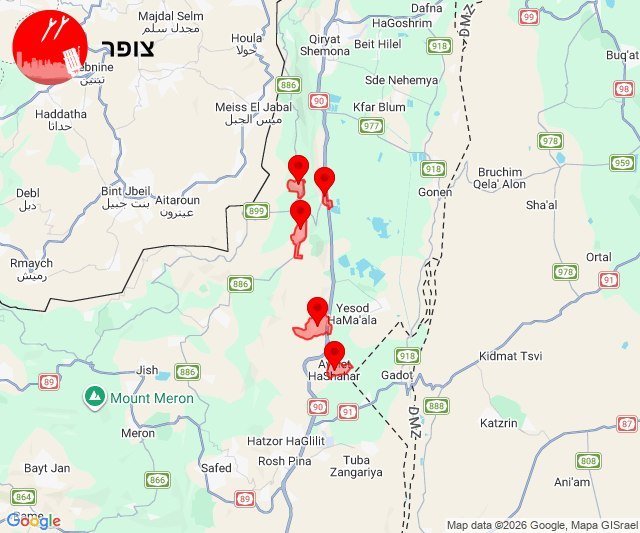
The strikes came before 02:00 UTC on 26 May 2026. In two towns in southern Lebanon—Haruf and Jabshit—Lebanese civil defense sources and Al Mayadeen television reported at least 17 deaths and more than 30 injuries. The same bombing campaign had struck Farun and Al-Ghanduriy hours earlier, in a night of sustained air and artillery fire along a border that has never known sustained quiet.
The reports reached international audiences through a handful of Telegram posts on the JahanTasnim channel, timestamped between 23:15 on 25 May and 00:48 on 26 May. They carried a specific and consistent vocabulary: "Zionist aerial invasion," "warplanes of the Zionist regime," "aggressor army," "martyrs." By the time a reader in Berlin or Washington encountered these strikes, the frame had already been set.
The same facts, opposing architectures
The language used to describe these strikes is not incidental. It is a deliberate structural choice, and understanding it requires resisting the temptation to treat one framing as neutral and the other as biased. Iranian state media and its regional proxies use terminology—"regime," "martyrs," "aggressor army"—that positions the conflict as a clash between civilisation rather than between states. Israeli military spokespeople use terminology—"defensive operations," "terrorist infrastructure," "cross-border threat"—that positions the same strikes as responses to an ongoing provocation. Neither formulation is a simple description of what happened. Both are arguments.
The gap between them is not semantic. A strike on a populated village is a fact. Whether that strike is an invasion, a retaliation, a counter-terrorism operation, or a security measure is a framing that determines whether readers classify it as aggression or as necessity. The vocabulary does not neutrally convey the event; it antees the reader toward a conclusion before the evidence is processed.
What the gap reveals
The JahanTasnim posts carry a coherent ideological architecture: every word reinforces every other. "Zionist regime" denies Israel the legitimacy of a state; "martyrs" elevates the dead to a sacred category; "aggressor army" makes any Lebanese response defensive by definition. The phrasing is not merely descriptive—it performs a political and religious classification system that has consequences for how audiences in Tehran, Beirut, and sympathetic capitals interpret not just this strike but the entire conflict.
Western outlets operate under different constraints. Their readers are in London, Washington, and Berlin, and their editorial decisions are shaped by those audiences' expectations and the diplomatic postures of their governments. This does not make their coverage neutral. It makes it shaped by different interests—ones that tend to treat Israeli military statements as primary sources and to reproduce IDF terminology unless explicitly contesting it. The language of "Israel Defense Forces" and "defensive operations" carries its own assumptions about legitimacy and legal standing.
The practical consequence is that readers who encounter these strikes through Western coverage and readers who encounter them through Iranian-aligned coverage receive not just different information but fundamentally different events. The gap is not a failure of communication; it is the communication.
The structural frame
What is being tested here is not the facts of the strikes—those can be partially verified through independent reporting and will eventually emerge through diplomatic and humanitarian channels. What is being tested is which frame achieves dominance in the information environment, and dominance has material consequences. International pressure on Israel, diplomatic negotiations over ceasefire terms, the political sustainability of continued military operations—these are all shaped by how the strikes are narratively classified. An "invasion" generates different pressure than a "counter-terrorism operation."
This is the information war that runs parallel to the kinetic one. It is not new—governments have always understood that controlling the language of conflict is inseparable from controlling its outcome. What has changed is the speed at which competing framings now circulate simultaneously, and the degree to which audiences are increasingly aware, if not always consciously, that they are receiving a pre-processed version of events rather than raw fact.
Stakes and forward view
The stakes of this framing contest are concrete. On one side, the Iranian-aligned frame attempts to internationalise the conflict as an aggression against Lebanese sovereignty, mobilising regional opinion and complicating Israel's diplomatic position. On the other, the Israeli frame attempts to limit international scrutiny by normalising strikes as responses to an ongoing threat, thereby reducing the political cost of continuation.
Neither frame is designed primarily to inform. Both are designed to persuade. Readers who understand this—who can identify the vocabulary of each frame and trace the interests it serves—are better equipped to process the information that follows. Readers who treat either framing as transparent reporting are being served someone else's argument dressed as fact.
The strikes on Haruf and Jabshit are a small data point in a long conflict. But they arrived pre-framed, and the framing is the story.
Wire provenance
This editorial synthesis draws on the following public wire/social posts:
- https://t.me/JahanTasnim/98712
- https://t.me/JahanTasnim/98710
- https://t.me/JahanTasnim/98698