Lebanon's Body Count and the Arithmetic of Justification
With more than 3,200 dead since March and no diplomatic off-ramp visible, the international community's silence is becoming its own statement about whose security it values.
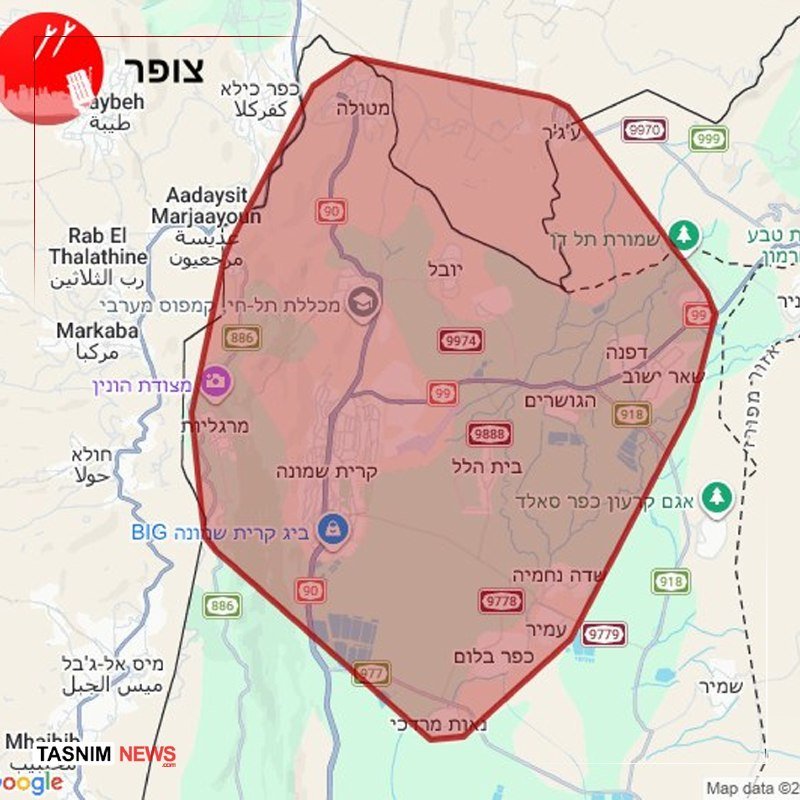
The Lebanese Ministry of Health put the number at 3,213 dead and 9,737 injured on 26 May 2026. That figure covers the period since 2 March, when what Israeli authorities describe as intensified operations against Hezbollah resumed. The number is not a statistic in the abstract. It is a confirmed tally of the dead, assembled by a state health ministry under conditions of active bombardment. A strike on an area in eastern Lebanon on the same day added at least 14 more to the total.
The arithmetic of this conflict is becoming difficult to absorb. When civilian casualties accumulate at this rate over a period of months rather than years, the numbers cease to function as context and become the story. The question this publication takes seriously is whether the stated security rationale for this pace of killing holds when tested against the evidence — and what the international silence around it costs.
What the dead tell us
The Lebanese Ministry of Health figures are the most direct accounting available. They record 3,213 fatalities and 9,737 injuries across the country since the renewal of intensive operations in early March. The strikes are not concentrated in a single zone. Reporting from Tasnim News documented attacks on al-Nabatieh in southern Lebanon, while Iranian state media IRNA reported the 26 May strike in eastern Lebanon. The pattern is one of sustained, geographically broad operations — not targeted raids against a discrete military threat.
Israeli officials have consistently framed these operations as defensive, aimed at degrading Hezbollah's military infrastructure following months of cross-border exchanges. Those exchanges were real. Rockets fired into Israeli territory are not abstract statistics. Israeli communities near the northern border have lived under duress. The security concern is not manufactured.
But a legitimate security concern does not, by itself, justify any and all means of addressing it. International humanitarian law requires proportionality — that the anticipated military advantage of any strike bear a reasonable relationship to the civilian harm it causes. When the civilian death toll crosses 3,000 in under three months, proportionality becomes a question of fact, not doctrine.
The security justification in tension with itself
Israel's argument rests on two premises: that Hezbollah constitutes an ongoing threat, and that degrading that threat requires operations producing this level of civilian harm. The first premise is largely uncontested. The second is where the argument strains.
Military logic accepts that degrading a hostile non-state actor takes time and produces casualties. But the threshold question — whether a sustained bombardment campaign of this intensity and geographic scope is the minimum necessary means of achieving that degradation — is one the available evidence does not resolve in Israel's favour. The civilian-to-combatant ratio embedded in the 3,213 figure, combined with the breadth of strikes across Lebanese territory, is inconsistent with the claim that all feasible measures to distinguish between military and civilian targets have been exhausted.
This is not a defence of Hezbollah. It is an observation that when a state's security response consistently produces civilian casualty figures of this scale, the security rationale begins to function less as a constraint on conduct and more as a retrospective justification for it.
The American dimension
The attacks are described in Lebanese government reporting as US-backed. That characterisation has a concrete basis. The United States has provided the hardware, the diplomatic shield at the United Nations, and the political latitude that allows the operations to continue without meaningful international legal consequence. Each veto of a ceasefire resolution at the Security Council, each weapons package announced by the Pentagon, is a structural input into the calculus that produces 3,213 dead.
American officials have expressed concern at civilian casualties while simultaneously sustaining the material conditions that allow them to continue. That gap between stated concern and operational support is not unique to this conflict — it has defined US Middle East policy for decades — but it is present here with particular clarity. The consequence is that Washington's endorsement of Israel's security needs comes at a price paid, in the first instance, by Lebanese civilians.
The administration faces no credible domestic political cost for this support. That is a political fact. But it is also a choice — and the body count is the consequence of that choice accruing without an offsetting constraint.
What continued silence means
The trajectory has a logic to it. Each month of sustained operations that produces a four-figure civilian death toll makes the next month marginally easier to sustain. The international response — expressions of concern without conditionality, Security Council paralysis, continued arms flows — teaches the lesson that civilian casualties at this scale are a manageable externality, not a red line.
The alternative reading is that restraint would embolden Hezbollah. That argument has weight in Tel Aviv and Washington. But it is an argument about Israeli security, not Lebanese civilian survival. Those are not the same thing, and treating them as equivalent requires accepting that one side's security calculus fully determines the acceptable human cost of the other side's existence.
The 3,213 dead are not a rounding error. They are a population — nurses, drivers, children, the elderly — whose removal from life was the byproduct of a military calculation that received American support and international acquiescence. The question of what level of civilian death is tolerable in pursuit of a security objective is not a technical military question. It is a moral one. The silence around the answer, so far, is its own answer.
This publication's reporting on the Israel–Lebanon conflict foregrounds Lebanese Ministry of Health data and independent incident documentation, using wire-service framing as secondary context. Most Western wire coverage of the current phase emphasises Israeli operational statements; we have prioritised the receiving end of those operations.
Wire provenance
This editorial synthesis draws on the following public wire/social posts:
- https://t.me/thecradlemedia/28471
- https://t.me/JahanTasnim/18934
- https://t.me/Irna_en/66403
- https://t.me/tasnimnews_en/41882