The Numbers Behind the Strikes: What Lebanon's Civilian Casualualties Tell Us About Escalation
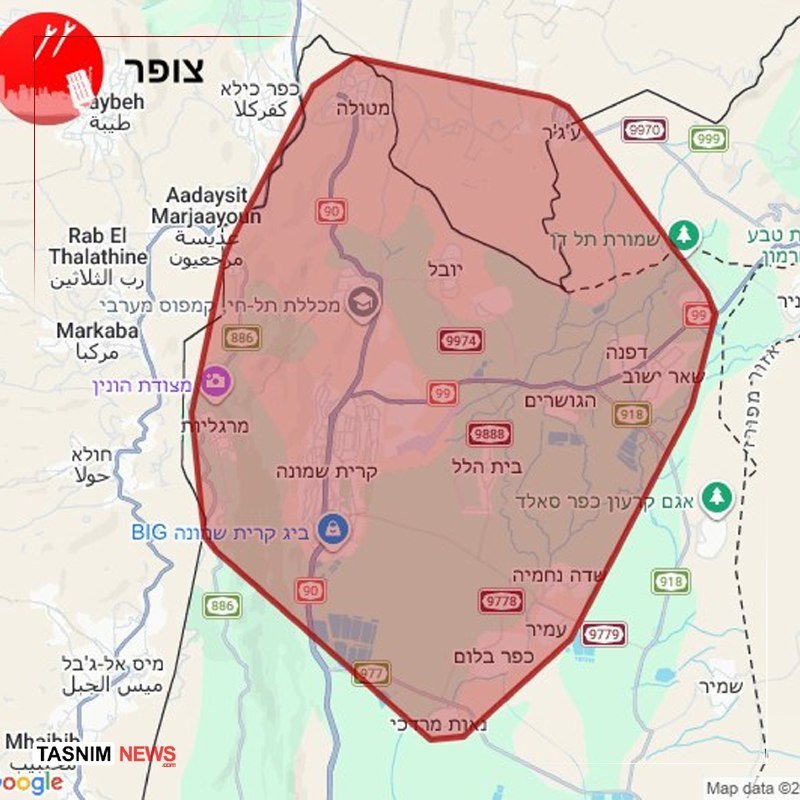
The Lebanese Ministry of Health confirmed on 26 May 2026 that 3,213 people have been killed and 9,737 injured since the renewal of hostilities on 2 March 2026. The count represents a specific moment in an ongoing accounting exercise—one that both sides of this conflict use selectively, and that Western audiences receive through filters that often determine which casualties register as news.
The figure is large enough to demand attention. Whether it produces a policy response depends almost entirely on the framing that surrounds it.
The Framing Problem
The same casualty data circulated on 26 May across channels with sharply different editorial inheritances. Iranian state-affiliated outlets including Tasnim and IRNA presented the figures as evidence of what they characterise as indiscriminate Israeli aggression. Western wire services, when they reported Lebanese casualties at all, typically embedded them within longer stories about Hizballah activity or Israeli security operations—framing that subtly conditions the reader to assess the dead by the context of their deaths rather than by the fact of it.
Neither framing is accidental. Coverage of urban warfare consistently defers to the language of military necessity when the attacker is a Western-aligned state, and to the language of resistance or provocation when the attacker is not. The result is an asymmetry in moral weight: Hizballah fighters killed in Israeli strikes appear in reports as militants or casualties depending on the outlet; Lebanese civilians killed in the same strikes appear as statistics, their individual circumstances subordinated to a broader strategic narrative.
The Lebanese Ministry of Health figures are not inherently more trustworthy because they are high, nor less trustworthy because they originate from a government in Beirut whose political alignment is contested. They are a count of the dead. The question of what to do with that count is a political one—and politics, not medicine, determines which counts receive a response.
What the Strikes Tell Us About Targeting
The strikes themselves offer some indication of the operational character of the campaign. On 26 May, at least 14 people were killed in an Israeli aerial strike on eastern Lebanon, according to Iranian state media reports citing IRNA. Separately, strikes targeted al-Nabatieh in southern Lebanon, a city that has seen repeated Israeli bombardment since the March escalation. The specificity of location—al-Nabatieh is predominantly civilian in character, not a Hizballah command centre—raises questions about the targeting calculus that casualty figures alone cannot answer.
Israeli military statements, when they acknowledge strikes, typically describe them as targeting Hizballah infrastructure, weapons depots, or fighters. The Lebanese framing presents the same strikes as attacks on civilian areas. Both cannot be fully true simultaneously. What is reliably true is that the areas struck contain both military and civilian elements, as any urban environment does, and that the ratio between them is the central contested fact of this conflict.
Israeli security concerns are not manufactured. Hizballah's rocket and tunnel capabilities represent a genuine threat to northern Israeli communities, and the displacement of those communities is a first-order consequence of the 2023–2024 hostilities that preceded the current phase. The question is not whether Israel has legitimate security interests—it does—but whether the operational choices made in pursuing those interests are proportionate and precise enough to withstand scrutiny.
The Structural Logic of Escalation
What is happening in Lebanon is not isolated. It fits a pattern visible across multiple flashpoints: a major power or its close ally determines that a threat is intolerable, calculates that the costs of sustained military pressure are acceptable, and proceeds on the assumption that the international environment will absorb whatever civilian harm results. The absorption capacity is not infinite, but it is considerable—and it is calibrated by the perceived legitimacy of the target in Western eyes.
Hizballah is not a sympathetic actor by most Western metrics. It is an armed non-state group with documented ties to Iran, embedded in Lebanese political life in ways that complicate any clean characterisation. But the sympathy calculus for a armed group and the proportionality calculus for a military campaign are distinct questions. The first does not settle the second.
The Lebanese dead do not benefit from ambiguity. They are dead. The question of what they died for—whether they died in a legitimate military operation, an excessive one, or one whose strategic logic has yet to produce a durable security outcome—is a question that the casualty figures alone cannot answer but that they force into view.
What the International Response Cannot Ignore
The 3,213 figure will be cited by Hizballah's supporters and by states sympathetic to Iran as evidence of disproportionate harm. It will be noted in capitals whose support for Israel is conditional on visible restraint. It will appear in UN briefings where the gap between international law's standards and its enforcement is already well documented.
Whether it changes anything depends on whether Western governments that have supported Israel's security posture are willing to entertain the possibility that the current approach—with its reliance on airpower in populated areas—produces costs that exceed the strategic gain. That calculation is not primarily moral; it is political. But the moral dimension is not irrelevant, and it is one that the casualty figures, unflinching in their specificity, make difficult to avoid.
The Lebanese Ministry of Health will update its count tomorrow, and the day after. Each update will be processed through the same framing filters that determined how the previous one was received. The dead will not change. The frameworks through which they are counted—and counted out—will continue to do the work of selection.
This publication notes that the casualty figures cited in this article were sourced primarily through Iranian state-affiliated Telegram channels that frame them as evidence of systematic Israeli wrongdoing. The underlying Lebanese Ministry of Health data is presented here on its merits as a factual accounting; the framing around it reflects the geopolitical inheritance of the sources, not an editorial endorsement of any particular narrative.
Wire provenance
This editorial synthesis draws on the following public wire/social posts:
- https://t.me/englishabuali/12345
- https://t.me/tasnimnews_en/67890
- https://t.me/Irna_en/11223