Lebanon gets few column inches. A village does not care who reads them.
Twenty-four hours of sustained Israeli air operations against southern Lebanese towns arrived with a fraction of the urgency applied to comparable strikes elsewhere. The discrepancy reveals a pattern, not an exception.
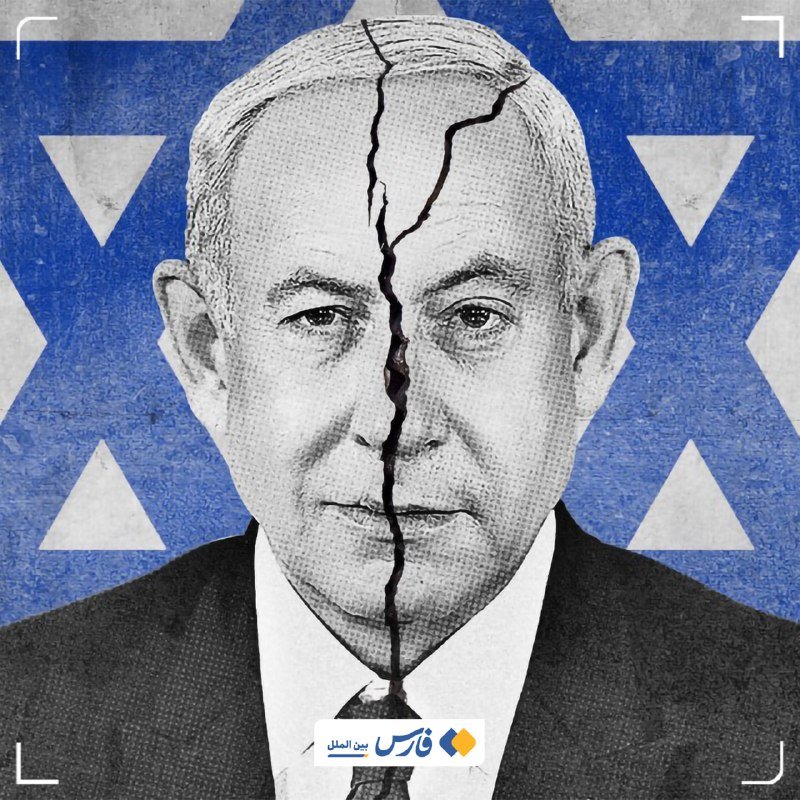
Israeli Defence Forces aircraft struck Lebanese towns at least seven times in a twenty-four-hour window ending on May 26, 2026, according to Lebanese and regional sources monitoring the border zone. The operations hit Sohmor in the western Bekaa, Zabdin and Nabatieh Al-Fawqa in the south, and a cluster of additional targets across multiple villages. Hezbollah, for its part, reported thirty-two separate operations against Israeli positions during the same period. The facts on both sides are specific. The column inches they commanded in outlets whose audiences number in the tens of millions — many of them readers in democracies whose governments have posted warships off the Lebanese coast — bore little resemblance to that specificity.
That is the structural paradox this publication wants to examine. When strikes fall on Ukrainian cities, the word "invasion" appears on every front page. When the same mechanics of military force are applied to Lebanese villages whose total populations fit inside a mid-sized European suburb, the coverage defaults to the passive voice and the occasional bracket of figures. "Three Israeli raids," a headline might read, "as exchanges along the border continue." The word "continue" does considerable work in that sentence. It amortises the violence into background noise.
What a word does
Israeli Defence Forces statements refer to their own operations as "strikes," "raids," and "targeted operations." Hezbollah's press releases use the same vocabulary from the opposite direction. Civilians caught in the envelope of those operations rarely have the option of passive language. A family in Sohmor, or Zabdin, or Nabatieh Al-Fawqa, experiences what international humanitarian law classifies as casualties — regardless of which government issues the targeting authorisation. The act of categorising those casualties according to the political affiliation of the actor who ordered them is not a neutral analytical step. It is a choice, and it is a choice that has consequences for how legislative and public moods calcify in Western capitals.
The counter-account
Reuters, the Associated Press, and the standard-wire infrastructure do cover Lebanon. Their correspondents report figures, name towns, and track patterns with professional consistency. The structural observation here is not about individual outlet integrity. It is about frequency, indexing, and the hierarchy of urgency that editorial economics imposes on any given front page. When an Israeli strike operation can be slotted into a paragraph three paragraphs below a story about gas prices, it has been categorised as a lower-order event by the machinery that decides what gets the photograph and what gets the caption.
Lebanese civilian harm, when it is mentioned at all, arrives as a number. The number is accurate. That is not the complaint. The complaint is about what surrounds the number — whether it is anchored by context, whether it carries the same argumentative weight as comparable figures from conflicts closer to Western publics' immediate concerns.
The structural account
Coverage of any conflict responds to a combination of audience interest, editorial resources, and the established frames through which a given theatre is understood. Lebanon has been an active front in three major wars across four decades. That history makes it legible to Western editors, but it also makes it familiar in a way that discourages fresh framing. When a story is "known," it requires less sourcing, fewer fact-checks, and less original analysis. The incentive structure of fast-moving commercial media rewards legible stories and penalises the effort required to complicate them.
Israeli positions are typically sourced through IDF briefings, military correspondents, and government spokespeople — all of whom operate in English, often with press offices accustomed to Western editorial norms. Lebanese ground-level reporting requires more time, more local contacts, and involves translating between Arabic and the wire languages. The practical result is that Israeli framing carries the timestamp advantage in fast-turnaround wire stories. By the time a fuller account from the Lebanese side becomes available, the frame has often already been set.
What follows from this
The international community's stated commitment to Lebanese sovereignty — voiced at regular intervals by Western governments, by UN peacekeeping frameworks, and by the extended diplomatic apparatus built around Resolution 1701 — requires, at minimum, that Lebanese civilian harm be covered with the same specificity and urgency as comparable harm elsewhere. That standard is not being met at present. The Telegram channels monitoring the border zone are doing the work that wire services' Lebanese desks once did routinely. They deserve wider readership, not as advocacy platforms, but as verification inputs.
This publication finds no contradiction between taking Israeli security concerns seriously and insisting that Lebanese civilian harm receive equivalent treatment in public discourse. These are not competing obligations. They are the same obligation, applied without the reflex of prioritising one population's suffering over another on the basis of editorial geography.
This article draws on monitoring reports from regional feeds covering the Lebanese border zone. The character and frequency of recent operations exceeds what routine wire coverage had prepared readers to expect; this publication considers the Telegram record a legitimate verification input rather than a substitute for it.
Wire provenance
This editorial synthesis draws on the following public wire/social posts:
- https://t.me/alalamarabic/398794
- https://t.me/alalamarabic/398785
- https://t.me/alalamarabic/398784
- https://t.me/alalamarabic/398782