Escalation Metrics: What the Lebanon Strikes Reveal About the Limits of Western Conflict Coverage
With civilian casualties mounting on both sides of the Israel-Lebanon frontier, the terms of reference used by Western wires to frame the conflict carry consequences that go far beyond journalism.
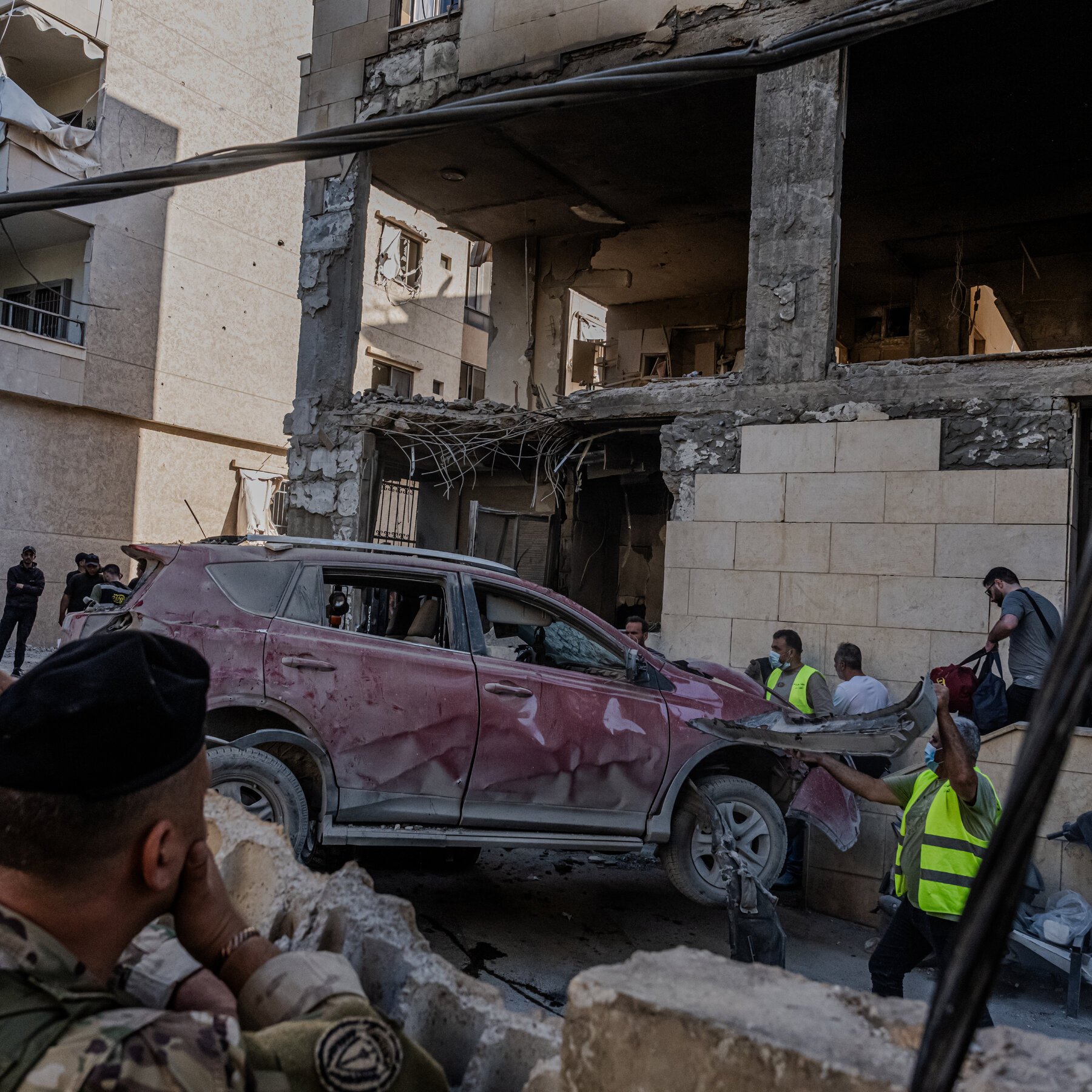
When air raid sirens sound in northern Israel, the Western wire shorthand is predictable: a Hezbollah strike, assessed, response underway. When 17 people are killed in Lebanese towns within hours, the wire shorthand is equally familiar in its economy — a tally, a geography, a qualification noting that casualty counts face verification constraints. Both accounts may be accurate. What the architecture of mainstream conflict reporting struggles to capture is the simultaneity of suffering, the asymmetry of attention, and the way that framing conventions quietly redistribute moral weight across a conflict that has no clean boundaries.
On 25–26 May 2026, both shorthands fired in sequence. According to Iranian state media outlet PressTV, air raid sirens blared in northern occupied Palestine following drone strikes launched from Lebanon. Within hours, according to reporting by Al Alam Arabic — corroborated in parallel reporting by PressTV — at least 17 people were killed and more than 30 injured in heavy Israeli airstrikes and artillery shelling across southern and eastern Lebanon. Targets included the town of Al-Duwair in the Nabatieh District, struck repeatedly by occupation warplanes. The sequencing is not incidental: provocation, reaction, escalation. The cycle runs by its own logic, indifferent to the diplomatic pauses between rounds.
The Attribution Problem
One of the structural features of Western conflict coverage is its preference for institutional sourcing over direct observation. When a strike takes place, the IDF spokesperson provides a statement; the Lebanese military provides a parallel one; neither is equipped to be dispassionate onlookers in their own cause. The wire service task — to convey each side's account without prejudging — produces a surface neutrality that masks the underlying asymmetry.
Israeli military communication operates through a professionalized spokesperson system calibrated for Western wire consumption. Statements are declarative, forward-looking, and framed in the language of self-defense. Lebanese or Hezbollah-aligned communication, when it reaches Western wires at all, arrives second, translated, and frequently filtered through the assumption that its source is not a neutral party. The result is that even in genuinely symmetric exchanges of force, the framing architecture tends to privilege one side's vocabulary of legitimacy.
This pattern does not require conscious malice on the part of any individual correspondent. It is structural: the beat is anchored to official Israeli sources, which are more accessible, more professionally media-trained, and more likely to be picked up in the first instance by wire services whose bureaux are in Jerusalem, Tel Aviv, or New York. Lebanese sources — operating in different time zones, different languages, and different institutional cultures — are at a structural disadvantage before a word is written.
Civilian Harm at Scale
The casualty figures reported from Al-Duwair and surrounding areas are necessarily provisional. Verification in active conflict zones is genuinely difficult; both sides maintain operational security interests in what gets confirmed and when. But the scale reported — at least 17 dead and over 30 injured from strikes described as heavy by Al Alam Arabic, with the town of Al-Duwair hit by multiple raids — isconsistent with patterns documented across the broader Israel-Lebanon frontier in prior escalation cycles.
What Western audiences often receive is a sanitized version of these numbers. Casualties are reported as statistics not because wire services lack compassion but because editorial conventions treat raw numbers as dry facts rather than events. The person killed in Al-Duwair or in an Israeli border community is, in the wire format, an event and a data point simultaneously. The human weight of each loss does not easily compress into the prose conventions of breaking news.
Israeli security concerns are legitimate. Drone strikes into northern Israel represent genuine threats to Israeli communities; civilian sirens and shelter protocols are real, documented, and not manufactured. The argument that one side's security imperatives justify pressure on another side's sovereignty is not one that can be dismissed — but neither can the counterweights: the Lebanese communities under sustained occupation of their airspace, their fishing waters, and their southern territory.
Why Escalation Coverage Shapes Escalation Politics
International mediators working to contain Israel-Lebanon tensions operate in a specific information environment. That environment is substantially constructed by wire reporting. When coverage consistently treats Lebanese-adjacent strikes as provocations and Israeli responses as measured — even when the material effects are symmetric — it creates an accountability gap. The party that receives more sympathetic framing faces lower reputational costs for escalation; the party that receives more hostile or minimized coverage faces higher costs for restraint.
This is not a novel observation. Conflict scholars and practitioners have long noted that media framing is not merely descriptive but consequential: it shapes the political calculus of actors who operate under the gaze of international opinion. When the dominant frame casts one side as the initiator and the other as the responder, it subtly licenses the responder's escalation as self-defense while casting the initiator's retaliation as renewed aggression. The dynamic is self-reinforcing.
The Lebanon-Israel frontier is not a place where diplomatic imagination has been in abundant supply. The UNIFIL mission operates under constraints that have long been noted by its own leadership as insufficient for the task. US engagement has been intermittent, structurally tied to the more prominent Iran nuclear file, and insufficiently resourced for sustained front-line diplomacy. Against this backdrop, the quality and balance of media reporting is not a secondary concern — it is part of the infrastructure determining whether the next cycle of violence lands as a localized incident or a wider conflagration.
What the Sources Cannot Tell Us
The thread providing this article's basis draws primarily from Iranian state-adjacent outlets — PressTV and Al Alam Arabic — providing a counter-perspective to the Western wire mainstream. Those outlets have their own structural biases, their own narrative interests in presenting Lebanese-adjacent actors as resistance rather than aggressors. The editorial position taken here does not endorse that framing wholesale; it uses it to demonstrate what mainstream coverage routinely omits or underweights.
What those sources cannot tell us: the specifics of what prompted the drone launches that triggered the sirens in northern Israel, whether those drones originated from Lebanese state territory or Hezbollah-controlled infrastructure, and what degree of civilian harm on the Israeli side remains unreported because it falls below wire-service thresholds for significance. The information environment in active conflict is incomplete by design — parties have incentives to announce successes and obscure failures for as long as operational security permits.
Monexus's coverage of this cycle aims to hold both sides' conduct to account without treating the conflict as one in which accountability is owed equally by parties of unequal power and unequal international standing. That is a judgment, not a neutral position — and it is one this publication makes deliberately.
Wire provenance
This editorial synthesis draws on the following public wire/social posts:
- https://t.me/presstv/125487
- https://t.me/presstv/125482
- https://t.me/alalamarabic/88234
- https://t.me/alalamarabic/88233