Mexico Takes Iran to the World Cup: Football, Diplomacy, and the Limits of American Leverage
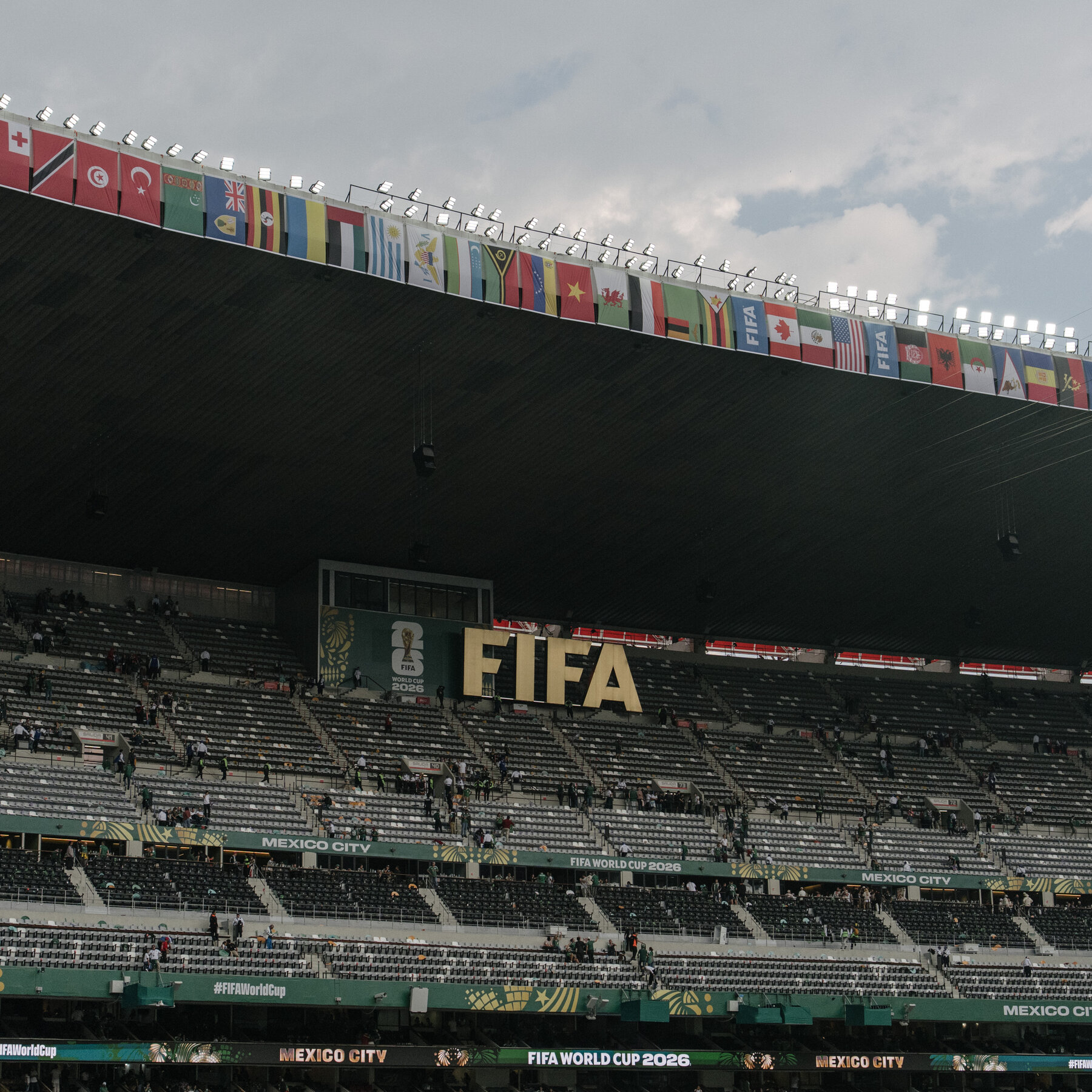
Mexico City has agreed to host Iran's national football team during the 2026 FIFA World Cup — permanent lodging south of the border, matches played on American soil. FIFA confirmed the arrangement on 26 May 2026 via its live-match coordination channels, with Reuters reporting the same day that Washington had declined to allow Iran to station its squad on US territory. The squad will travel from Mexico to US cities for each fixture, returning to its Mexican base between games. FIFA's formal confirmation puts to rest weeks of speculation about where the Iranian delegation would be accommodated across a tournament co-hosted by three nations, one of which — the United States — has no diplomatic relations with Tehran and sanctions its state apparatus under federal executive order.
The decision carries a diplomatic weight that 132 years of codified football law did not anticipate. A World Cup staged across three North American capitals, in which one of those capitals acts as the accommodation hub for a geopolitical adversary of its closest ally, is novel enough. That the arrangement was brokered not through back-channel memoranda but through the public confirmation of a sporting governing body, with a Polymarket market on the outcome registering significant speculative interest before the announcement, suggests the incident is shipping as a bilateral signal no party fully controls.
What this publication finds is a story about the limits of leverage — Washington's in particular. Mexico under President Claudia Sheinbaum has taken a position that is, by any conventional read of alliance management, irregular. It has done so without fanfare, without a formal communiqués about ideology or solidarity, and without publicly framing the decision as a rebuke of US policy toward Iran. The irregularity is precisely the point.
The Arrangement Confirmed
FIFA's confirmation on 26 May 2026, reported simultaneously by Middle East Eye's live coordination feed and Reuters, establishes the basic facts without ambiguity. Iran will use Mexico as its base camp for the duration of the World Cup. The United States will not host the squad overnight. Mexico will.
The sanctions architecture governing Iranian state entities means that hosting any official Iranian delegation involves legal exposure — a consideration that does not appear to have blocked Mexico's formal agreement but that likely shaped the logistical specificity of the arrangement. The squad's accommodation in Mexico, rather than in the US, reduces the footprint of Iranian actors on US soil and consequently limits the legal complexity for American tournament operators.
The Polymarket market, active from at least 25 May 2026 according to discussion of its odds movement, indicates that a speculative public — and by extension, an audience of politically attentive bettors — was watching this question before word of Sheinbaum's agreement was formally confirmed. The market registering movement prior to the Reuters and FIFA confirmations suggests the information was circulating in informed diplomatic or sporting circles before it reached wire channels.
For the Iranian football federation, the arrangement is straightforward: a functional base with adequate facilities, access to CONCACAF training infrastructure, and a daily commute north for competitive fixtures that satisfies the tournament's participation requirements. The difficulty of that arrangement is non-trivial. Iran is drawn into the US-side of the bracket, meaning several of its matches will require repeated cross-border travel during a compressed tournament schedule. But it is workable, and that it is workable is itself Mexico's answer.
Mexico's Independent Foreign Policy, Southbound
Sheinbaum assumed office in October 2024 as the political successor to Andrés Manuel López Obrador, inheriting a governing coalition that had spent six years constructing what the Mexican foreign ministry explicitly frames as a policy of "friendships with all peoples." That formulation is not new. Mexican diplomacy has long maintained formal relationships with governments that the United States places on its sanctions or designation lists — including Iran, with which Mexico has had an active embassy and consular presence throughout the current period of elevated US-Iran tensions.
What is different in 2026 is the context. Trump returned to office in January 2025 and almost immediately moved on trade, initiating a broad tariff regime that hit Mexican exports with significant frequency. The tariff pressure, combined with repeated demands on migration — an extension of the remain-in-Mexico posture that defined the first Trump administration's handling of asylum seekers — created a governing relationship that Sheinbaum navigated with deliberate formality and measured concession.
The Iran decision reads most coherently as a signal along that axis. Mexico is not endorsing Iranian foreign policy. It is not entering into a bilateral security cooperation arrangement with Tehran. It is extending a routine diplomatic courtesy — hosting a national football team — to a country with which it maintains normal diplomatic relations. The United States has declined to extend an equivalent courtesy. Mexico is quietly declining to treat Washington's preferences as a binding constraint on its own sovereign diplomatic decisions.
Mexican scholars who track the relationship observe that López Obrador sought to diversify Mexico's international partnerships, notably toward Beijing, during his six-year term — a diversification that Sheinbaum has maintained without reversing. The Iran hosting decision is consistent with that posture. It is not a strategic alliance. It is an assertion of diplomatic space, exercised in public and in a domain — international football — where the reputational cost of refusal would have been asymmetric and visible.
This publication notes that the decision was announced as a sporting arrangement, not a diplomatic one. There was no press conference at which Sheinbaum cited international law or the Vienna Convention on Consular Relations. There was FIFA, confirming the operational logistics. That restraint is itself a signal. Mexico wanted the arrangement to be known but did not want to own it rhetorically. The US State Department, for its part, has not commented publicly on the decision per available wire reporting as of 26 May 2026.
The US-Iran Contest, Encoded in Sport
The broader context is the sustained contest between Washington and Tehran for influence across the Global South. That contest is most visible in military confrontations and nuclear negotiations. It is also relentlessly present in softer registers — trade partnerships, infrastructure lending, diplomatic missions in multilateral forums, and, with increasing frequency, the world of international sport.
Iran has invested in football diplomacy systematically over the past decade. The Iranian federation's outreach to FIFA's regional structures, its hosting of Asian Football Confederation tournaments, and its bilateral sporting agreements with nations outside the US alliance network are documented instruments of a soft public diplomacy that treats international sport as a legitimate channel of statecraft. The arrangement with Mexico is the highest-profile manifestation of that investment in the current cycle.
Washington's approach has been more transactional. The US veto on Iranian hosting at the World Cup is consistent with the broader sanctions architecture that limits Iranian state actors' physical presence in the United States — an architecture the Biden administration maintained and which the Trump administration has continued without visible modification. The veto itself is not a dramatic escalation. It is a continuation of existing policy, applied to a context — an international football tournament co-hosted by the US — that made the conflict between policy and sporting obligation unusually visible.
What the veto produced was an inadvertent demonstration of that policy's limits. The US chose not to host Iran overnight. It did not choose — and likely cannot compel — the other co-hosts to refuse. Mexico's decision, formally confirmed by FIFA, means that a major international sporting event will proceed with an Iranian national delegation present in North America, resident outside US jurisdiction but participating in US-hosted matches. The arrangement minimises legal exposure for US tournament operators and satisfies FIFA's participation requirements. It also means the US veto, in practical terms, produced a bilateral outcome in which Washington's preference was partially respected but ultimately routed around.
The sources do not confirm whether any formal US-Mexico consultation occurred on this specific question. That gap in the evidentiary record is notable. In the absence of a public statement from the US State Department or the Mexican foreign ministry on the consultations — absent from available wire reporting as of this article's filing — readers should understand that the arrangement's specific mechanics (which cities, which logistics, which formal legal instruments) were settled between FIFA and the Mexican football federation. The diplomatic dimension is inferred from the structural context, not sourced from any single primary document.
Precedent in a Host-Nation Dilemma
The World Cup has produced diplomatic dilemmas of this kind before, though rarely in configurations that map cleanly onto this one.
The 1978 World Cup in Argentina presented a hosting question shaped by the Argentine military junta's human rights record — a circumstance that drew protest from European football federations, some of whose associations publicly considered withdrawal. None withdrew. Argentina played and won the tournament amid noisy diplomatic controversy that was ultimately subordinated to the sporting calendar.
Russia hosted the 2018 World Cup amid Western sanctions following the annexation of Crimea — a sanctions regime that excluded senior Russian officials from attending matches but that permitted the tournament to proceed on its commercial and logistical terms. FIFA's relationship with Russian football's governing structures was maintained throughout. Several European federations symbolically declined to attend certain events; the football itself proceeded.
Iran's own participation in previous tournaments — notably Russia 2018, where Iran was the first Asian team eliminated — produced no comparable diplomatic friction in its host nations. The 2022 World Cup in Qatar involved the most extensive pre-tournament diplomatic controversy in recent tournament history, focused on Qatar's labour conditions and human rights record. The matches proceeded; the controversy persisted.
The current configuration is less a repeat of any specific precedent than an accumulation of elements. A co-hosting arrangement that forces geopolitical adversaries to coexist within a single tournament structure. A veto by one co-host, accommodated by another. An arrangement brokered not by formal state-to-state negotiation but through a sporting federation's operational confirmation. The configuration is novel less because any single element is unprecedented than because the combination — a three-nation North American host, a non-diplomatic adversary relationship, and a base-camp arrangement that spans the border — has not occurred within this particular regulatory and diplomatic architecture.
Football historians and tournament logistics analysts will note that cross-border base camps are not unknown in tournament football — club teams and national squads occasionally split preparation and accommodation across jurisdictions for practical reasons. The novelty here is the political load carried by the arrangement rather than the logistical structure itself.
Stakes and What Comes Next
The immediate stakes are sporting and logistical. FIFA's coordination teams must finalise movement protocols for a national squad crossing an international border repeatedly during a compressed tournament schedule. Visa arrangements, security convoys, and medical protocols sufficient for cross-border transit must be formalised before the tournament's opening. For the Iranian football federation, the cost of the arrangement — additional travel fatigue, potential schedule compression — must be weighed against what is evidently a non-negotiable participation requirement.
The diplomatic stakes are more diffuse and more durable. Sheinbaum's government has demonstrated, quietly and without rhetorical provocation, that it will not treat Washington's sanctions preferences as a binding constraint on Mexican diplomatic decisions involving third parties. That posture has precedents within Lopez Obrador-era foreign policy, but the international visibility of the football context elevates its signal value. The 2026 World Cup will draw global audiences numbering in the hundreds of millions. Iran's participation, with Mexico as its host, will be visible in that context.
Whether that visibility translates into a diplomatic cost for Mexico — in the bilateral relationship with Washington, in trade negotiations where tariff pressure has already been applied — depends on variables the available sources do not resolve. The US State Department's formal silence on the arrangement as of 26 May 2026 is notable but not conclusive. silence is not the same as acceptance. It is possible the State Department is managing the issue quietly with the expectation that the arrangement's operational inconvenience will be contained by FIFA's logistics. It is equally possible that the silence reflects a calculation that public comment would elevate rather than contain the diplomatic significance.
What is knowable from current source material: Mexico made the arrangement. FIFA confirmed it. The US declined to host Iran and did not, by available wire reporting, object publicly to Mexico's subsequent agreement. The arrangement is operative. Whether formal objections were registered in back-channel communications — which would be consistent with the documented tariff and migration pressures running concurrently in the relationship — cannot be sourced from publicly available material and should not be assumed.
The World Cup begins in June 2026. The question of how a Mexican-hosted Iranian squad navigates multiple cross-border transits to US cities, under what security arrangements, and with what diplomatic reverberations will resolve itself in the tournament's first weeks. The more durable question — whether North American hosting of a Global South state's sporting delegation, in defiance of US preference, represents a structural shift in regional alliance management or a one-time accommodation to a specific FIFA problem — will take longer to answer.
This publication notes that its primary wire frame for this story follows the Reuters and Middle East Eye confirmations. The Polymarket signal — speculative positioning on Sheinbaum's agreement ahead of wire confirmation — informed the editorial assessment of how the information circulated before formal announcement. Coverage in English-language Western wire services as of 26 May 2026 emphasised the diplomatic irregularity of the arrangement. This article attempts to situate that irregularity within the structural context of North American bilateral pressures rather than treating it as an isolated provocation.