Nathan Allman's Death Tests the Limits of Decentralized Finance's Promises
The death of Ondo Finance's founder and CEO on May 26, 2026, has thrown one of the crypto industry's most prominent real-world asset protocols into sudden uncertainty, raising hard questions about succession, trust, and what decentralized infrastructure actually means when the humans behind it are gone.
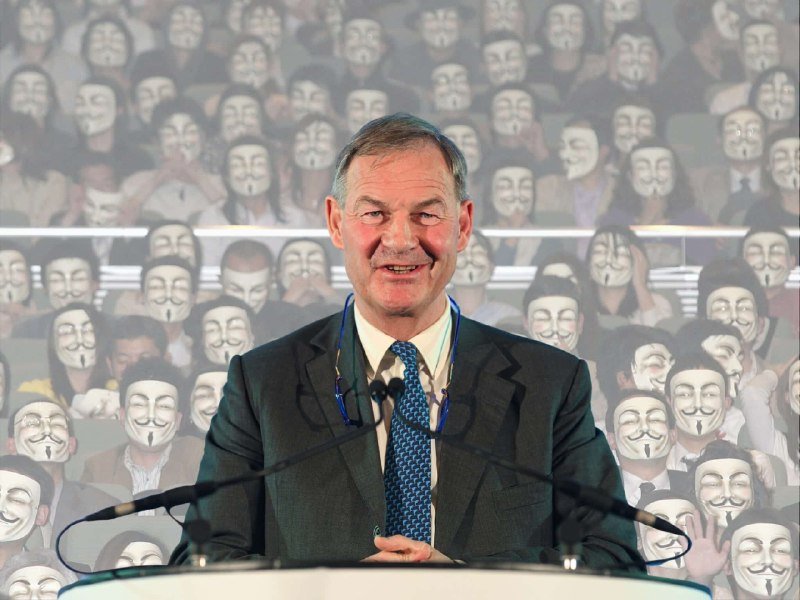
Nathan Allman was forty-two years old when he died. That detail — specific, human, irreplaceable — is the one the market briefings will not contain. When Cointelegraph broke the news on May 26, 2026, the initial wire reports listed his role (founder and CEO of Ondo Finance), the time of the announcement (early morning, U.S. Eastern time), and little else. The protocols he helped build will keep running. The assets his company tokenized will remain on-chain. But the humans who gave those systems coherence, direction, and legal standing are now, in one respect, one fewer.
Allman's background was not unusual for the tokenized-finance class of 2020s founder. He studied economics at Harvard, worked in structured products at Morgan Stanley, then advising on M&A at Perella Weinberg Partners before moving into crypto-native finance. Ondo launched in 2021 as one of the first serious attempts to bring dollar-denominated real-world assets — U.S. treasuries, money market instruments — on-chain at scale. By 2026, the protocol had grown into one of the largest issuers of tokenized short-term government securities in the world, a bridge between Wall Street's custody infrastructure and DeFi's trading pools.
The immediate market reaction was predictable: a brief spike in uncertainty premium on OUSD, Ondo's dollar-pegged stablecoin, followed by stabilization as the protocol's collateral backing held. But the deeper question — what happens to a heavily centralized financial protocol when its centralizing force is removed — is not a market event. It is a governance question. And it is one the industry has spent the better part of a decade not answering.
Ondo's product suite was not, in any meaningful sense, decentralized in operation. OUSD — the stablecoin — was backed by a combination of U.S. treasuries, agency obligations, and overnight repos held in custodian accounts managed by Third景, Bank of New York Mellon and other institutional counterparties. The legal structure required to maintain the peg operated through contracts between Ondo, its custodians, and the stablecoin holders. The on-chain components — the tokens themselves — were written in Solidity, auditable, transparent. But the economic substance ran through New York law firms, prime brokers, and regulatory frameworks that assumed a named human being — with a social security number, a board seat, a business formation — was at the other end of every decision.
Allman's death surfaces a structural irony that the crypto industry has long been content to leave undiscussed. The promise of decentralized finance rests on the idea that trust can be migrated from fallible institutions to immutable code. But tokenized real-world assets — the category Ondo helped define — are, by design, the opposite of that promise. They are on-chain representations of off-chain legal relationships. They require KYC. They require regulated custodians. They require corporate officers who can sign documents, respond to subpoenas, and authorize changes to reserve composition when maturities roll. Remove that human layer, and the code does not know what to do.
Ondo reported approximately $900 million in total value locked across its products as of early 2026. That figure makes it a systemically modest institution — far smaller than BlackRock's BUIDL fund, which crossed $2 billion in assets under management within months of its 2024 launch. But Ondo's tokens circulate in DeFi liquidity pools, serve as collateral for lending protocols, and anchor yield strategies across multiple chains. The contagion surface from uncertainty about succession is not trivial.
The comparison that suggests itself is instructive: if the CEO of a publicly listed money market fund died, the transition would be governed by SEC succession rules, board resolutions, and press releases filed within hours. Crypto has none of this infrastructure. There is no regulator to call. There is no prospectuses requirement to follow. There is only the question of whether the founders' keys and governance documents are accessible, unambiguous, and executable by a successor who has legal standing to act.
The sources do not specify the current status of Ondo's governance transition, who holds administrative control over the protocol's multisig wallets, or what arrangements existed for a leadership contingency. These are the questions the coming days will answer. What can be said now is that the industry that gathered in Miami for Bitcoin 2026 last month, celebrating the maturation of tokenized finance and the institutional legitimacy it supposedly gained, has been reminded that the legitimacy was always conditional on the continued existence of the people who created the legal wrappers around the code.
Allman's death is a personal tragedy. It is also a test of whether the industry's narrative about decentralization can survive contact with the most basic fact of corporate continuity: people die. The protocols he built will keep running. The tokens will keep circulating. But what it means to trust a system built by a person who is no longer there — that question is now live, and the industry's answer will shape how seriously institutional capital treats on-chain finance for years to come.
The answer will arrive in the form of actions, not statements. Whether Ondo's reserve attestations continue on schedule, whether new corporate officers are named and their credentials disclosed, whether the stablecoin peg holds through the next maturity cycle — these are the signals the market will read. Allman cannot provide them. The structure he built will have to.
Wire provenance
This editorial synthesis draws on the following public wire/social posts:
- https://t.me/Cointelegraph/14237
- https://t.me/Cointelegraph/14237