Netanyahu's Trump Call Lands as Israel Weighs Lebanon Ceasefire Under Mounting Casualty Pressure
Israeli officials confirmed Prime Minister Benjamin Netanyahu spoke with US President Donald Trump on the evening of 26 May 2026, a conversation that came hours after a cabinet session in which ministers discussed the deteriorating military situation along the Lebanon border — and a possible diplomatic off-ramp.
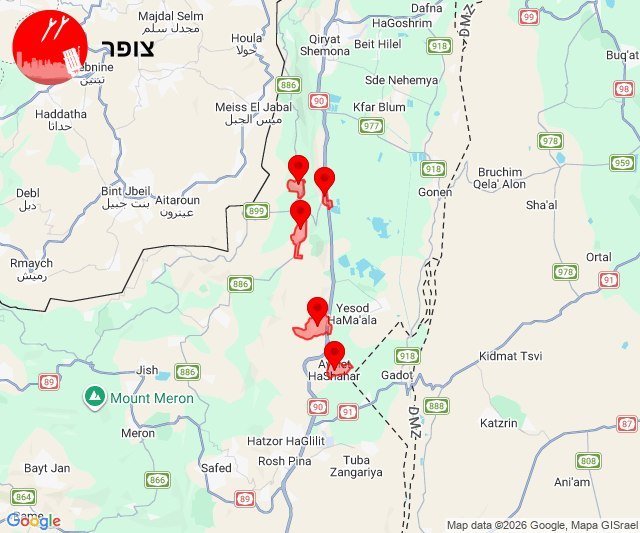
Israeli officials confirmed Prime Minister Benjamin Netanyahu spoke with US President Donald Trump on the evening of 26 May 2026, a conversation that came hours after a cabinet session in which ministers discussed the deteriorating military situation along the Lebanon border — and a possible diplomatic off-ramp.
The call, details of which remain sparse, followed a roughly two-and-a-half-hour cabinet discussion inside the Israeli security establishment. Hebrew-language outlets were first to report that Netanyahu had left a mini-security council meeting to take the call with the US President — an unusual sequence that suggested something more than a courtesy conversation was underway. Within minutes, Channel 14, citing an Israeli source with knowledge of the talks, reported that any emerging agreement between the United States and Iran would explicitly include provisions touching Lebanon. That disclosure, if accurate, would link two of the region's most volatile flashpoints under a single diplomatic framework.
What made the evening's developments notable was not merely the Netanyahu-Trump exchange but the context into which it landed. Channel 13, in reporting carried across Hebrew-language wires, described Israel as "stuck in a political impasse in Lebanon" — language that carries weight coming from a domestic outlet not predisposed to undermine the government's framing. The military operation, the channel stated, had "no marketable goal"; the problem on the ground was structural: every hill or high ground seized required forces to hold it, and holding it was costing the Israeli military at a rate of three to four soldiers killed per week. That figure — modest in the calculus of total war, but politically acute in a democracy — has created a specific kind of pressure on the cabinet. The operation continues, but the rationale for its continuation grows harder to articulate.
The casualty rate is not the whole story, but it is a significant part of it. On the same day as the cabinet deliberations, Channel 12 reported that Hezbollah had launched more than fifteen separate strike operations — described as drone or missile barrages — against Israeli positions in what Hebrew outlets termed "occupied territories." The frequency of those engagements suggests the Lebanese front is not in a holding pattern but under active kinetic pressure, with both sides sustaining the exchange. Israel's capacity to absorb the losses is not in question militarily; politically, however, the arithmetic is less comfortable. Three to four deaths per week is a number that does not make headlines individually but accumulates into something that shapes electoral arithmetic and cabinet cohesion.
The diplomatic signal from Washington is the variable that changes the calculation. Axios and other outlets tracking the US-Iran nuclear dialogue have reported for weeks that Lebanon is a chapter inside the broader deal, not a separate negotiation. The Channel 14 disclosure on 26 May — that the US-Iran agreement will explicitly include Lebanon — if confirmed, would suggest Washington is prepared to offer Israel a framework it has long demanded: a cessation of hostilities backed by written guarantees and international monitoring, in exchange for a withdrawal that does not read as a retreat. Whether that framework is acceptable to Jerusalem is the question the cabinet meeting was convened to address.
There are at least two ways to read this sequence. The first is that the call with Trump was the opening of a final negotiation: Netanyahu, facing a cabinet split between those who want to keep fighting and those who want a ceasefire that preserves dignity, used the conversation with the American President to test whether the diplomatic package on offer is real enough to bring back to ministers. Under this reading, the cabinet meeting preceded the call precisely because the ministers wanted to know, before committing to a position, whether Washington could deliver something worth retreating for. The second reading is that the call was defensive — an effort to brief the Americans on an operation that is not going according to plan, and to buy time before the casualty count becomes a campaign issue. Both readings have evidence in their favour, and the public record, at this stage, does not resolve the ambiguity.
What does appear increasingly clear is that the military-only approach to the Lebanon question has reached its operational ceiling. The terrain punishes territorial consolidation; the adversary is not a conventional army that retreats when positions are taken. Hezbollah has shown it can sustain attrition at a level that is uncomfortable for Israel without triggering the kind of escalation that would give Jerusalem a casus belli for the larger war it has, so far, declined to fight. Under those conditions, diplomacy — even diplomacy as circumscribed as a US-brokered ceasefire that stops short of a formal peace agreement — begins to look less like a concession and more like the only option that preserves the army for other contingencies.
The stakes, for now, are the shape of the northern border and the political survival of the government that must sell any withdrawal to its own base. The Trump administration, for its part, has an interest in a visible diplomatic success that can be framed as part of a broader Middle East reset — one that includes a nuclear understanding with Iran and a ceasefire that allows the region to move toward something resembling stability. Whether those interests converge will depend on whether Netanyahu returns from the conversation with Trump with something he can present as a victory, and whether his cabinet can agree on what a loss looks like before they are asked to accept one.
The reporting from Hebrew-language outlets on 26 May provides the clearest domesticIsraeliaccount of the military impasse and the diplomatic pressure driving the cabinet conversation. Monexus has not independently confirmed the casualty figures reported by Channel 13; they appear consistent with accounts from Israeli military correspondents over the preceding weeks but have not been verified by the IDF Spokesperson's office as of publication.
Wire provenance
This editorial synthesis draws on the following public wire/social posts:
- https://t.me/Middle_East_Spectator/cover
- https://t.me/amitsegal
- https://t.me/alalamarabic
- https://t.me/megatron_ron
- https://t.me/alalamarabic
- https://t.me/alalamarabic