The Pentagon Shrinks While NATO Expands — and the Old Calculations Don't Hold
As the United States signals a pullback from forward NATO commitments, the alliance is quietly filling the gap in the Baltics — while American biotech fills its own vacuum through acquisitions. Both stories run on the same structural logic.
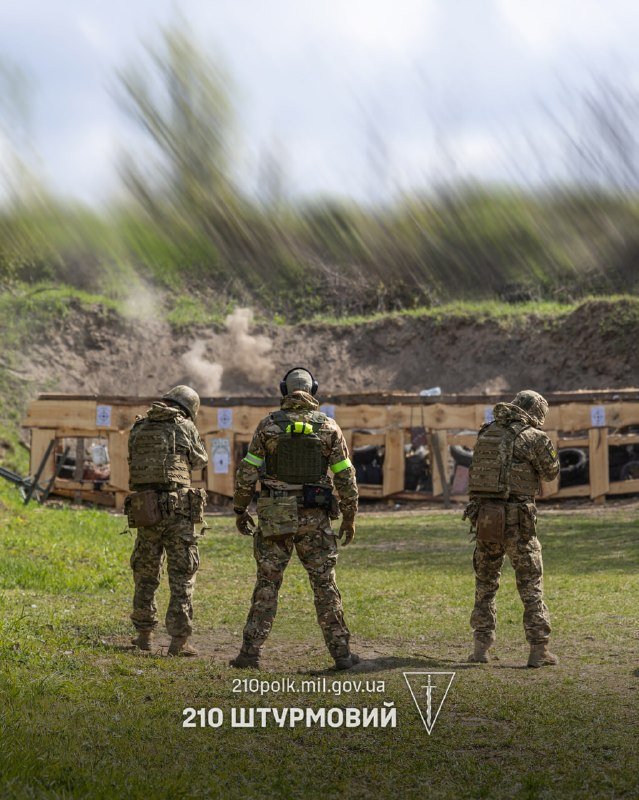
The United States plans to drastically scale back the strategic bombers, warships, and other high-end forces it would make available to NATO in a crisis — while the alliance simultaneously moves to reinforce the forces assigned to defend Estonia, Latvia, and Lithuania against a potential Russian advance. On the same day that story broke, Eli Lilly announced up to $3.8 billion in vaccine acquisitions and previewed a gene-editing cholesterol treatment that sounds, charitably, like a press release from a company running out of organic growth. Three separate items. One structural sentence.
Washington is redistributing its risk. NATO is redistributing its exposure. The pharmaceutical sector is redistributing everyone else's complacency.
The Polymarket wire flagged the defense story first, at 17:15 UTC on 26 May 2026. The NATO Baltic reinforcement, reported by the same feed hours earlier, is its mirror image. The implication is not subtle: if the United States is planning to hold fewer of its strategic assets in reserve for European contingencies, the alliance cannot afford to rely on those assets being there. The Baltics — exposed, landlocked-adjacent, politically salient in a way that makes their defense a coalition-fundamentals issue — get the compensatory investment. The heavy lifting migrates from Washington to Warsaw to the alliance's forward-deployed order of battle.
Deeper than the immediate news is the signal about alliance reliability. NATO's credibility rests on Article IV and the assumption that the readied power behind it is real. Drastically reducing strategic bombers and aircraft carriers committed to a European conflict is not a budget line item. It is a statement about where the stomach sits relative to the wallet. The alliance, to its credit, appears to be adapting rather than waiting for reassurance. Bolstering Baltic forces is a structural hedge against the gap that a thinner American cushion would leave.
The counter-argument worth holding is that this may not be a pullback at all — merely a reshuffling. The United States has always maintained the option to surge forces rather than pre-position them. Forward deployment and contingency availability are different things. A carrier group off the coast of Virginia is still a carrier group. The criticism of the reported plan may overestimate how much the current deployments actually deter — and underestimate the degree to which NATO's own force improvements have made the deterrence situation less dependent on American forward presence.
That is a coherent position. It is also a position the alliance's European members will be expected to perform publicly, while privately adjusting their own defense planning to account for the possibility that surge options take days rather than hours, and come with conditions attached.
The Eli Lilly story is a different register but the same underlying dynamic. A one-time gene-editing shot targeting LDL cholesterol at the structural level — not managing it, but rewriting the cellular script that produces it — is either a genuine leap or an exceptionally well-marketed hypothesis. The $3.8 billion vaccine acquisition spree compounds the ambiguity. Three clinical-stage developers, absorbed into a company whose core pipeline is already substantial, is consolidation behavior. And consolidation — the purchase of optionality by a firm that can afford to absorb the failure risk — is what incumbents do when they sense the landscape shifting faster than organic R&D can respond.
The structural parallel to the NATO picture is direct: whether the actor is a defense planner or a pharmaceutical executive, the instinct is the same when a redistributive shift is underway. Acquire the capacity you might need. Shore up the positions most exposed to disruption. If the old model still works, the acquisitions and the new deployments are hedges. If it doesn't, they're the only real plan.
Russian pressure on Armenia — the gas-discount cancellation warning surfaced at 06:41 UTC the same morning — sits in the same frame. Moscow is signaling that the realignment of post-Soviet states toward European structures cannot be free. The heavily discounted gas Armenia has relied on is an instrument of dependence, and its withdrawal is the predictable cost levied on sovereignty claims. This is not new logic. It is old logic, exercised openly, because the geopolitical environment now permits its exercise without the restraint that a fully-engaged American order imposed.
What connects the five Polymarket items of 26 May 2026, then, is a single underlying fact: the matrix of commitments, subsidies, deployments, and market structures that defined Western influence for three decades is under active revision. NATO is adapting to a more conditional American posture. The U.S. defense posture is adapting to a more contested global burden-sharing argument. The pharmaceutical sector is adapting to a pipeline environment where the easy approvals are behind and scale is the remaining moat. And Moscow is adapting by doing something it could always do but refrained from doing when the costs were prohibitive.
The reader should hold two things simultaneously. The first is that none of these developments are inevitable or irreversible — surge forces can be redirected, the gene-editing shot may fail regulatory review, the Russian gas playbook has disappointed before. The second is that the probability each actor assigns to a favorable outcome has shifted, and the actions are adjusting accordingly. That gap between what the old consensus implied and what the new calculations demand is where the actual news lives.
This publication covered the U.S. posture shift and NATO Baltic reinforcement from the wire reports on 26 May 2026. The Eli Lilly items appeared in the same feed cycle, and the Armenia gas story provided the geopolitical connective tissue. The Polymarket wire is the primary provenance for all five items; no secondary outlet framing shaped the synthesis.
Wire provenance
This editorial synthesis draws on the following public wire/social posts:
- https://x.com/polymarket/status/1923456789012345678
- https://x.com/polymarket/status/1923456789012345677
- https://x.com/polymarket/status/1923456789012345679
- https://x.com/polymarket/status/1923456789012345680
- https://x.com/polymarket/status/1923456789012345681