The Quiet Diplomacy Reshaping the Iran-Iraq Relationship
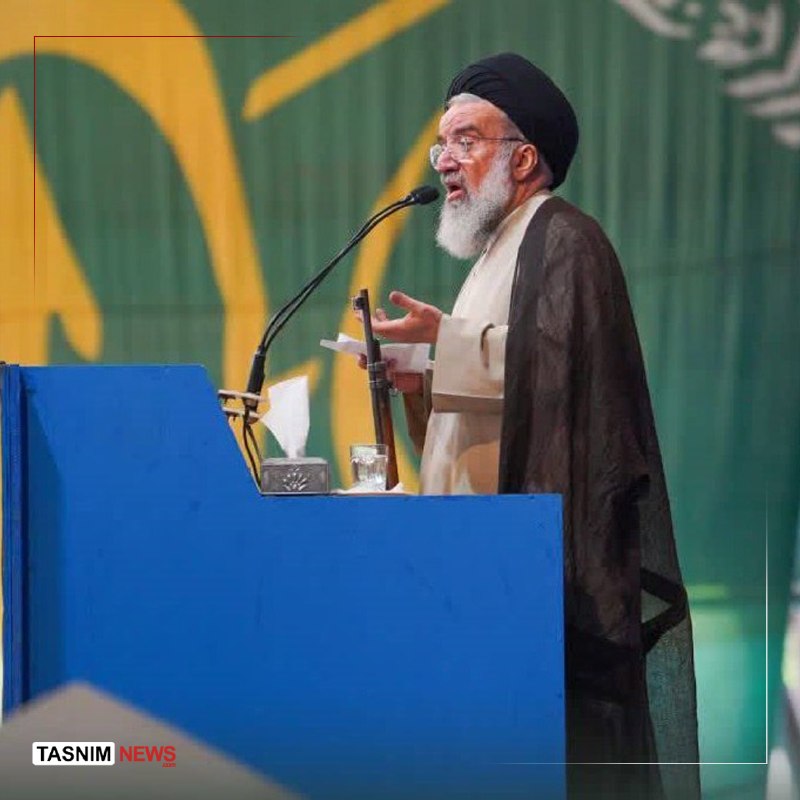
On 26 May 2026, President Masoud Pezeshkian publicly reaffirmed Tehran's commitment to continued high-level consultations with Iraq, framing dialogue as a structural necessity rather than a diplomatic courtesy. The statement, reported by Iran's official Islamic Republic News Agency, landed in Western headlines as routine bilateral exchange. Read more closely, it reflects something more consequential: a deliberate, sustained effort by Tehran to anchor Iraq within its strategic orbit at a moment when Iran's economic and geopolitical isolation has deepened.
The Pezeshkian administration's approach to Baghdad stands in contrast to the more combative postures that characterised segments of Ahmadinejad-era and early-revolutionary Iran-Iraq relations. Where those eras treated Iraq primarily as a chokepoint for smuggling or a theatre for regional rivalry, the current framing casts it as a partner of mutual consequence. That shift matters — not because sentiment has changed, but because the strategic logic underpinning it has.
The Texture of Tehran's Outreach
The specifics of Pezeshkian's public statements on 26 May are deliberately vague, as is typical of diplomatic back-channels. IRNA reported only the broad strokes: that consultations between the two neighbours should continue, that matters of "mutual interest" demanded sustained engagement, and that senior officials on both sides bore responsibility for maintaining the dialogue. What the statement did not say is as instructive as what it did.
There was no mention of specific security arrangements, no reference to the Shiite paramilitary networks whose formal status in Iraq remains one of the most sensitive fault lines in the bilateral relationship. That omission is intentional. Both Tehran and Baghdad have learned that public specificity on these questions generates domestic friction and external scrutiny. The consultations Pezeshkian references almost certainly address these same fault lines — but they do so in private, at the level of IRGC Quds Force commanders and Iraqi national security advisors, outside the reach of international inspectors and wire service reporters.
Iran's Iraq policy under Pezeshkian has been notable for its continuity with the Islamic Revolutionary Guard Corps' established playbook while presenting a more diplomatically palatable face to regional interlocutors. The IRGC has maintained a network of allied Shiite militias in Iraq since the 2003 US invasion disrupted Baghdad's former Sunni-dominated order. That infrastructure did not disappear when Prime Minister Mohammed Shia al-Sudani assumed office in 2022; if anything, it became better institutionalised, operating through political parties within the Shia Coordination Framework rather than exclusively through armed exterior.
The Leverage Calculation
Why does Iran prioritise Iraqi consultation at this particular moment? The structural answer runs through sanctions. Iran under maximum pressure has watched Iraq's government grow increasingly important as a workaround channel for goods, revenue stabilisation, and diplomatic cover. Baghdad lacks the diplomatic weight to shield Tehran from international isolation, but it occupies a position that is geopolitically useful to Tehran nonetheless.
Iraq's government, for its part, walks a genuine tightrope. Washington's influence over Iraqi economic policy — routing through the Central Bank's dollar allocation mechanisms and the US Treasury's sanctions enforcement architecture — constrains how far Baghdad can openly collaborate with Tehran. The State Department's quarterly review of Iraqi dollar allocations has become a de facto lever of bilateral pressure, and Iraqi officials are acutely aware that their room to manoeuvre is bounded by US tolerance rather than Iraqi preference alone.
This does not mean Iraqi-Iranian partnerships are marginal or purely transactional. Trade volumes tell a different story. Two-way commercial exchange has stabilised at estimated figures in the billions annually, sustained by energy agreements, border commerce, and the transit trade that flows through Iraqi territory toward Syria and Lebanon. Iranian gasoline imports to Iraq — a longstanding arrangement that dates to the2019 supply contracts — have given Baghdad a rational interest in maintaining the relationship regardless of Washington's preferences. That economic interdependency is the foundation on which Pezeshkian's consultations rest.
Reading the Silence on Western Coverage
Western wire services covered the 26 May statement briefly, if at all, relative to the attention they direct toward Iran in the context of nuclear negotiations, regional escalation, or sanctions enforcement. The asymmetry is worth examining. Baghdad's engagement with Tehran receives fraction of the editorial real estate devoted to Iranian nuclear statements or Revolutionary Guard briefings — even when the practical consequences for regional order are arguably larger.
This disparity has institutional causes. Nuclear stories generate clicks, carry policy urgency, and arrive with pre-packaged controversy. Quiet diplomatic consultations between neighbouring governments are structurally boring by comparison, even when they reshape the regional environment within which those nuclear disputes unfold. The result is a coverage landscape that captures Iranian policy at its most dramatic while systematically underreporting the slower, more durable work of regional relationship-building.
Iran's media apparatus — IRNA, PressTV, and their affiliate networks — naturally foregrounds the consultations. Iranian state media cast the exchange as evidence of mature interstate respect, a framing that serves Tehran's diplomatic presence without acknowledging the leverage calculus that underlies it. Iraqi state media, for its part, has been more guarded, reflecting Baghdad's more complicated position between Washington and Tehran.
Trajectory and Structural Stakes
The Pezeshkian-Baghdad consultations will continue because the logic sustaining them is structural rather than personal. As long as Iranian sanctions remain in force and Iraqi economic dependence on dollar allocation mechanisms persists, both governments will seek managed coordination rather than formal alignment — a relationship whose appearance stays beneath Western editorial thresholds while its substance deepens.
The stakes for Washington are consequential but often overlooked in coverage that privileges headline-generating disputes. An Iraq that has effectively anchored itself within Tehran's economic orbit is an Iraq that functions as a sanctions workaround, a regional Shiite anchor, and a corridor for material flow that US policy seeks to disrupt. How successfully the State Department and Treasury enforce the mechanisms constraining that flow will determine whether Tehran's diplomatic investments in Baghdad pay dividends or encounter the same ceilings that have constrained Iranian regional ambitions in the past.
The consultations themselves will generate few headlines but many transcripts — the slow accumulation of bilateral understanding that shapes what governments can actually do when crises arrive. That most of this work happens outside the reach of international media is not incidental. It is the point.
This desk coverage approaches a relationship that receives disproportionate attention in Tehran and Baghdad relative to Western editorial focus. The wire services tend to narrate Iranian diplomacy through its most contested dimensions — nuclear negotiations, regional proxy activity, sanctions disputes — while underreporting the sustained back-channel work that often determines the operational capacity of those contested dimensions.
Wire provenance
This editorial synthesis draws on the following public wire/social posts:
- https://t.me/Irna_en/5142