Rangers Bet on Shankland as Scotland's World Cup Countdown Begins
Lawrence Shankland's move from Hearts to Rangers is complete — a two-year deal with a twelve-month option that raises immediate questions about Scotland's striking options heading into the World Cup.
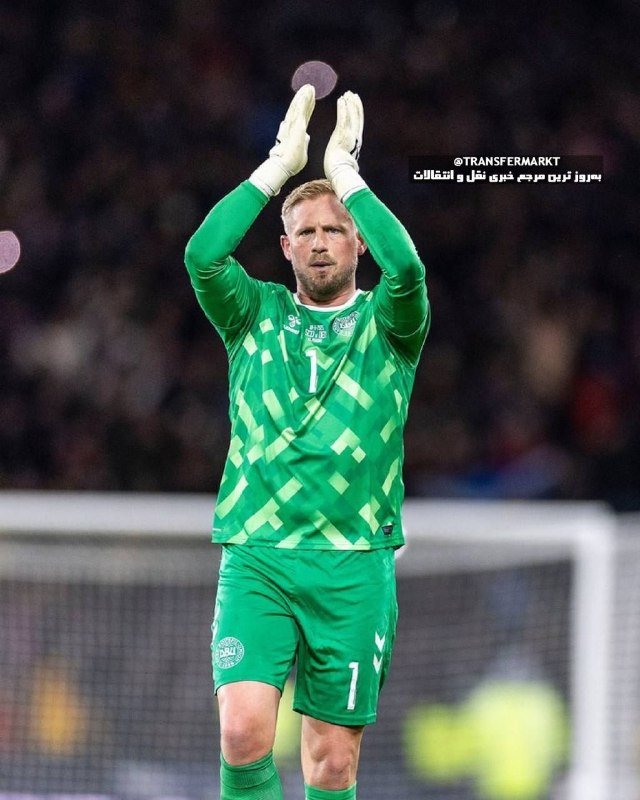
Lawrence Shankland completed his move to Rangers from Heart of Midlothian on 26 May 2026, signing a two-year contract at Ibrox with the option of a further twelve months. The transfer, confirmed by BBC Sport at 17:01 UTC, extinguishes months of speculation about the Scotland striker's next destination and positions him squarely at the centre of a debate Rangers supporters have been having without resolution since their last goal-scoring crisis point.
Shankland arrives with 194 goals in 377 career appearances across Scottish clubs, a record compiled predominantly in the topflight with Dundee United and Hearts since his early-career stint at Ayr United. At Hearts, he averaged better than a goal every two games — respectable numbers in a side that finished mid-table in the 2025–26 Scottish Premiership. The question his new employers are gambling on is whether those numbers translate when the quality of chance creation improves.
Shankland has earned 15 caps for Scotland, scoring 7 goals — modest figures by the metric of a starting number nine at a Nations League-bound side, though his international appearances have been episodic rather than consolidated. The 29-year-old has not consistently been Scotland's first-choice striker under previous regimes. Whether he becomes that man depends on two overlapping timelines that align awkwardly: the World Cup qualification-run, and Philippe Clement's requirements at Ibrox.
Scotland's Striker Appointment
The context for this transfer is inseparable from Scotland's forward planning. With a World Cup on the horizon and qualification infrastructure already in motion, the Scotland manager faces a decision that has no clean answer in domestic football right now. Che Adams operates at a comparable Premier League level. Lyndon Dykes offers physical dimensions Shankland does not. But neither has made the position their own in a Scotland shirt through a sustained run of starts.
Shankland's numbers at Hearts give him a plausible claim. Seven goals from open play in the Premiership last season was a figure that placed him among the top domestic goalscorers irrespective of team context. If Hearts created fewer clear-cut chances than Celtic or Rangers per match — which the data suggests — then Shankland's conversion rate takes on additional meaning. He has shown an ability to score difficult goals, not just tap ins from central positions.
The counter-argument is not difficult to locate. Hearts finished eighth in a twelve-team league. The quality of opposition in a Good Friday-style Old Firm fixture occurs four times a season at most. The remaining 34 league matches present a different defensive challenge — one that, while not trivial, does not replicate the tactical complexity of tournament football.
What Rangers Bring Out of Shankland
Rangers have been here before with Scottish strikers who performed well at Hearts. The club's recruitment pattern under previous managers swung between experienced imported forwards — Kemar Roofe, Alfredo Morelos, Danilo — and domestic options who promised more than they delivered in a blue shirt. The Ibrahim Glory era gave way to inconsistency; the current project under Clement is trying to rebuild a functional forward line from a position of constraint.
What Shankland brings is not mystery. He is a defined player: good positional awareness, competent in the air against teams that press high, and experienced enough to handle the physical demands of the Premiership without adjustment. What he has not demonstrated — and cannot demonstrate without playing at a higher level — is whether he can sustain输出的 quality when every team in the league has detailed intelligence on his movement patterns.
The two-year deal with a twelve-month option suggests Rangers are hedging. A short contract signals they are not building a project around Shankland but filling an immediate gap with a known quantity. If he delivers, the option extends. If he does not, the contract length limits the financial commitment.
This is rational recruitment in a constrained financial environment. It is not the signing that transforms Rangers into a side capable of competing consistently with Celtic in the league or qualifying from a European group. Whether it adequately addresses the immediate gap depends on what Rangers' data says about their chance creation last season — and how many goals they left unconverted in areas Shankland's positioning would have reached.
The World Cup Angle
Scotland's World Cup qualification is not certain, and the timing of Shankland's move creates a specific pressure dynamic. If he starts well at Ibrox, the narrative becomes self-reinforcing: good form at a Glasgow club with European commitment enhances his case for international selection in a way that Hearts' mid-table finishes could never provide. If he struggles, the counter-narrative crystallises quickly: a mid-table player who cannot make the step up to the demands of a title-chasing side.
The Scotland manager, whoever leads the qualification campaign, will be watching with a dual awareness. Shankland's case for the number nine role is strongest when he is scoring at Ibrox against Celtic, Aberdeen, and in European qualifiers — not against St Johnstone in October. The transfer is simultaneously a club football decision and an implicit audtion for international football's central role.
What remains genuinely uncertain is whether Shankland is the player who peaked at Hearts under the specific conditions of their tactical setup, or whether he has remaining development that a better-attacking Rangers side will draw out. The evidence from his career to date points in the direction of a reliable Premiership striker, not a player who transforms a title race. The distinction matters enormously for everything Rangers and Scotland are trying to achieve.
The Transfer Window Opens Against a Wider Backdrop
Scottish football's transfer behaviour has shifted in the years since Rangers' financial restructuring. The days when Ibrox could attract established European players on wages that reflected Champions League participation are gone. The recruitment model has adjusted accordingly: undervalued domestic assets, targeted imports from lower European leagues, and the occasional bet on a proven Scottish striker who has shown he can perform at this level.
Shankland is the last category. He is not cheap by Scottish market standards, and his transfer fee — not officially disclosed in the BBC reporting — will be scrutinised against his eventual output. The deal caps a transfer window for Rangers that has been characterised by measured movement rather than marquee arrivals.
For Hearts, losing their leading scorer to a domestic rival removes a goal dependency that their tactical system relied on. The assumption in the industry is that replacement options exist in the market, but the quality of those options will determine whether this transfer is as significant for Hearts as it is for Rangers. On 26 May 2026, that question is still open.
Shankland is expected to join Rangers' pre-season training in July 2026, with the new Scottish Premiership season beginning in early August. Scotland's World Cup qualification matches are scheduled for September 2026.