Starlink's Africa Gambit Puts Continental Digital Sovereignty in the Crosshairs
As Starlink secures operational authorization across more than two dozen African states, a new report quantifies what is at stake: billions in capital flight and the consolidation of orbital infrastructure under a single private foreign operator.
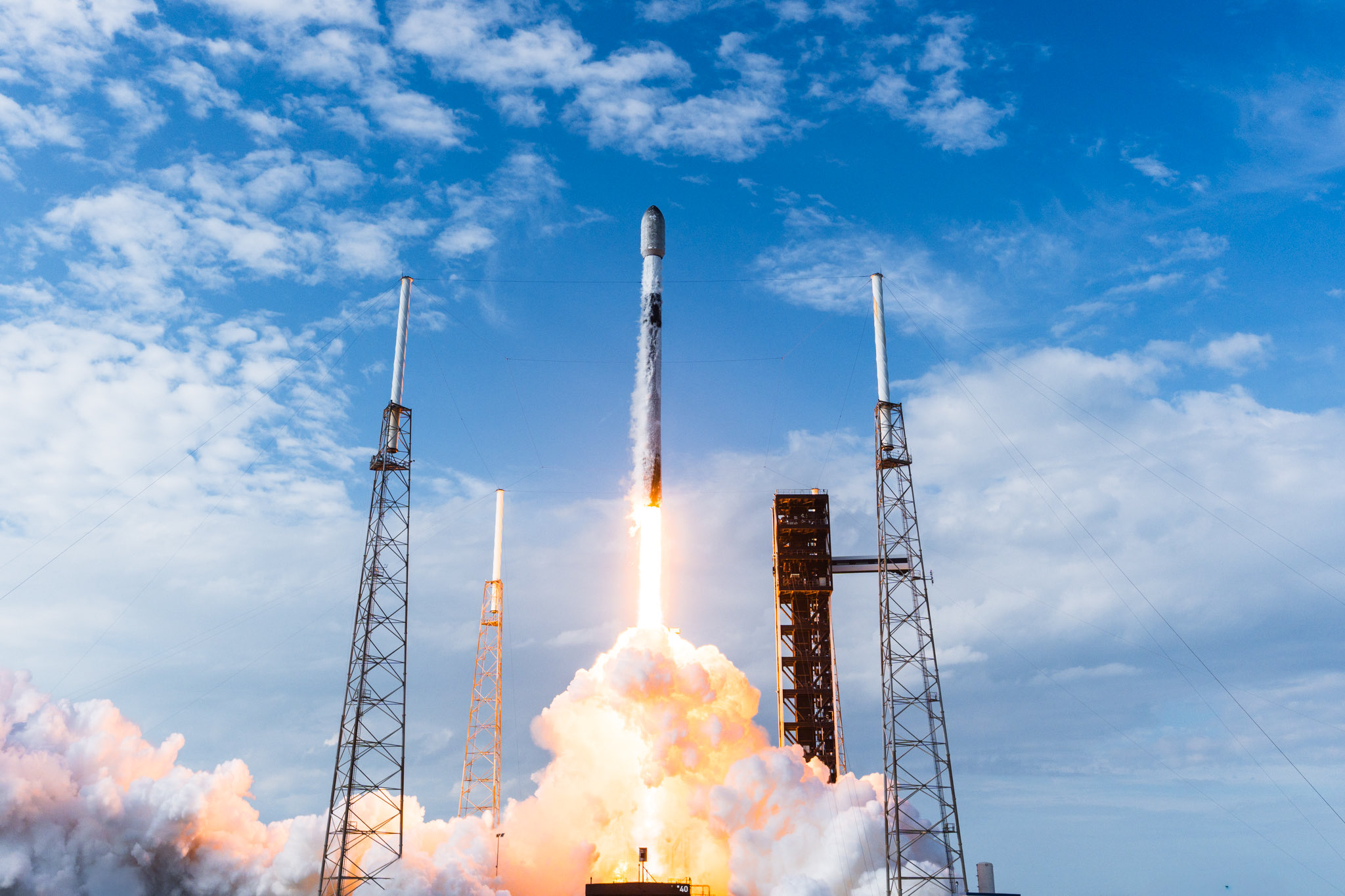
Elon Musk told an audience on 26 May 2026 that, based on personal observation, average happiness in an African village exceeds that recorded in Beverly Hills. The comment surfaced as a separate, harder-edged story was unfolding across African regulatory corridors: the rapid consolidation of satellite internet infrastructure under a single foreign commercial operator, and the billions in economic value the continent stands to forfeit if current trajectories hold.
A report published this week warns that Africa risks losing billions of dollars annually to satellite internet operators who control the orbital infrastructure delivering connectivity to some of the continent's most underserved populations. The findings land as Starlink, the broadband constellation owned by Musk's SpaceX, has secured operational authorization in at least 25 African countries — a footprint that places the company in direct control of the primary broadband link for thousands of schools, clinics, businesses, and government facilities in regions where terrestrial fiber networks have never arrived.
The structural problem is not hard to state. Satellite internet requires发射 and maintenance of equipment in orbit — a capital-intensive, technically complex undertaking that no African state currently possesses the domestic capacity to replicate at scale. Starlink has filled that vacuum with a commercially competitive product. In doing so, it has positioned itself as essential digital infrastructure for an entire continent, raising familiar questions about dependency on foreign-controlled systems for services that are increasingly load-bearing for economic development.
The Connectivity Dividend
The case for Starlink in Africa is straightforward and not without merit. Across large swaths of the continent, the last-mile problem has never been solved by terrestrial operators. Terrain, sparsity, and institutional weakness have left hundreds of millions of people in connectivity dead zones. Starlink's constellation of low-earth orbit satellites can deliver high-bandwidth service to any location with a clear view of the sky — a genuine solution for remote hospitals, research stations, mining operations, and rural schools that would otherwise wait years, if ever, for fiber or LTE coverage.
African governments have generally welcomed the authorization of Starlink services precisely because the alternative is no service at all. In several countries, the operator has moved faster than domestic regulators could develop frameworks for managing a foreign company's role as critical digital infrastructure. The result is a patchwork of approvals with varying degrees of regulatory oversight — a pattern that critics say leaves African states with limited leverage once the operator achieves market dominance in a given territory.
Who Captures the Value
The economic framing in the new report sharpens the stakes. When a continent pays billions annually to a foreign satellite operator for internet access, those dollars flow outward. The hardware — the user terminals — is manufactured outside Africa. The satellites are launched and maintained from facilities outside Africa. The technical expertise required to operate and expand the constellation resides in California. What remains on the continent is the subscription revenue, the recurring drain.
The comparison to terrestrial telecoms is instructive. African mobile operators — MTN, Vodacom, Airtel Africa — have spent decades building local infrastructure, employing local workforces, and generating domestic tax revenue. Their expansion has coincided with measurable improvements in connectivity access across the continent. Satellite broadband, by contrast, imports a finished service. The infrastructure sits overhead, beyond the reach of national jurisdiction, operated by a company with no permanent economic presence in most of the markets it serves.
This is not a critique of technology. The same physics that makes satellite internet work in Africa makes it work everywhere. The question is whether a continent that has spent decades building domestic telecommunications capacity is now being asked to cede a strategically important sector to a single private foreign actor — one whose pricing, service terms, and data practices are governed by American corporate policy rather than African regulatory authority.
The Sovereignty Dimension
Digital sovereignty has become a live debate in African capitals, though it plays out differently across regions. In West Africa, where several francophone states have been cautious about Starlink approvals, concerns about French satellite alternatives and domestic regulation intersect with broader questions about technological independence. In East Africa, governments have moved faster, driven partly by the absence of competitive alternatives and partly by the political economy of infrastructure delivery in contested border regions where terrestrial cables are vulnerable to sabotage.
South Africa's regulator has signaled a more interventionist posture, requiring Starlink to meet local content and data-residency requirements that the company has not fully satisfied. The outcome of that regulatory standoff is being watched across the continent as a proxy for how far African states are willing to push back against the terms being offered by a dominant operator.
The Musk comment about African happiness, surfacing in the same news cycle as the sovereignty debate, is a reminder of the framing problem that accompanies much international coverage of the continent. Africa is frequently discussed in terms of what it needs from external actors — connectivity, capital, technology — rather than what it possesses in domestic capacity, agency, and resources. The billion-dollar question is whether African states will exercise the regulatory agency they technically possess to shape the terms on which foreign satellite operators operate within their borders, or whether market momentum and connectivity desperation will produce a fait accompli.
The Road Ahead
The report's central projection — that Africa risks losing billions annually if current satellite internet dependency patterns solidify — is a fiscal and strategic warning, not a prediction. The trajectory is not irreversible. Regional bodies including the African Union and the African Telecommunications Union have begun discussions about coordinated satellite policy frameworks. A handful of continental initiatives, including a South African-backed low-earth orbit satellite project at an early stage of development, suggest that domestic alternatives are not inconceivable — though they require sustained investment commitments that have historically been difficult to secure.
The more immediate question is regulatory. Whether African states can collectively negotiate better terms with Starlink — on data sovereignty, pricing transparency, and domestic revenue-sharing — will define whether satellite internet becomes a net positive for continental economic development or a new vector for capital extraction. The billions at stake are not hypothetical. They are the subscription fees, hardware margins, and data revenues that will flow out of African economies for as long as the continent lacks the orbital infrastructure to provide equivalent service domestically.
What remains uncertain is whether the political will exists to translate awareness of the problem into structural solutions before the market locks in. The connectivity gap is real. Starlink has filled it faster than any domestic alternative could. The question for African regulators now is not whether to allow satellite internet — the need is too acute and the demand too established — but on whose terms it operates, and who captures the value it generates.
Wire provenance
This editorial synthesis draws on the following public wire/social posts:
- https://t.me/insiderpaper/45678
- https://t.me/techcabal/78901