The Strait and the Talks: How the Hormuz Chokepoint Became the Center of US-Iran Talks
American strikes on Iranian boats and missile sites in the Gulf on 25 May 2026 landed hours before Tehran's negotiators arrived in Doha — a collision of force and diplomacy that has defined the two countries' relationship for decades and now threatens to reshape global energy markets.
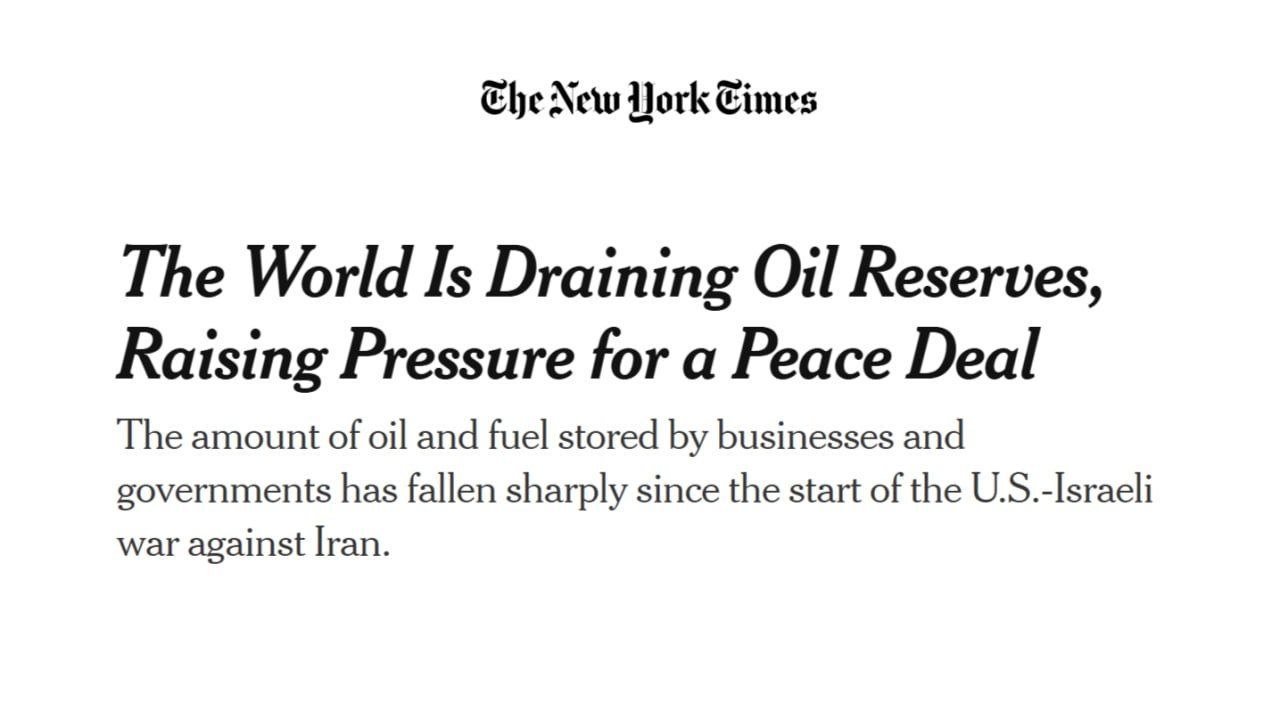
At 22:02 UTC on 25 May 2026, the Telegram channel BRICS News carried a terse dispatch: several IRGC Navy personnel had been killed in American strikes on Iranian boats in the Persian Gulf. Hours earlier, the same channel had reported that US forces had struck Iranian missile launch sites and boats attempting to plant mines in the Strait of Hormuz, citing the New York Times. The attacks — confirmed by no official American or Iranian statement as this article was filed — landed in the middle of a diplomatic shuttle that was already underway.
Iran's foreign minister had arrived in Doha earlier that same day to meet Qatar's prime minister. Iranian negotiators, with Pakistan and Qatar mediating, had already convened in the Qatari capital to discuss two subjects that have defined the current standoff: the Strait of Hormuz and Iran's highly enriched uranium programme. Bitcoin and Ethereum prices ticked upward on 25 May, with crypto markets interpreting the Doha gathering as a signal that a deal was possible. Polymarket, the prediction market platform, moved odds on a US-Iran peace agreement higher as the day progressed.
The collision of force and diplomacy in the same 24-hour window was not accidental. It was the latest iteration of a pattern that has structured the US-Iran relationship since the 1979 revolution — each act of coercion accompanied, or immediately followed, by an offer to negotiate. The question now is whether that pattern is finally producing a durable outcome, or whether it is simply running in place while the underlying tensions deepen.
The Strikes and What They Signal
American military action in the Gulf has a specific grammar. Unlike the large-scale campaigns conducted in Iraq and Afghanistan, US operations against Iranian targets in the Persian Gulf have typically been calibrated — limited in scope, deniable in attribution, and timed to coincide with moments of diplomatic pressure. The strikes reported on 25 May fit that template. Targets were boats and missile launch sites, not installations on Iranian soil. The stated rationale — preventing the laying of mines and the projection of missile capability into the strait's shipping lanes — was precise and defensible under the rules of engagement that govern US naval operations in international waters.
The mine-laying concern is not new. Iran's Islamic Revolutionary Guard Corps Navy has a documented history of deploying floating mines and fast attack craft in the Gulf's northern reaches. The mines themselves are a crude but effective instrument: cheap to deploy, difficult to detect in shallow water, and capable of disrupting commercial shipping in a corridor where even a brief closure sends freight rates sharply higher. The IRGC Navy's personnel losses in the 25 May strikes represent a direct American response to that threat, communicated in the language that Washington understands best.
What the strikes did not do was resolve the underlying problem. Iran retains the capacity to resume mine-laying operations, to test missiles from other launch sites, and to harass commercial vessels transiting the strait. The strikes were a message, not a strategy. Their immediate effect was to strengthen the American hand at the negotiating table in Doha — demonstrating to the Iranian delegation that military escalation carries real costs — while simultaneously creating the conditions for a diplomatic settlement by raising the stakes of failure.
The Doha Track and Tehran's Diplomatic Logic
The Iranian negotiating team arrived in Doha carrying a set of demands that have remained broadly consistent across successive rounds of talks: partial sanctions relief, recognition of Iran's civilian nuclear programme, and formal acknowledgement of Tehran's regional standing. The Americans, for their part, have insisted on constraints on uranium enrichment and guarantees that the Strait of Hormuz will remain open. These positions are not new. What has changed is the context in which they are being advanced.
Iran's foreign minister's meeting with Qatar's prime minister on 25 May was not a first contact. Qatari and Pakistani mediation has been a persistent feature of the back-channel between Washington and Tehran for more than a decade, and Qatar's willingness to host Iranian negotiators reflects Doha's longstanding interest in positioning itself as a neutral venue for regional dispute resolution. The Emirate's hosting of theTaliban peace talks gave it credibility in this role that few other regional actors can claim.
The Polymarket posts from that day offer an unusual window into how financial markets were reading the situation. One post noted that Iran could reportedly keep the Strait of Hormuz shut for 30 days even after a US deal is reached — a scenario that, if accurate, suggests the diplomatic track is as much about managing a post-agreement enforcement problem as it is about reaching a deal in the first place. Another noted Iran's declaration that it would not charge tolls in the strait, instead imposing what Tehran called "environmental protection fees" — a formulation that sidesteps the language of sovereignty over international waters while creating a new revenue mechanism and a mechanism of leverage. The language matters: "tolls" implies a territorial claim that would be internationally indefensible; "environmental protection fees" implies a regulatory rationale that is harder to challenge and easier to adjust.
The Strait as Political Instrument
The Strait of Hormuz is roughly 33 kilometres wide at its narrowest point, yet the waters through which it passes carry approximately 21 million barrels of oil per day — roughly a fifth of global consumption. Any sustained disruption to traffic through the strait produces immediate and measurable effects on global energy prices, on freight rates, and on the economics of oil-dependent industries from aviation to petrochemicals. This is not a latent strategic asset; it is an active one, and both sides understand how to use it.
Iran's approach to the strait has evolved over decades. In the 1980s, during the Iran-Iraq war, Tehran mined the waterway directly, prompting Operation Earnest Will — the largest US Navy escort operation since World War Two. That history is a reference point for every current calculation. Iran's leadership knows that closing the strait, or threatening to close it, triggers an American response that has historically been overwhelming. But the threat itself — even an implausible one — is sufficient to concentrate minds in Washington, Riyadh, and Tokyo. The leverage is real even when it is not exercised.
The American calculus is different but related. Washington's interest is in keeping the strait open and demonstrating that it can compel Iran to accept terms that preserve freedom of navigation. The strikes on 25 May served both purposes: they punished an Iranian provocation, and they reminded Tehran that the US Navy's presence in the Gulf is not negotiable. The diplomatic track that followed was the second half of that same strategy.
What makes the current moment distinct is the degree to which the Hormuz question intersects with the nuclear question. Enrichment levels that Tehran has reached would, if extended, produce weapons-grade material within months rather than years. American negotiators are asking for constraints that Iran considers a precondition for any sanctions relief. Iranian negotiators are asking for guarantees that any agreement will not be torn up by the next administration in Washington — a concern that is not hypothetical, given the history of American deal-making with Tehran.
Historical Echoes and Structural Parallels
The pattern of military pressure followed by diplomatic overture is not unique to 2026. The negotiations over Iran's nuclear programme have followed this arc repeatedly since the process began in earnest in the early 2000s. The Joint Comprehensive Plan of Action agreed in 2015 was preceded by years of sanctions, covert operations, and regional military posturing. The Trump administration's withdrawal from the JCPOA in 2018 was followed by a period of "maximum pressure" that included the targeted killing of General Qasem Soleimani — and that period, in turn, produced the conditions for indirect negotiations that continue to this day.
The structural logic is straightforward. Both sides have incentives to negotiate: the US avoids the costs of a sustained military campaign and the diplomatic isolation that accompanies unilateral action; Iran gains sanctions relief and international recognition without formally abandoning its nuclear programme. Both sides also have incentives to maintain the threat of force: the US because coercive pressure is the only thing that has historically produced Iranian concessions; Iran because the strait is the only card it holds that the Americans cannot simply ignore.
This is a relationship defined by mutual dependence and mutual hostility, in which the alternation between confrontation and negotiation is not a sign of dysfunction but the actual mechanism through which the relationship functions. Each side uses force to improve its position at the table and negotiation to manage the consequences of force. The question is whether the current round of talks is producing something more durable than the previous ones, or whether it will be followed by another cycle of escalation.
What Comes Next
The stakes of the current diplomatic moment are not symmetrical, but they are high for all parties. A successful agreement would remove a significant source of geopolitical risk from global energy markets, allow Iran to increase oil exports, and provide both Washington and Tehran with a period of relative stability. It would also, plausibly, allow the Trump administration to claim a diplomatic victory without the large-scale military commitment that a sustained campaign would require.
A failure would be more consequential. Polymarket's assessment that Iran could keep the strait partially closed for 30 days even after a deal suggests that the enforcement problem is genuine — that a signed agreement may not translate into a stable operational reality in the Gulf. If the Doha talks collapse, the strikes of 25 May will have accomplished nothing except to deepen Iranian resentment and to harden positions on both sides. The military pressure will have to intensify, the diplomatic track will have to restart, or the cycle will simply continue at a higher level of danger.
The sources do not specify what terms, if any, were agreed in Doha as of 25 May. Iranian state media has not commented on the strikes; the US Department of Defense has not confirmed them in a form this article could verify. What is clear is that the diplomatic track is active, that both sides have interests in its success, and that the Strait of Hormuz remains the place where those interests collide most directly. The question is not whether the two countries will talk. They are already talking. The question is whether the talks will produce an agreement that actually changes the dynamics of the relationship, or whether they will produce another document that future administrations will treat as disposable.
This article was filed from wire and market sources on 26 May 2026. Monexus coverage emphasises the simultaneous military and diplomatic tracks — a pattern that the wire services treated as two separate stories rather than a single coordinated dynamic. The decision to frame the strikes and the Doha talks as two elements of the same strategy reflects this publication's view that coercive pressure and diplomatic negotiation in the Gulf context are better understood as complementary instruments than as opposing approaches.
Wire provenance
This editorial synthesis draws on the following public wire/social posts:
- https://t.me/bricsnews/18432
- https://t.me/bricsnews/18428
- https://x.com/polymarket/status/1923456789123456789
- https://x.com/polymarket/status/1923345678901234567
- https://x.com/polymarket/status/1923234567890123456
- https://en.wikipedia.org/wiki/Strait_of_Hormuz
- https://en.wikipedia.org/wiki/Operation_Earnest_Will