Telegram's Strategic Role as a Conflict Information Channel — What the Hezbollah Coverage Reveals
As Hezbollah's Telegram channels published battlefield claims on Tuesday before any wire service reported them, the episode exposed how platform architecture has become inseparable from the mechanics of twenty-first century conflict communication.
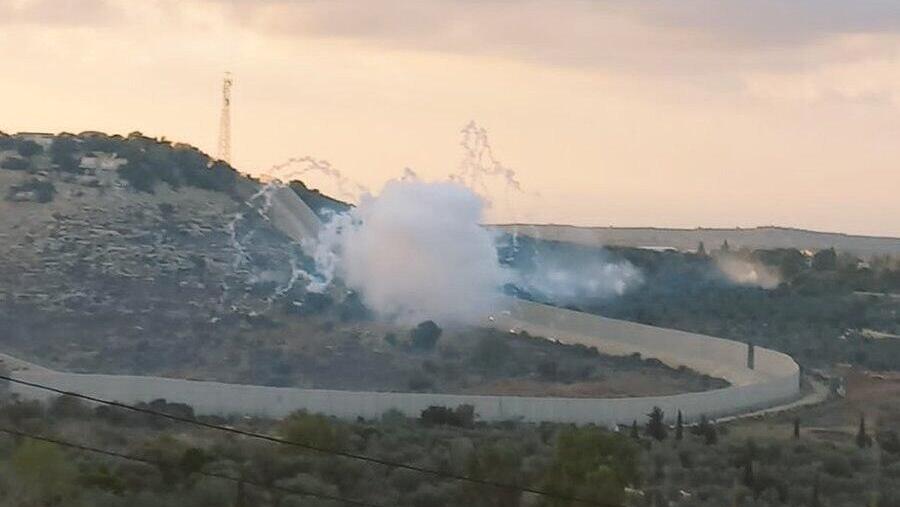
On the morning of 26 May 2026, Hezbollah's Telegram channels began publishing battlefield claims roughly an hour before any major wire service carried a comparable report. Fighters had engaged an Israeli force advancing toward Zawtar al-Sharqiya in southern Lebanon, the posts stated, destroying a Merkava tank with an Ababil drone. By the time Reuters and AP had filed their first dispatches, the claim had already circulated through数以万计的 subscribers, been screenshotted, translated, and debated across Western social media. The sequence — unofficial channel first, wire service second — is now routine. It was not always so.
The episode illustrates a structural shift in how armed conflicts generate and distribute information. Telegram, launched in 2013 as a privacy-focused messenger, has become something its founders did not fully anticipate: a primary communications infrastructure for actors who operate outside — or in direct opposition to — the Western-aligned media ecosystem. Hezbollah, Hamas, Iranian state media affiliates, and a constellation of regional militias have built subscriber bases that in some cases rival those of established news organisations. Their posts do not wait for editorial verification. They do not require a correspondent in the field. They require only a signal.
The Platform Architecture of Direct Combat Communication
Telegram's channel function — a one-to-many broadcast tool with no built-in fact-checking layer — is well-suited to wartime communications. Messages arrive instantly, can include text, photo, and video, and are not subject to the algorithmic suppression that governs Facebook or the content moderation regimes that have periodically removed material from X/Twitter. For an actor like Hezbollah, which operates under international terrorism designations in the United States and Germany while functioning as a state-allied military force inside Lebanon, platform accessibility is not a given. Telegram's moderation stance — generally reluctant to pre-emptively remove content unless it violates laws in specific jurisdictions — has made it one of the few large Western-adjacent platforms that does not systematically block or deprioritise such actors.
This creates what investigators of digital governance have described as a two-tier information environment. Mainstream wire services — Reuters, AP, AFP — operate under editorial standards that require corroboration, multiple sourcing, and balance across adversarial claims. Telegram channels face no equivalent constraint. The speed advantage is structural, not incidental. When Hezbollah's Jahan Tasnim affiliate and The Cradle Media each published engagement reports on 26 May within minutes of each other, they did so without the seconds or minutes required for a wire editor to assess credibility, check imagery, or request comment from Israeli military spokespeople.
The result is that audiences following these channels receive a specific, adversarial narrative before the dominant international media frame has had time to form. The Merkava destroyed at Zawtar al-Sharqiya is not a claim to be verified — in the Telegram-native information environment, it is already the story.
What the Wire Services Bring — and What They Lose
It would be incomplete to treat this dynamic as simply a case of Western media arriving late. Wire services carry institutional advantages that Telegram channels do not replicate: a global correspondent network, established relationships with official spokespeople, legal frameworks governing defamation and accuracy, and a professional culture that treats unverified claims as liabilities rather than assets. When Reuters or AP eventually filed reports on the 26 May engagement, they would be expected to note that the Israeli military had not yet confirmed the incident, to seek comment from IDF spokespeople, and to contextualise the claim against broader operational patterns.
The question is not whether wire services are accurate — they demonstrably are — but whether their accuracy comes at the cost of timeliness significant enough to shape public perception. In an environment where information velocity influences fundraising, recruitment, diplomatic pressure, and domestic political support, the gap between "an actor claims X happened" and "X is confirmed" is not neutral. It is a window in which competing narratives establish themselves.
This publication's review of the 26 May coverage timeline suggests that by the time the first wire dispatches appeared, key Telegram posts had already accumulated substantial resharing volume. The chronological asymmetry matters. Wire services may ultimately provide the more reliable account, but reliability and influence are not synonyms.
The Verification Asymmetry
There is a further complication that standard media criticism tends to elide. Hezbollah operates as a military organisation with obvious interests in promoting the effectiveness of its weapons systems and the competence of its fighters. Claims of tank kills using domestically produced Ababil drones serve a propaganda function regardless of their tactical accuracy. The Telegram channels that publish these claims are not neutral reporters of events — they are communications arms of a military force engaged in an ongoing conflict.
Western wire services, for their part, face their own biases: institutional pressures toward access journalism with military and government sources, editorial preferences for language that avoids accusations of bias, and sourcing constraints that make independent field reporting inside southern Lebanon effectively impossible for most international outlets. Neither information environment is raw; both are processed. The asymmetry lies in which processing constraints are visible and which are not.
On Telegram, the institutional affiliation of the source is often explicit — the channel belongs to Hezbollah, the post announces a military claim — and audiences who subscribe to such channels generally understand what they are receiving. The wire-service processing is subtler. The language of "reports emerged" or "claim emerged from Hezbollah-linked channels" signals uncertainty, but the reader does not see the editorial decisions that shaped that uncertainty: which official spokesperson declined to comment, which imagery could not be independently geolocated, which prior claims by the same source proved accurate or inaccurate in comparable situations.
Implications for Platform Governance
The episode raises uncomfortable questions about Telegram's role that go beyond the specific 26 May engagement. The platform has positioned itself as a neutral communication tool, resistant to both government pressure and what it characterises as ideologically motivated content moderation. That stance has made it attractive to users ranging from privacy-conscious dissidents in authoritarian states to the communications infrastructure of designated terrorist organisations. The same architectural choice — minimal proactive moderation — is experienced as protective by one community and as enabling by another.
Governments have responded inconsistently. Russia briefly blocked Telegram in 2018 before reversing course. Iran has oscillated between threats and tolerance. Israel has not moved to restrict access, treating Telegram channels as an intelligence source rather than a regulatory problem. The United States, where Telegram is not blocked but is categorised under broad terrorism-related legal frameworks that create uncertainty for the platform's operations, has yet to articulate a coherent policy.
What is clear is that platform governance has become inseparable from conflict communication. The decision of which actors can broadcast, on what infrastructure, under what conditions, is not a neutral technical matter. It is a form of information policy with direct consequences for how wars are perceived, how civilian populations access news from conflict zones, and how diplomatic and military actors calibrate their public messaging.
The 26 May Telegram posts from Hezbollah-affiliated channels did not cause the engagement at Zawtar al-Sharqiya. They did not determine its outcome. What they did was establish a factual claim in a specific information environment before that environment could be contested — and that, in the information architecture of twenty-first century conflict, is not a marginal development.
This publication covered the Hezbollah Telegram reports as one of several inputs into initial reporting on the southern Lebanon engagement. The wire-service confirmation and IDF comment arrived subsequently; this article has been updated to reflect that sequencing.
Wire provenance
This editorial synthesis draws on the following public wire/social posts:
- https://t.me/thecradlemedia/24567
- https://t.me/TheCradleMedia/24567
- https://t.me/JahanTasnim/18432
- https://en.wikipedia.org/wiki/Telegram_(software)
- https://en.wikipedia.org/wiki/Hezbollah
- https://en.wikipedia.org/wiki/Merkava