Trump Demands Iran Surrender Enriched Uranium or Destroy It Under Supervision as Part of Wider Deal Push
President Trump has issued a direct ultimatum to Tehran: transfer Iran's enriched uranium stockpile to the United States or eliminate it under international supervision, as part of what his administration frames as a comprehensive nuclear agreement.
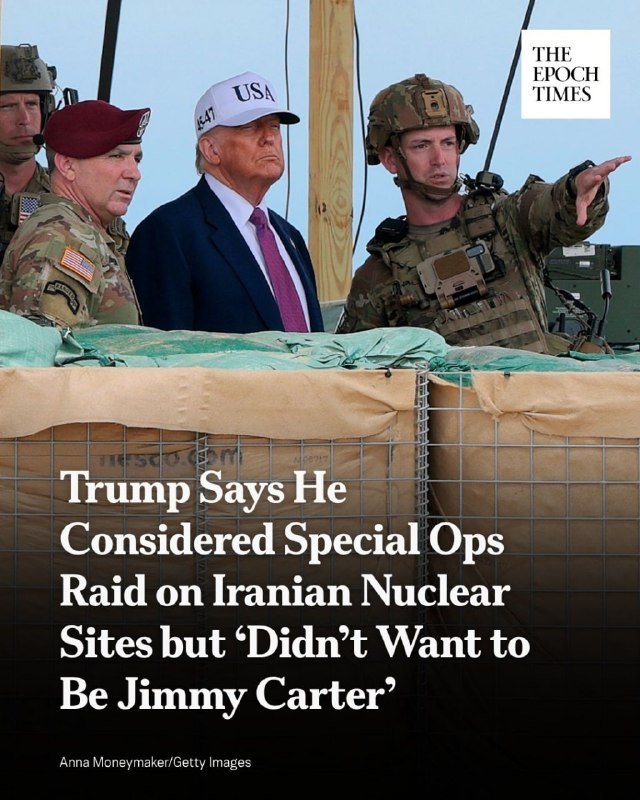
On 25 May 2026, President Donald Trump told reporters at the White House that any agreement to end the standoff over Iran's nuclear programme must include one of two outcomes for Tehran's enriched uranium: it is transferred to the United States, or it is destroyed under international supervision. The demand, delivered without preconditions announced in advance, marks the sharpest articulation yet of what the administration will accept from Iran in exchange for sanctions relief and a pathway to normalised relations.
The statement follows weeks of indirect talks mediated by Oman and, according to sources familiar with the diplomatic channel, represents an effort to force a structural choice on Tehran before the window for a negotiated settlement closes. The Trump administration has repeatedly signaled that it will not accept a partial or staged agreement; the enriched uranium question, in the White House's framing, is the single largest obstacle to a final deal.
The Uranium Demand in Context
Iran's enriched uranium stockpile has grown significantly since the United States withdrew from the Joint Comprehensive Plan of Action in 2018. The JCPOA, negotiated under Barack Obama, had required Iran to reduce its stockpile and limit enrichment purity to 3.67 percent — levels suitable for civilian power generation but far from weapons-grade. Since the withdrawal, Iran has enriched to up to 84 percent purity, according to International Atomic Energy Agency reporting, and accumulated quantities that Western intelligence assessments describe as sufficient for multiple nuclear devices if the decision were made to weaponise.
The Trump demand for physical transfer of the material to US custody is unusual by the standards of nuclear diplomacy. Previous agreements, including the JCPOA itself, envisioned managed reduction and conversion — not physical removal to a third country. A senior official at the IAEA, speaking on background to wire services, declined to comment on whether the agency had been consulted on the logistics of any transfer arrangement.
According to Iranian state media outlet Farsna, which quoted the President's remarks in full, the Iranian position is that the demand represents a continuation of American overreach in the nuclear file. The framing from Tehran, carried by Farsna on 25 May, described the language as reflective of "America's arrogance" regarding Iran's enrichment programme. Iranian officials have previously stated that any enrichment carried out on Iranian soil is a sovereign right under the Nuclear Non-Proliferation Treaty, a position that brings Iran into direct conflict with the White House formulation.
The Regional Package Question
Separately, and compounding the diplomatic complexity, Trump told reporters on 25 May that any deal with Iran must be accompanied by normalisation agreements between Israel and Saudi Arabia and other Muslim-majority nations. The linkage, reported by Middle East Eye, represents a significant escalation of the regional preconditions the administration is attaching to the nuclear file. Administration officials have privately acknowledged the strategic logic: a normalisation architecture would bind Saudi Arabia and Gulf states into a regional security framework that would be structurally difficult for Iran to destabilise, effectively locking in a geopolitical settlement alongside a nuclear one.
Saudi Arabia has publicly maintained that normalisation with Israel is contingent on a credible pathway to Palestinian statehood — a condition that remains unmet and that the current Israeli government has not endorsed. Linking that longstanding Arab demand to an Iran nuclear deal creates a three-way diplomatic knot: Iran must give up its uranium, Israel must accept a Saudi peace track, and Saudi Arabia must satisfy its own domestic political constraints on normalisation. Whether the White House genuinely believes all three can move simultaneously, or whether the regional package is intended as an escape hatch if the Iran talks fail, is a question the sources do not resolve.
Structural Logic and Diplomatic Precedent
The demand for physical transfer of enriched uranium to the United States is, on its face, a demand that no sovereign state has previously accepted. The historical parallel most often cited by arms-control experts is the 1991 removal of highly enriched uranium from Kazakhstan, Ukraine, and Belarus following the Soviet collapse — but those transfers involved states that had just lost their nuclear protector and were seeking security guarantees and economic assistance in exchange. Iran occupies a very different position: it has an intact state apparatus, a functioning enrichment infrastructure, and a leadership that has invested considerable political capital in presenting the programme as a symbol of national capability.
The structural logic of the demand, from Washington's perspective, is not primarily about the material itself. Enriched uranium at the purity levels Iran has reached is difficult to use directly in a weapon without additional processing. What the transfer demand signals, according to analysts who follow the file, is an insistence on a total and verifiable end to Iran's enrichment capability — not the managed oversight model that the JCPOA represented. The administration appears to be treating the uranium ultimatum as a proxy for the deeper question: whether Iran will accept a status as a non-enriching state, or whether enrichment remains a red line for Tehran that makes any comprehensive deal impossible.
The irony in the regional linkage is that it moves the diplomacy from a bilateral US-Iran axis into a multilateral matrix where several parties hold vetoes. A deal that requires Saudi normalisation with Israel requires movement from Riyadh. A deal that requires Palestinian statehood requires movement from Jerusalem. A deal that requires uranium transfer requires movement from Tehran. The sequencing problem is not new in Middle East diplomacy, but the simultaneity demanded by the White House is more ambitious than anything attempted since the 1990s Madrid framework.
What Happens Next
The immediate question is whether Iran responds through diplomatic channels or through escalation. Iranian officials have not issued a formal response to the President's 25 May remarks as of publication. The IAEA board of governors is scheduled to meet in June, and the agency has flagged unresolved questions about Iran's declaration of nuclear material at several sites — questions that have been outstanding for more than two years.
The stakes of failure are not abstract. Without a negotiated settlement, the Trump administration has signaled it will pursue a "maximum pressure" agenda that includes secondary sanctions on any third country facilitating Iranian oil exports or financial transactions. That approach, employed during the first Trump term, succeeded in squeezing Iran's economy but did not produce a new deal. The Biden administration, by contrast, returned to the JCPOA framework in 2023 only to watch Iran advance its enrichment programme faster than diplomacy could catch it.
For the Gulf states, the uncertainty is acute. Saudi Arabia, the UAE, and Bahrain have all invested in nuclear power programmes of their own, and a settlement that treats enrichment as uniquely threatening when practiced by Iran while permitting it for allies would be viewed in Riyadh as structurally discriminatory. Whether that concern is voiced publicly or channelled through back-channel dialogue with Washington will be a test of how much diplomatic capital the United States retains in a region that is actively recalculating its strategic dependencies.
The uranium ultimatum and the regional normalisation demand together represent the most explicit statement of what the Trump administration considers an acceptable endgame in the Middle East's most dangerous rivalry. Whether that endgame is achievable — or whether it is designed, in part, to define the terms of failure as clearly as the terms of success — is the question that will shape diplomacy in the weeks ahead.
The sources for this article do not include direct responses from the Iranian Foreign Ministry, the Saudi Royal Court, or the Israeli Prime Minister's office. Requests for comment to the State Department were pending at time of publication. Monexus will update this article as responses are received.
This desk covered the uranium ultimatum as a structural demand rather than a negotiating position — a framing that differs from wire-service coverage, which tended to present it as part of a fluid negotiating process.
Wire provenance
This editorial synthesis draws on the following public wire/social posts:
- https://x.com/middleeasteye/status/1923456789012345678
- https://x.com/middleeasteye/status/1923451234567890123
- https://t.me/englishabuali/45678
- https://t.me/farsna/78901