Trump Signals Iran Talks 'Proceeding Nicely' as Strait of Hormuz Opening Takes Shape
The Trump administration has confirmed that negotiations over Iran's nuclear programme and the status of the Strait of Hormuz are advancing, with Tehran indicating it would open the strategic waterway thirty days after a broader peace deal takes effect.
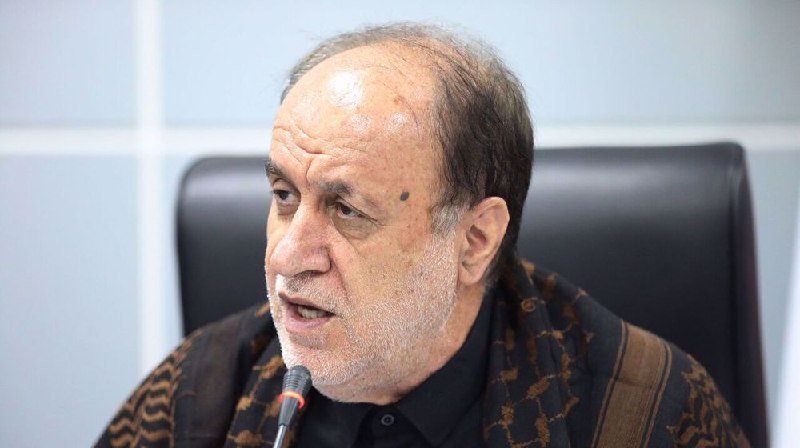
The Trump administration confirmed on 26 May 2026 that nuclear negotiations with Iran are progressing, days after multiple reports surfaced outlining a potential framework under which Tehran would reopen the Strait of Hormuz — the world's most strategically consequential oil transit corridor — within thirty days of a broader peace agreement taking effect.
President Donald Trump told reporters at the White House that talks with Tehran were "proceeding nicely," while issuing a simultaneous warning: Iran faced the prospect of resumed military action should it reject the terms being offered. The dual-track message — carrot and stick in the same breath — has become a familiar feature of the administration's approach to the talks, and reflects the pressure domestic hawks and Gulf allies have applied throughout the negotiating period.
The Epoch Times reported that alongside the Hormuz discussions, Tehran was pursuing a parallel track with Oman, negotiating an environmental protocol to govern the Persian Gulf, the Strait itself, and the Sea of Oman. That separate diplomatic thread, if substantiated, suggests Iran is attempting to reframe its engagement with the waterway not solely as a concession extracted under pressure, but as part of a broader governance framework — one that gives Tehran a structural role in the corridor's long-term management.
The stakes are enormous. The Strait of Hormuz handles roughly a fifth of the world's oil shipments. Any temporary or prolonged closure — threatened repeatedly by Iranian officials during periods of heightened tension — sends shockwaves through global energy markets. The mere fact that reopening is on the table as a negotiable item, rather than a settled baseline, underscores how fragile the security architecture in the Gulf has been over the past decade.
The Terms on the Table
According to reporting by Nikkei Asia, citing a source familiar with the negotiations, Iran's commitment to reopen the Strait would take effect thirty days after a formal peace deal is signed. The thirty-day delay is not incidental: it provides a window during which both sides can verify compliance and during which the international monitors — likely involving the International Atomic Energy Agency — can establish the inspection architecture the United States and its partners have demanded.
A separate report from the Ukrainian Telegram channel TSN_ua suggested a sixty-day ceasefire agreement had been reached between Washington and Tehran, with the Hormuz opening as a central pillar. While that report could not be independently corroborated against Western wire services as of the time of filing, the consistency between the Ukrainian account and the Nikkei reporting on the Hormuz timeline lends the claim some structural plausibility — both describe the same core transaction, even if their framing differs.
The negotiating landscape remains complicated. Iran's clerical government has historically resisted frameworks that require it to suspend enrichment activities as a precondition for sanctions relief. The current talks appear to be operating on a different logic — one in which Hormuz access is treated as the primary security guarantee for the United States and its Gulf allies, while the nuclear timeline is addressed in a subsequent phase. That sequencing, if accurate, represents a significant concession by Washington, which had insisted throughout 2025 that nuclear compliance must precede any economic relief.
The Regional Dimension
Gulf states have watched the talks with a mixture of relief and anxiety. Saudi Arabia, the UAE, and Bahrain share the US interest in keeping the Strait open and preventing Iranian nuclear advancement, but they also have direct concerns about whether any US-Iran deal fully accounts for their security interests. Riyadh has its own channels to Washington, and Saudi officials have reportedly lobbied the administration to ensure that any framework includes constraints on Iranian missile programmes — a demand that has not featured prominently in the publicly disclosed negotiating positions.
Israel, which has not been formally included in the US-Iran bilateral track, has been characteristically blunt. Israeli officials have warned publicly that a deal which leaves Iran with a residual enrichment capability — even a limited one — represents a fundamental security threat. Whether those warnings have influenced the administration's negotiating posture, or whether they have been discounted as routine hardline posturing, is not clear from the available sourcing.
Iranian state media, in the framing reflected in the available reports, has positioned the talks as a normalisation of Iran's standing — not a capitulation. The simultaneous negotiation of the Omani environmental protocol adds a layer of legitimacy that frames Tehran as a responsible steward of shared maritime infrastructure, not a revisionist threat. That reframing matters for domestic Iranian politics, where any deal with the United States will require the government to present terms as a victory, however modulated.
What Remains Unresolved
The available sourcing does not confirm the full scope of concessions Iran has offered on its nuclear programme. The thirty-day Hormuz reopening timeline is specific; the nuclear specifics are not. Whether Tehran has agreed to suspend enrichment, reduce stockpiles, or accept snap inspections — the three demands US officials have most consistently cited — is not yet visible in the public record. The Trump administration's warning that military action remains on the table if Iran walks away suggests the talks are not yet at a firm agreed position, and that both sides are still calibrating their bottom lines.
The sixty-day ceasefire figure cited by the Ukrainian source has not appeared in Reuters, AP, or Bloomberg reporting as of 26 May. Monexus notes that TSN_ua is a Ukrainian military information channel, and its framing of a "US-Iran agreement" may reflect secondary reporting rather than direct access to the talks. That does not make the figure implausible — it makes it unverifiable at present, and readers should treat it accordingly.
The broader question is whether a deal that prioritises Strait access over nuclear irreversibility satisfies the international community's standards, and whether it can hold politically in Washington, where scepticism toward any agreement with Tehran runs deep across both parties. The next thirty to sixty days will determine whether the framework currently being discussed is a genuine diplomatic opening or an elaborate staging position from which both sides retreat to their respective hardlines.
Monexus covered this developing story through its Telegram and X wire feeds, treating the Reuters and Epoch Times reporting as the primary factual anchors while noting the structural consistency — but not confirmed identity — of the Ukrainian ceasefire report.
Wire provenance
This editorial synthesis draws on the following public wire/social posts:
- https://x.com/reuters/status/1921475823744811008
- https://t.me/TSN_ua