The Soft-Power Salesman: How Trump’s Tourism Chief Became the Face of American Reassurance
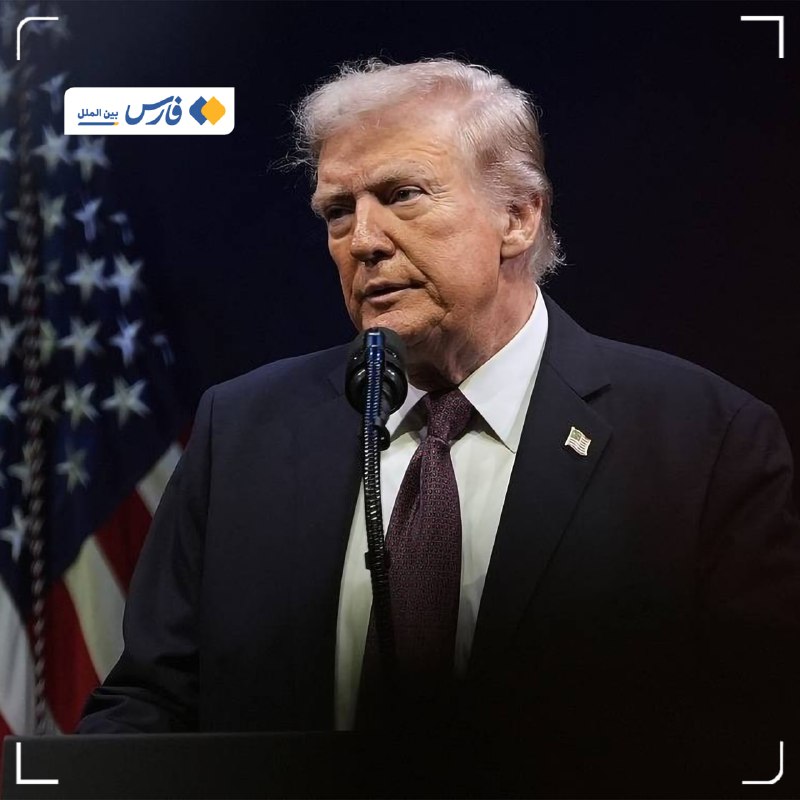
The optics were peculiar from the start. An Australia-born official, dispatched to convince the world that America remains open for business, standing at a podium in Washington and arguing — with visible effort — that the United States has not become a hostile destination. It was a PR assignment tangled in contradiction: promote a country whose current government's rhetoric often suggests the opposite.
This is the peculiar position occupied by Christopher L. Naylor, the Australia-born executive tapped by the Trump administration to lead Visit USA, the national tourism promotion body, as global travel sentiment toward the United States has grown increasingly uncertain. According to reporting by the South China Morning Post, Naylor has spent recent weeks publicly addressing what he calls 'myths' about American danger and unwelcoming氛围 — a term diplomatic handlers typically avoid in official communications.
The role itself is a decades-old fixture of American soft-power architecture. Visit USA operates as a public-private partnership, funded partly by industry contributions and partly through congressional appropriation, tasked with reversing the decades-long trend of declining international arrivals as a share of global travel. That mission now arrives complicated by policy decisions — travel vetting programs expanded under the current administration, visible political rhetoric about immigration, and a State Department advisory posture that has shifted in ways that alarm the tourism industry.
The Perception Problem
The numbers driving Naylor's intervention are not subtle. International arrivals to the United States peaked in 2019 at roughly 79 million visitors; recovery from pandemic-era closures has been uneven, and the dollar's relative strength has made the US an increasingly expensive destination for foreign travelers. Several industry analyses conducted this year suggest that the United States has lost ground as a preferred global destination not because of infrastructure deficits but because of what private-sector polling variously describes as 'polish' and 'welcomeness' — the indefinable variables that make a country feel accessible to foreign visitors.
Naylor's public messaging has leaned heavily into countersurveillance. His briefings describe a country where violent crime rates are declining, where airports function efficiently, where the hospitality sector employs trained professionals who understand international guests. This is technically defensible on certain metrics. FBI data shows certain violent crime categories declining year-on-year. Major urban tourism corridors have invested heavily in visible safety infrastructure. The tourism sector's economic contribution — cited at over $2.5 trillion in visitor spending annually in pre-pandemic peaks — remains a cornerstone of service-sector employment in coastal and gateway cities.
The Structural Contradiction
But the administration Naylor serves has complicated his pitch in ways that industry professionals find maddening. Travel restriction expansions, vetting delays at consular posts, and rhetorical positioning on immigration have registered in source markets — European, Asian, and increasingly South American — as signals that the United States does not particularly want foreign guests. That framing persistseven when the formal visa approval rate technically improved year-on-year in several categories.
This is the structural problem at the heart of American tourism policy: the promotional apparatus must project welcome while the broader governmental posture often signals the opposite. Naylor, as an Australian national who chose to build a professional career in American tourism promotion, represents the ideal of cross-national talent contribution that the current administration's immigration framework simultaneously questions.
The dissonance is not lost on foreign observers. Correspondents covering the travel sector from Asian and European capitals note that official American messaging has become difficult to decode — mixed signals from different departments, a presidential rhetoric that appeals to a specific domestic base but complicates international perception management, a consular posture that suggests rigor but reads abroad as hostility. Naylor's public reassurances, in this context, read less like tourism promotion and more like diplomatic damage control.
The Economic Stakes
The economic calculus is real and measurable. Tourism remains among the United States' largest service exports. Every avoided international visitor represents lost accommodation revenue, unspent retail expenditure, foregone dining income in gateway cities where the visitor economy supports millions of jobs. Industry modeling suggests that sustained double-digit declines in key source markets — particularly the crucial Chinese and European inbound segments — would translate into measurable regional employment effects within two to three budget cycles.
The competitive picture has also shifted. Nations that have invested deliberately in tourism-infrastructure messaging — the UAE's airport-led connectivity strategy, Thailand's long-term visa liberalization, Japan's coordinated hospitality sector development — have captured share from destinations perceived as complicated, expensive, or unwelcoming. The United States' brand advantage in tourism remains enormous; American cities, parks, and cultural institutions retain unmatched global recognition. But brand equity requires active management, and management requires coherence between the promotional apparatus and the broader governmental posture.
What Remains Uncertain
Whether Naylor's campaign can meaningfully shift perception — in markets where the dominant information environments are shaped by social media, news coverage, and peer networks rather than official tourism brochures — is genuinely unclear. The sources consulted for this article do not include reliable polling on whether explicit safety reassurances move the needle with travelers who have already absorbed a general impression of a country as unwelcoming.
The deeper question is whether the perception gap can be closed while the underlying policy signals remain contradictory. Naylor has been given a sales mandate with a product his own colleagues in government have spent four years describing as malfunctioning. The tourism chief's Australian nationality, which likely recommended him for the role precisely because of his outsider's credibility, might also prove his limitation: an Australian can say America is safe, but an American has to live with the consequences if the pitch fails.
This publication tracked how the Visit USA briefing was framed against industry data on international arrivals. The South China Morning Post's piece provided the direct-sourced quotes on Naylor's 'myth-busting' initiative; industry economic data was drawn from U.S. Travel Association reporting and aggregated government statistical releases.