The 500-Target List: What Kyiv's Targeting of Belarus Reveals About the Fiction of Minsk's Neutrality
Ukraine's disclosure that it has identified 500 military targets inside Belarus exposes the hollowness of Minsk's claimed neutrality — and raises the question of how long President Lukashenko can maintain a position that satisfies neither Moscow nor his own populace.
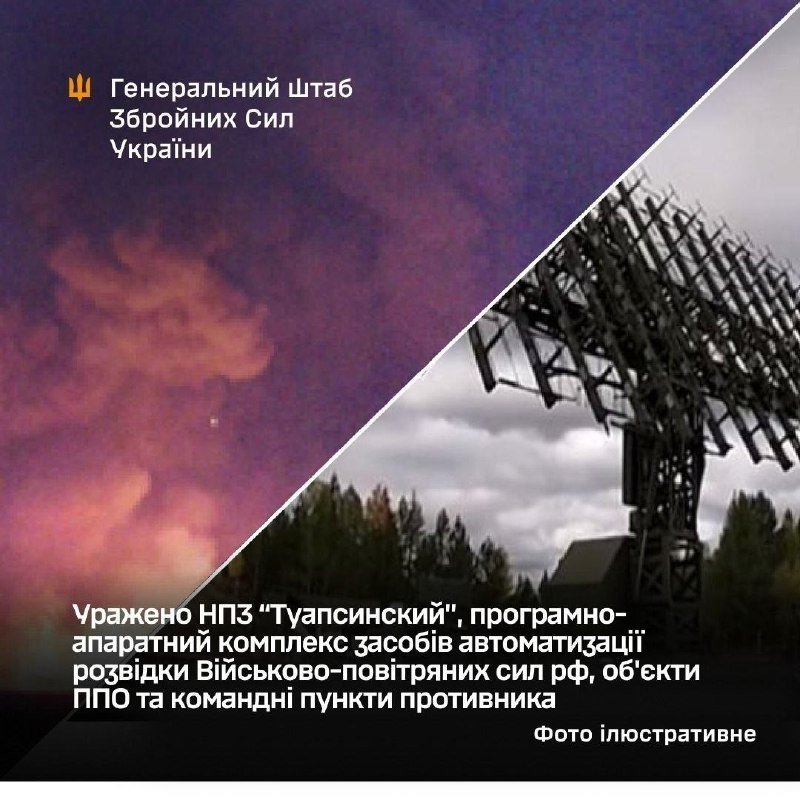
The disclosure, reported on 26 May 2026 by Ukrainian outlets TSN and confirmed by other mass media, landed with the deliberate precision of a signal. Ukraine has identified 500 targets on Belarusian territory — and has made that fact public. The intent is not difficult to read.
Belarusian state media moved quickly to denounce the reporting as a Ukrainian provocation, pointing to alleged drone incursions as evidence that Kyiv was preparing false-flag operations to justify aggression. Minsk's foreign ministry issued a statement framing the targeting disclosure as a threat to regional peace. The choreography was familiar, but the timing was not: Ukraine rarely publishes target lists in advance of any action. Something has changed in how Kyiv communicates with Minsk.
\n\n## The Neutrality That Never Was
The fiction of Belarusian neutrality has always required willing suspension of disbelief. Since February 2022, Belarusian territory has served as a launchpad for Russian military operations against northern Ukraine. Russian troops moved through Belarus to Kyiv. Russian missiles have been fired from Belarusian airspace. The Belarusian railway network has handled logistics for the Russian military machine. None of this is secret; satellite imagery, intelligence assessments, and independent reporting have documented it extensively.
What Belarus has claimed — and what Lukashenko has repeated at every available opportunity — is that Belarus itself is not a party to the war. Belarus does not fire on Ukraine. Belarusian soldiers do not cross the border. Belarus is simply a bystander, unfortunate enough to share a border with Russia.
The 500-target list punctures this claim in a specific and measurable way. Ukraine is treating Belarusian military infrastructure — airfields, logistics hubs, command posts, staging areas — as legitimate components of a battlefield that runs from Luhansk to Chernihiv to Brest. That is not the targeting posture of a country that believes its neighbour is neutral. It is the targeting posture of a country that has absorbed, at the policy level, the reality that Belarus functions as an operational theatre for Russian forces.
\n\n## Lukashenko's Impossible Position
What makes this uncomfortable for Minsk is that Lukashenko has no good options. His survival in power depends entirely on Russian backing — a dependency cemented after the brutal suppression of the 2020 protests that would have ended his thirty-year rule without Moscow's intervention. He cannot confront Russian demands. He cannot extract meaningful concessions from Vladimir Putin on the pace or scope of the military presence in Belarus.
But he also cannot ignore the domestic reality that Belarusians, while cowed, have shown no appetite for actual combat participation in Ukraine. The Belarusian military is a garrison force designed for internal security and symbolic deterrence, not for expeditionary warfare against a neighbour with a battle-hardened army. Sending Belarusian conscripts into Ukraine would be politically catastrophic — and the families of those conscripts know it.
Lukashenko has therefore settled on a posture of strategic ambiguity: permit Russian operations, deny Belarusian involvement, and accept the periodic humiliation of having his airspace or territory used in ways that make the neutrality claim absurd to any observer willing to look at a map. The 500-target list is a consequence of that ambiguity. Kyiv has calculated that the ambiguity must now be named plainly — that treating Belarus as a Russian staging ground is more accurate than treating it as a third party.
\n\n## The Minsk–Moscow Asymmetry
There is a structural dimension to this that deserves attention. The Belarus–Russia union state arrangement, signed in 1999 and formalised incrementally since, was always asymmetrical — but the asymmetry has deepened significantly since 2022. Russia has embedded military assets inside Belarus under bilateral agreements that give Moscow operational control. Russian air defence systems, aviation units, and now tactical nuclear weapons deployed under a 2023 decree all sit on Belarusian territory with legal cover that makes their removal by Minsk effectively impossible without a political rupture with Russia.
That rupture is not coming. Lukashenko is 71 years old and has no succession plan that does not depend on Russian approval. His family holds positions across the Belarusian state apparatus. The structural dependency is total, and both sides understand it.
What changes with the targeting disclosure is not the operational reality — Russian forces will continue to stage from Belarus regardless — but the political register in which Minsk must now operate. The fiction of neutrality has become a diplomatic liability for Kyiv, and naming it publicly is a way of drawing a red line that Belarus must now think carefully about crossing.
\n\n## What the List Means — and What It Does Not
The publication of a target list is not the same as a decision to strike. Ukrainian military doctrine has consistently emphasised precision and strategic patience; firing missiles into Belarus would cross a threshold that Kyiv has so far avoided, not because Belarusian territory is inviolable but because the escalation calculus has not favoured it. Belarusian strikes would give Moscow a propaganda gift, potentially justify a broadening of the conflict, and risk pulling NATO more directly into a confrontation it has thus far managed to keep at arm's length.
The list therefore functions primarily as deterrence and communication. It tells Minsk: we see what you have, we know where it is, and if you cross the line from passive enabler to active combatant, the response is already drafted. It tells Moscow: Belarus is not a buffer; it is part of the theatre, and treating it as safe from Ukrainian precision capabilities is a gamble your logistics planners should factor in.
Whether that deterrence holds depends on how the war evolves over the coming months. If Russian pressure on Ukraine intensifies and Kyiv's Western support narrows, the calculus that currently keeps Belarusian targets on a watchlist rather than an engagement order may shift. Lukashenko is betting that the current arrangement — profitable enough for Moscow, survivable enough for Minsk — will outlast the war's most acute phases. The 500-target list suggests that Kyiv is not willing to wait for that bet to resolve on its own terms.
The stakes, plainly, are asymmetric. A Belarus that continues as a Russian staging ground costs Ukraine operational flexibility and lives. A Belarus that escalates to direct combat involvement costs Lukashenko whatever remains of his claimed legitimacy as something other than a province of Russia. The list names that asymmetry publicly. What Minsk does with that information will reveal, yet again, how much agency it retains in a conflict that has progressively stripped it of the option to stand aside.
\n\nThis publication's wire reading prioritised Ukrainian and Western-allied sources on the Belarus targeting story, treating Belarusian state media framing as counter-claim material requiring independent corroboration — which the available sources did not provide.
Wire provenance
This editorial synthesis draws on the following public wire/social posts:
- https://t.me/TSN_ua/7891
- https://t.me/TSN_ua/7893
- https://t.me/Tsaplienko/4521