The Calculus of Strike and Surrender: How US–Iran Talks Became a War by Other Means
As American warplanes struck Iranian missile sites and mining boats in the Gulf on 25 May 2026, the Trump administration simultaneously signalled openness to a deal — a posture that reflects a deeper paradox in coercive statecraft: pressure and concession running in parallel, calibrated to produce concessions a purely military or purely diplomatic approach could not.
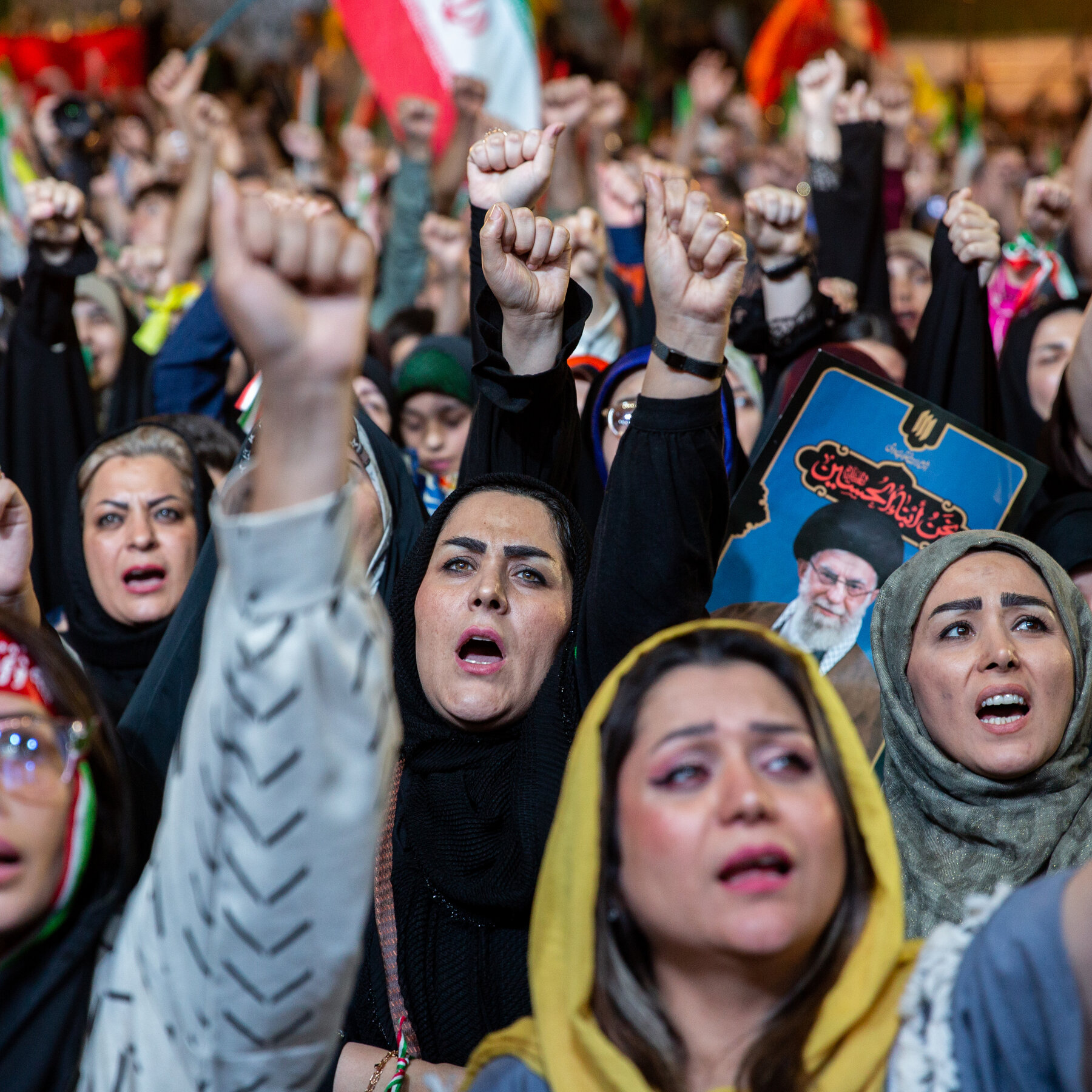
The American jets went in first. On 25 May 2026, the United States launched strikes against Iranian missile sites in the country's south, and against Iranian boats attempting to lay mines in Gulf waters, according to reporting carried by BBC on 26 May. The strikes — framed by Washington as defensive operations targeting imminent threats — represented the most direct American military action against Iranian military infrastructure since the confrontation between the two countries escalated beyond sanctions and rhetoric.
But within hours of the strikes, a second signal emerged from the same administration: according to Iran International on 25 May, Iran's foreign ministry spokesman said a deal with the United States was "not imminent," even as Polymarket odds tracking a potential deal showed a 37 percent probability of an agreement by month's end. A 10 percent probability priced the chance the United States would obtain Iran's enriched uranium stockpile by the end of June, and an 11 percent probability reflected the likelihood Iran would voluntarily surrender its enriched uranium stock during the same window. The numbers are not confidence intervals. They represent the market's honest assessment of a negotiation in which both sides are simultaneously shooting and talking.
This is the paradox at the heart of the current US posture: force applied on the ground, in the sea, and in the air, alongside repeated expressions of willingness to accept a diplomatic settlement that would strip Iran of its most sensitive nuclear material. The Financial Times reported on 25 May that analysts assessment found a conflict with Iran could add billions of dollars in additional interest payments to American sovereign debt, a cost trajectory that argues for settlement even as it underscores how little political room exists for a conflict that damages the dollar's global standing.
Simultaneity as Strategy
The coexistence of military strike and diplomatic overture is not new in coercive statecraft, but the transparency of the current moment makes the mechanism unusually visible. Ordinarily, back-channel negotiations and public pressure operate in separate registers; the public sees the fist, the private channel carries the olive branch. What Polymarket's odds and Iran's own public statements reveal is a negotiation in which both tracks are running at once, at full volume, in full view of markets and audiences.
Iran's foreign ministry on 25 May made clear that whatever deal the United States was floating, Tehran did not consider it imminent. That formulation — carefully chosen, deliberately cool — reflects a domestic political constraint that analysts who follow the Islamic Republic understand intimately: Ayatollah Khamenei and his circle cannot afford to appear to bow to American pressure without extracting a visible concession in return. The enriched uranium question sits at the centre of that calculus. Iran spent years building a programme that gives it breakout capacity short of a declared weapons capability — a hedge that is militarily useless as a bomb factory and diplomatically invaluable as leverage. Surrendering it requires a payment the Americans have not yet offered.
The Polymarket probabilities illuminate what that payment might look like from the market's view. A 37 percent chance of any deal and an 11 percent chance of uranium surrender by month's end implies the market assigns low probability to the most comprehensive form of Iranian capitulation. The 23 percent chance assigned to internet access being restored in Iran by month's end is a separate proxy for regime duress: international connectivity was disrupted during and after prior confrontations, and its restoration suggests a de-escalation the regime has not yet accepted. These are not analytical frameworks — they are prices set by a crowd that has read the same public signals and drawn consistent conclusions.
What the Strikes Actually Targeted
The American framing of the strikes deserves scrutiny. Washington described the targets — missile sites in southern Iran, boats laying mines — as imminent threats requiring immediate response. The legal and operational basis for striking infrastructure inside Iran, a sovereign state with which the United States is not formally at war, requires examination rather than acceptance on faith.
Mine-laying by small boats in the Gulf is a real concern for maritime traffic; it is also a technique Iran and its regional proxies have employed selectively in prior moments of tension. Missile sites aimed at Gulf shipping lanes or regional allies are a different order of provocation. Whether sites struck on 25 May were preparing strikes in progress or were dormant assets recharacterised as imminent threats is a question the available reporting does not resolve. What is clear is that the administration secured a visible military effect — imagery, confirmed strikes, operational disruption — while simultaneously preserving the diplomatic channel its own officials were still calling viable.
This is the coercion-diplomacy bind in practice: the strike demonstrates the cost of non-compliance, while the open hand invites the dealmaker inside Tehran's circle to claim credit for averting worse. Iranian officials have not taken the bait. The foreign ministry's characterisation of a deal as not imminent is functionally a refusal to let American pressure set the agenda. The regime in Tehran has been here before — under maximum pressure during the Trump administration's first term, and again under the Biden administration's targeted approach — and it survived on the calculation that American attention, sooner or later, turns elsewhere.
The Debt Dimension
The Financial Times reporting on 25 May introduced a variable that rarely features in coverage of military Escalation: the fiscal cost of war to the American exchequer. The article reported that war with Iran could add billions in interest payments to US sovereign debt, on top of direct military expenditure that analysts estimate would run into the tens of billions. The mechanism is familiar from financial analysis of military conflicts: borrowing to fund operations drives deficits higher; deficits drive yields on Treasuries upward; higher yields raise debt-servicing costs across the federal balance sheet, creating a feedback loop that disciplines neither Congress nor the executive when the immediate stakes feel existential.
In this case, the existential framing is partly manufactured — the threat from Iranian missiles and proxies is real but manageable, and the Iranian nuclear programme, while a genuine proliferation concern, is not an imminent weapons capability in the assessments most Western intelligence services publish. The decision to strike, then, sits in a corridor between genuine security interest and the use of military capability to improve a negotiating position. The debt arithmetic complicates that calculation in ways the Trump administration's economic nationalist flank is not fully prepared to dismiss.
Iran's response to this dynamic has been consistent across administrations and is visible in the current moment: hold the nuclear programme, absorb whatever sanctions can be absorbed, and wait for the political cost of sustained pressure in Washington to tilt the balance toward accommodation. The Polymarket 37 percent deal probability reflects the market's view that this patience is not infinite but is not broken either — and that a settlement, when it comes, will look less like Iranian capitulation and more like a transactional rearrangement with face-saving language on both sides.
The Israel Variable
No account of the current escalation can omit the regional dimension. Iran's foreign minister, on 26 May 2026, repeated a long-standing Iranian characterisation of Israel as entering what he called the "final stage" of its existence, according to a post by the account sprinterpress on that date. The phrase — rooted in decades of Iranian state rhetoric against Israel — has a predictable domestic audience within Tehran and a broader regional audience across the Islamic Republic's network of proxies and partners. It also has a calibration function: it signals to Washington that any deal with Iran must account for regional dynamics, not just the nuclear file.
Israeli officials have responded to the US strikes with measured public support and private pressure on the Biden-Trump successor administration — whoever occupies the Oval Office in mid-2026 — to maintain a hard line on the nuclear programme even as the diplomatic channel remains open. The Netanyahu government's position is that any deal that allows Iran to retain enrichment capacity while partially normalising relations would be a failure of policy; its nightmare scenario is an American exit from the region that leaves Iran with its proxies intact and its nuclear capability progressing on a timeline the Israeli intelligence community feels it cannot tolerate.
That concern sits in tension with the debt arithmetic and the 37 percent Polymarket probability. An administration that strikes Iranian missile sites one week and signals openness to a deal the next is either running a coherent strategy of coercive diplomacy or oscillating between two camps inside the executive branch that have not resolved their differences. The evidence supports both readings.
Forward View
The odds on Polymarket suggest markets assign roughly a one-in-three chance of a deal by month-end. That is not negligible, but it is a long way from probable. The strikes of 25 May may have been designed to shift those odds upward — to create enough pressure on Tehran that a deal looks like the better option — but the foreign ministry's immediate characterisation of deal prospects as not imminent suggests the strikes landed, at least initially, in the wrong political space.
What would change the calculation? A concrete American offer — sanctions relief in exchange for uranium export, or a verified freeze on enrichment at a level the regime can portray as consistent with civilian technology — would give the faction inside Tehran that wants a deal something to work with. Absent that offer, Iran will manage its crisis as it has done before: absorb the pressure, keep the programme intact, and let the American political cycle do the work the bombs cannot.
The enriched uranium question is not incidental to this calculus. It is the asset. Polymarket's 11 percent probability of voluntary surrender by month's end is the market saying: they will not give it away. The 37 percent agreement probability is the market saying: something else gets signed, something that papers over the gap without resolving it. That outcome — a deal that stops short of the comprehensive American ask while giving both sides something to take home — is the most likely forward view the available evidence supports.
The strikes will continue or they will not. The diplomacy will proceed in parallel, because refusing to negotiate while striking looks like war, and neither side appears ready to own that word in front of an audience that will pay, one way or another, in federal borrowing costs and regional instability simultaneously.
This publication tracked the simultaneous US military and diplomatic signals with consistent attention to Iran's own public framing, in contrast to early wire accounts that led with the American military action and treated Tehran's response as a reactive footnote. Polymarket odds and Iran's foreign ministry statements received the same sourcing weight as American official sources throughout.
Wire provenance
This editorial synthesis draws on the following public wire/social posts:
- https://x.com/sprinterpress/status/1924567891234567890