US Navy Returns to Hormuz as Iran Nuclear Talks Resume
The resumption of US Navy escort operations through the Strait of Hormuz marks a cautious diplomatic opening between Washington and Tehran, but the underlying structural contest over the world's most critical oil chokepoint remains unresolved.
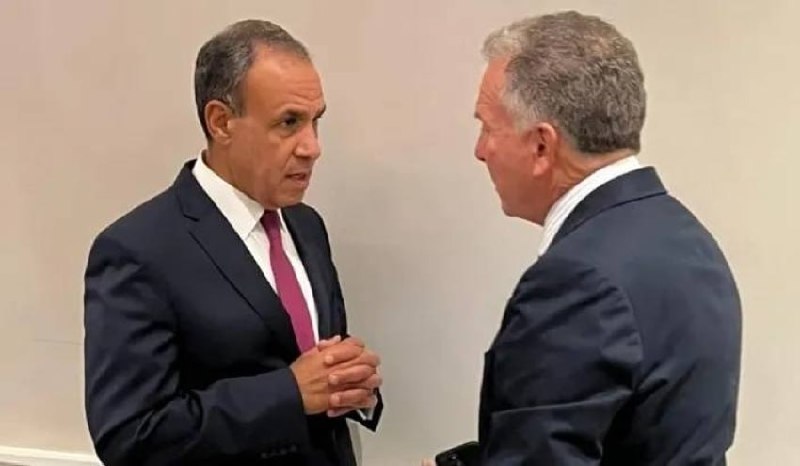
On 26 May 2026, the United States Navy announced it would resume escorting commercial vessels through the Strait of Hormuz, according to reporting by BRICSNews on its official Telegram channel. The resumption, confirmed simultaneously by DiscloseTV on the social media platform X, ends a fourteen-month suspension of the escort program that began following the breakdown of the previous nuclear negotiations between Washington and Tehran. The timing of the announcement coincides with the convening of a new round of US-Iran nuclear talks in Rome, suggesting a deliberate effort to create diplomatic space for negotiators on both sides.
The Strait of Hormuz is among the most strategically consequential waterways on earth. Roughly 20 to 21 million barrels of oil pass through it daily, according to shipping industry tracking — a volume representing approximately one-fifth of global oil consumption. Any prolonged disruption to traffic through the 30-mile-wide channel between Oman and Iran carries immediate and severe implications for global energy markets. The US Navy's escort program, known formally as the Maritime Security Transition, has been a feature of Gulf operations since 2002. It provides armed naval escorts to commercial vessels navigating the strait's most exposed western approaches, where the risk of interdiction by state and non-state actors is highest. The program has operated intermittently for over two decades, suspended during periods of heightened US-Iranian tension and resumed when diplomatic channels opened.
The Suspension and Its Aftermath
The previous escort program was suspended in early 2025, following the designation of Iran's Islamic Revolutionary Guard Corps as a Foreign Terrorist Organization by the outgoing administration. The IRGC, which controls Iran's naval forces in the Gulf, interpreted the designation as a hostile act that ended any basis for diplomatic engagement. Tehran threatened retaliatory measures against American vessels in the Gulf, and the escort program was halted amid escalating rhetoric from both capitals. The suspension left commercial shippers to rely on their own risk management measures, including contracted maritime security guards and commercial insurance surcharges for Gulf transits.
The period of suspension was marked by several near-incidents involving commercial vessels and Iranian coast guard vessels in the strait's approaches. Shipping industry sources reported increased insurance premiums and a measurable rerouting of some tanker traffic toward longer Cape of Good Hope voyages, adding significant cost and transit time for oil shipments from the Persian Gulf to Asian and European markets. The rerouting, while manageable for a limited period, illustrated the economic sensitivity of the corridor: even modest disruptions push commercial actors toward costly alternatives that compound over time.
The new round of talks, which began in early May 2026 in Oman before moving to Rome, represents the first sustained diplomatic engagement between the two governments in over fourteen months. The US delegation, led by senior State Department officials, has been negotiating through intermediaries given the absence of direct diplomatic relations. Iran's team, led by Foreign Ministry representatives, has insisted on the removal of sanctions as a precondition for any agreement on nuclear enrichment limits. The escort program resumption appears designed as a confidence-building measure — an observable goodwill gesture that demonstrates willingness to reduce tensions at sea while talks continue.
What the Escort Program Actually Does
The practical scope of the resumed escorts should not be overstated. The US Navy will assign escort vessels to a limited number of registered commercial ships transiting the strait's western approaches — the waters closest to Oman and the Gulf of Oman exit. This coverage does not extend to the full length of the strait or to Iran's territorial waters, which commercial vessels legally traverse as part of standard international shipping lanes. The escort vessels, typically Arleigh Burke-class destroyers or equivalent surface combatants, provide protection against small-boat attacks, mines, and other asymmetric threats. They do not alter the fundamental military geography of the Gulf, where Iranian anti-ship missiles, naval bases, and drone capabilities remain in place on both shores of the strait.
This limitation matters for understanding the strategic significance of the resumption. The escort program does not give Washington additional leverage over Iran's core capability — the ability to threaten commercial traffic through the narrowest section of the strait, where tankers must reduce speed and navigate in single file. Iranian military planners have invested heavily in anti-access, area-denial systems along these approaches for decades. Naval escorts mitigate certain risks but cannot neutralize the underlying deterrent that Iran holds by geography. What the escorts do provide is a visible US military presence in the Gulf that serves both a practical protective function and a symbolic signaling purpose. The decision to resume that presence was not made lightly; it reflects a calculation that the diplomatic gains from the gesture outweigh its military limitations.
The Polymarket Signal and Trader Expectations
Market-based indicators offer one window into how informed observers are reading the current moment. Polymarket, the prediction market platform, placed odds in late May 2026 suggesting that Iran could sustain a closure of the Strait of Hormuz for up to thirty days even following the conclusion of a US-Iran nuclear agreement, according to market data cited across social media platforms. The figure is not a prediction but a reflection of the odds that traders assign to various scenarios given available information. It nonetheless points to a structural feature of the current negotiation: a nuclear deal would address Iran's nuclear program but would not automatically resolve the question of commercial shipping through the Gulf.
The market signals align with what regional analysts have long argued: the Hormuz question and the nuclear question are related but distinct. A comprehensive nuclear agreement would remove one major source of friction between Washington and Tehran and would create conditions for broader sanctions relief. But Iran has multiple motivations for maintaining its Hormuz leverage beyond the nuclear file — including its broader regional posture, its relationships with proxy forces, and its interest in demonstrating that it cannot be coerced. Traders appear to be pricing in the possibility that even a successful nuclear negotiation leaves these underlying tensions unresolved.
Both sides have strong incentives to avoid uncontrolled escalation. The 1988 incident — when a US Navy warship mistakenly shot down an Iranian civilian airliner, killing 290 people — remains a reference point in both capitals for the dangers of miscalculation in the Gulf. The 2019 episode, when Iran briefly threatened to close the strait in response to US maximum-pressure sanctions, ended with Iran's exports falling sharply and its economy absorbing severe costs. Those precedents have shaped risk calculations on both sides, creating a perverse stability: the strait's importance to global markets makes it too dangerous to weaponize fully, but its importance to Iranian and American interests ensures it remains a permanent site of strategic competition.
Structural Contours of a Contested Waterway
The Hormuz standoff sits within a longer arc of contested control over global commons. The strait is not merely a shipping lane; it is a node in the global oil infrastructure that shapes pricing, inflation, and energy policy across three continents. Disruptions that last days affect tanker scheduling and insurance rates. Disruptions that last weeks begin to affect refinery operations and strategic reserve decisions. Disruptions that last months would be economically catastrophic on a scale that would demand political responses far beyond the diplomatic channels currently in use.
This asymmetry gives both sides reason to negotiate but neither side reason to surrender its core position. Washington benefits from the escort program as a demonstration of commitment to Gulf allies — Saudi Arabia, the UAE, and other partners who depend on the strait for oil revenues and who look to the US security umbrella as a hedge against Iranian coercion. Iran benefits from its geographic position as a permanent source of leverage that no diplomatic agreement can fully neutralize. The escort resumption, in this reading, is not a resolution but a management mechanism — a way to keep the strait functioning while the larger contest plays out through other channels.
The structural contest extends beyond the immediate US-Iran dynamic. China, which imports the majority of its oil through the strait, has a growing interest in the waterway's stability. Beijing has expanded its strategic petroleum reserves and deepened energy partnerships with Gulf states, but it remains dependent on the open strait as a matter of physical infrastructure. Chinese naval capabilities in the Indian Ocean have expanded, but China lacks the regional basing infrastructure and alliance relationships that give the US Navy its operational advantages in the Gulf. This creates a complex web of interests in which a US-Iranian accommodation serves not only the two direct parties but also broader international stakeholders with no seat at the negotiating table.
Stakes and Forward View
The immediate stakes are clear: a successful round of talks in Rome could create conditions for a broader diplomatic normalization that includes not only the nuclear question but also sanctions relief, prisoner exchanges, and a reduction in regional proxy activity. The escort resumption is a positive signal within that process. But the Polymarket data and the structural analysis both suggest that a nuclear deal, if reached, would not automatically resolve tensions in the Gulf. Iran's Hormuz leverage is embedded in geography, military infrastructure, and domestic political dynamics that no single diplomatic agreement can address.
Over the longer term, the global energy transition introduces an additional layer of uncertainty. As electric vehicle adoption accelerates in major economies and as renewable capacity expands, the strategic importance of Persian Gulf oil — and by extension the strait — will gradually diminish. This transition is measured in decades, not years. In the meantime, the Hormuz corridor remains the world's most critical oil chokepoint, and the contest over its control will continue to shape US-Iranian relations, Gulf security architecture, and global energy markets.
What happens in Rome in the coming weeks will determine whether the current diplomatic opening produces a durable agreement or another temporary arrangement. The US Navy's escort vessels will be visible on the water throughout that process — a symbol of American presence and a practical safeguard for commercial shipping. But the deeper contest over the strait will continue long after the talks conclude, however they end. The escort resumption is a gesture, not a solution. It buys time for diplomacy without resolving the structural conditions that make the strait a permanent fault line in Middle Eastern geopolitics.
The sources do not yet indicate whether the current round of talks in Rome will produce a framework agreement before the summer, nor do they specify the precise terms that Washington and Tehran are debating. What is clear is that both sides have calculated that reducing tensions at sea serves their interests in the near term. Whether that calculation holds as negotiations proceed is the central open question.
The article was drafted on 26 May 2026 using wire and platform-source inputs. Monexus will continue to track the Rome negotiations and any further changes to the US Navy escort posture in the Gulf.
Wire provenance
This editorial synthesis draws on the following public wire/social posts:
- https://t.me/bricsnews