The Vatican's AI十字路口:Leo XIV's Encyclical and the Governance Gap
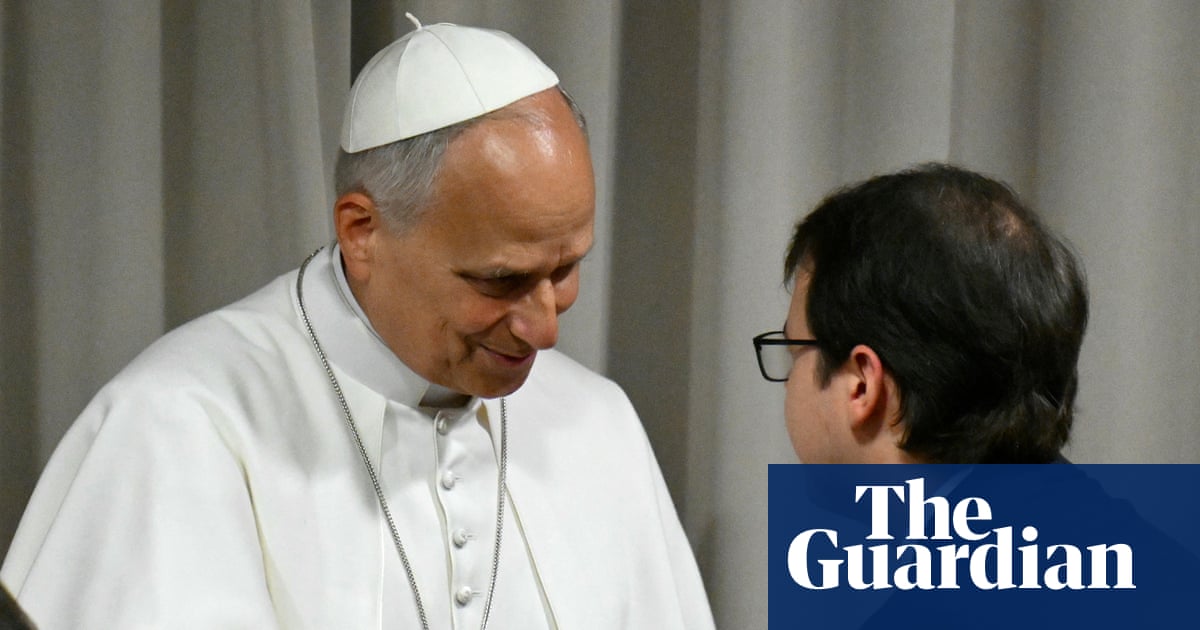
When Pope Leo XIV published his first encyclical in May 2026, observers expecting a cautious doctrinal meditation on technology were quickly disabused of that expectation. The document — a letter addressed to the world's 1.4 billion Catholics but plainly intended for a wider audience of policymakers, technologists, and the informed public — opened with an analogy that reverberated across diplomatic cables and tech-industry boardrooms alike: unchecked artificial intelligence posed a threat to human dignity comparable in scale to nuclear proliferation.
The framing was deliberate. It was also, by design, a provocation.
The encyclical, titled Fraternitas in Technologia according to Vatican communications released on 25 May 2026, did not limit itself to the familiar Catholic concerns about automation's displacement of workers or the ethics of algorithmic decision-making. It went further, arguing that the concentration of AI capability in a small number of private corporations and the states that back them represented a structural threat to democratic governance itself. The language used — "disarm," "domination," "humanity must not be subordinated to its own creation" — drew explicit parallels to Cold War-era arms control discourse, repurposing it for an era in which the weapon in question is computational rather than ballistic.
The Vatican's message, in other words, was not primarily theological. It was geopolitical.
A Encyclical That Is Not Really About AI
The most penetrating reading of the document came not from Catholic commentators but from technology-industry analysts. An analysis published by TechCrunch on 25 May 2026 argued that Pope Leo XIV's encyclical uses artificial intelligence as a diagnostic lens rather than as the subject itself. The real targets of the critique — according to this reading — are older problems: the concentration of economic and political power in a small technocratic elite, the erosion of democratic accountability as consequential decisions are delegated to opaque algorithmic systems, and the failure of existing international institutions to govern technologies that were not contemplated by the treaties and frameworks through which states manage shared risks.
This interpretation finds support in the encyclical's text. The document devotes substantial attention to what it calls the "governance gap" — the mismatch between the speed at which AI capabilities are advancing and the pace at which legal, regulatory, and diplomatic frameworks are being updated to account for them. This is a problem that governments, multilateral bodies, and civil-society organisations have been flagging, with varying degrees of urgency, for at least five years. The Vatican did not discover it. What the encyclical added was the moral authority of the papacy and the institutional platform from which to say it in a register that no corporate executive or government minister can easily dismiss.
The comparison to nuclear weapons is instructive in another respect. The nuclear analogy draws attention not to any single AI system but to the systemic properties of a technology that, once deployed at scale, cannot be recalled, whose effects compound in ways that are difficult to predict, and whose control requires international coordination among parties that have divergent interests and asymmetric capabilities. Those properties describe a class of risk that existing regulatory models — premised on national jurisdiction, corporate liability, and product-by-product safety certification — are poorly equipped to manage.
The Governance Gap the Encyclical Identifies
The encyclical is most specific when it addresses the structural conditions that make AI governance so intractable. Three passages received the most attention in the days following publication.
The first concerns the question of who controls the infrastructure through which AI systems are trained and deployed. The document notes — without naming specific companies — that the compute resources, training data, and proprietary models that underpin leading AI systems are concentrated in a small number of firms, the majority of them headquartered in the United States, with a small number of Chinese state-adjacent entities operating at comparable scale. This concentration, the encyclical argues, means that the decisions made by a handful of corporate actors about what to build, what to deploy, and what constraints to accept on their systems carry consequences for human welfare at a civilisational scale — without any corresponding mechanism of democratic accountability.
The second concerns the limitations of existing multilateral institutions. The document acknowledges the work of the United Nations Secretary-General's Advisory Body on Artificial Intelligence, as well as the EU AI Act and various national-level regulatory initiatives, but argues that these efforts remain fragmented, voluntary, and subject to capture by the same concentrated interests they are meant to govern. The analogy to early nuclear governance is explicit: just as the Nuclear Non-Proliferation Treaty succeeded only when the major powers agreed that proliferation was contrary to their collective long-term interests, AI governance will require a comparable agreement — one that does not yet exist and whose preconditions remain deeply contested.
The third concerns what the document calls the "democratic deficit" in AI development. By this, the encyclical means not merely the absence of popular consultation on how AI systems should be designed and deployed, but the more structural problem that the decisions shaping AI's development trajectory are made within private corporations according to commercial logic, and that the feedback loops through which democratic societies ordinarily correct market failures — regulation, liability, collective bargaining, public investment — operate too slowly and with too little information to keep pace.
Reactions from the Technology Sector and Governments
The reception of the encyclical across the technology sector was, predictably, uneven. Several major AI companies released statements emphasising their commitment to safety research, red-teaming, and alignment work — language that acknowledges the Vatican's concerns without accepting the governance conclusions drawn from them. Two companies referenced in Vatican-adjacent press coverage as having "engaged constructively" with the Holy See in the months preceding the encyclical's publication declined to comment on the specifics of those discussions.
Governments responded with varying degrees of warmth. The United States Mission to the Holy See issued a statement welcoming the encyclical's "affirmation of the role of human reason and moral conscience in technological development," a formulation that acknowledged the document's framing while sidestepping its more pointed governance implications. The European Commission, which has led international efforts on AI regulation through the AI Act, offered a more substantive response: a statement from the Commissioner for Digital Sovereignty noting that the encyclical's analysis of the governance gap aligned closely with concerns that had motivated the EU's regulatory approach and expressing interest in further dialogue with Vatican interlocutors.
China's response was notable for what it omitted. Official Chinese state media, including Xinhua and Global Times, carried factual accounts of the encyclical's release but did not publish editorial commentary on its implications for AI governance. This restraint is consistent with Beijing's broader posture toward multilateral technology governance: willing to participate in international discussions, but wary of frameworks that might constrain the development of Chinese AI capabilities or embed values the Chinese government considers externally imposed.
The absence of a Chinese editorial response underscores a structural problem the encyclical identifies but does not resolve. The governance gap it describes is not simply a technical or administrative problem. It is a geopolitical problem. Any international framework for AI governance would need to accommodate the interests and values of states whose understanding of the relationship between technology, sovereignty, and human rights is fundamentally different — and whose competitive dynamics in AI development are shaped by considerations of national security and great-power rivalry that multilateral frameworks can at best manage, not eliminate.
What the Vatican Can and Cannot Do
The encyclical is, in one sense, an act of institutional positioning. The Vatican has a long history of intervening in debates about weapons technology, from the nuclear age through to autonomous weapons systems. Each time, the pattern has been similar: the Holy See signals concern, draws on its moral authority and diplomatic network to inject the issue into multilateral discourse, and then works to shape whatever institutional response emerges. The result is rarely direct — the Vatican does not write regulations or deploy systems — but it is not negligible. The nuclear non-proliferation regime, such as it is, was built in a world in which the moral and diplomatic pressure generated by actors like the Vatican was a real factor in shaping the political will of nuclear-weapon states.
Whether that historical analogy transfers to AI is genuinely uncertain. The technology is more diffuse, the competitive dynamics more acute, and the institutional infrastructure for governance more fragmentary. The encyclical itself acknowledges this. Its language about "disarmament" is aspirational in a way that reflects both the Vatican's rhetorical tradition and the genuine difficulty of the problem.
What the document does accomplish is to name the problem in terms that are difficult to dismiss or reframe. The governance gap is not a technical failure but a political one — a failure of the international community to treat AI risk with the same seriousness it eventually brought to nuclear risk. Whether the political conditions for closing that gap exist, or whether they can be created, is a question the encyclical poses but cannot answer. That is not a criticism. It is, perhaps, the most honest thing a document of this kind can do.
This article was filed from Rome. Monexus covered the encyclical's release through Vatican wire services and technology-policy reporting; the primary comparison in most Western outlets focused on AI ethics frameworks. This piece foregrounds the geopolitical governance dimensions that those accounts treated as secondary.
Wire provenance
This editorial synthesis draws on the following public wire/social posts:
- https://x.com/sprinterpress/status/2059237423326851072
- https://x.com/sknerus_/status/2059026925918543872
- https://x.com/polymarket/status/2059150789118543872