140,000 at Al-Aqsa: When Attendance Figures Become a Geopolitical Claim
When 140,000 Muslims gathered at Al-Aqsa Mosque for Eid al-Adha on 27 May 2026, the same event was reported four different ways across four outlets. The attendance figure is not a neutral fact—it is a claim, and claims require context.
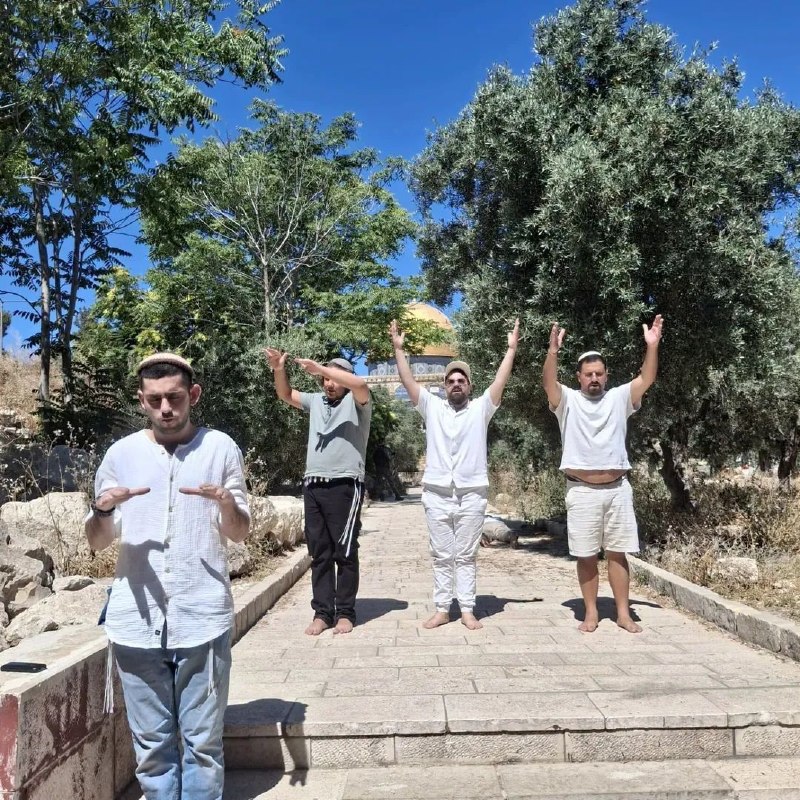
On 27 May 2026, the Al-Aqsa Mosque in Jerusalem drew what multiple sources describe as one of the largest Eid al-Adha gatherings in recent memory. The Palestinian Waqf Ministry, the Jordanian-affiliated body responsible for administering thecompound, placed the figure at 140,000 worshippers. Iranian state-adjacent outlets ran the story prominently. A Western-aligned wire service covered it in brief. Same event, different emphasis—and that differential treatment is itself the story.
The argument here is not that media outlets fabricated facts. The argument is that identical reporting choices—foregrounding this number versus that context, citing this official versus that analyst—produce materially different pictures of the same geopolitical reality. In covering contested religious spaces, no coverage is structurally neutral. The question is which institutional interest a given frame serves.
The Number Is a Claim
140,000 is not simply a headcount. It is an institutional assertion—from the Palestinian Waqf Ministry—about who is present at, and therefore invested in, one of Islam's holiest sites. The Waqf's continued administration of Al-Aqsa has been a persistent point of friction with successive Israeli governments, which dispute the extent of Waqf authority and have pursued policies—both administrative and physical—that critics argue amount to encroachment on Muslim custodial rights.
That institutional context rarely appears in wire summaries. When Western outlets noted the gathering, the framing tended toward the security register: "tensions," "Israeli police presence," "access arrangements." These are not false details. But centering them as the structural frame—rather than the religious and territorial significance of 140,000 Muslims asserting physical presence on the compound—reframes a mass devotional act as a security event requiring management.
Who Controls the Camera Shapes the Picture
The outlets reporting on this gathering reflect divergent institutional positions.
The Waqf Ministry's 140,000 figure anchors Palestinian and Arab-state coverage. For Ramallah-adjacent media, this is a story about demonstrated attachment to Jerusalem—the compound as a daily fact of Palestinian religious and national life, with or without international recognition of sovereignty.
Iranian state-adjacent channels ran the story as part of a broader narrative in which Jerusalem sits at the center of an Islamic civilizational contest. For Tasnim News and affiliated Persian-language services, the attendance figure is evidence of aummah solidarity against what coverage characterizes as occupation-era restrictions.
Western wire services, when they covered the event at all, tended to frame it through a bilateral diplomatic lens—emphasizing the site as a friction point between Israel and Jordan, whose 1967 custodianship agreement remains the legal basis for Waqf administration. This framing treats Al-Aqsa as a negotiation variable in a bilateral dispute rather than as a first-order Palestinian religious and national interest.
Each of these framings is internally coherent. None is simply "wrong." But each serves different institutional interests and positions different audiences to draw different conclusions.
The Contested Site as Media Laboratory
Al-Aqsa is not unique in this regard. Contested religious sites—Yerevan's Etchmiadzin, Sarajevo's Gazi Husrev-beg Mosque, Kashmir's Hazratbal—consistently expose media systems to the same structural tension: identical events, divergent frames, consequential downstream effects on how reader Understands the underlying dispute.
What coverage of the 27 May 2026 gathering demonstrates is that even ostensibly factual reporting—"140,000 worshippers attended"—carries embedded political conclusions when the institutional source, the contextual framing, and the sourced analyst are all selected according to editorial logic that the reader does not see.
When the Waqf Ministry's figure appears without attribution caveats in some outlets and with "Israeli officials dispute" hedging in others, readers are receiving materially different accounts of the same morning. When Iranian coverage foregrounds Islamic resistance to occupation while Western outlets foreground Jordanian custodianship disputes, both are accurate about different dimensions of what is objectively a multidimensional situation.
The structural insight is not that selective coverage equals propaganda—propaganda implies deliberate deception, and most of these outlets are reporting facts. The structural insight is that selective emphasis, sourced analysts, and contextual framing produce ideologically coherent narratives from identical subject matter. In a contested space like Al-Aqsa, that coherence serves different interests.
What This Means for Coverage of Contested Holy Sites
The stakes of this pattern extend beyond today's Eid gathering. As Jerusalem's Old City remains a focal point of competing claims—Israeli annexation assertions, Palestinian irredentism, Jordanian custodianship concerns, broader Arab and Muslim solidarity commitments—the media infrastructure covering the city will continue to sort facts into incompatible interpretive frameworks.
A reader who relies solely on Western wire services for Al-Aqsa coverage will understand a site in negotiation. A reader who relies on Iranian state-adjacent outlets will understand a site in resistance. A reader relying on Palestinian and Arab-state media will understand a site under siege. All three readers are receiving factual information. None is receiving a complete picture.
The aspiration to neutrality that many outlets maintain on contested religious sites is, if this event is any indication, more aspiration than achievement. "Neutrality" in this context often means the absence of explicit political language while the structural framing—chosen officials, selected context, differential emphasis—does the work of positioning instead.
What readers should demand is transparency about which institutional voice is being cited, whose interests that framing serves, and what the coverage does not say. On 27 May 2026, 140,000 Muslims prayed at Al-Aqsa. How that fact is presented is a choice—and choices have consequences.
This publication's MENA desk frames contested holy site coverage by surfacing the institutional interests behind diferent editorial choices rather than treating any single framing as naturally neutral. The divergent treatment of the Waqf Ministry's own attendance figures across outlets is documented above.
Wire provenance
This editorial synthesis draws on the following public wire/social posts:
- https://t.me/englishabuali/14276
- https://t.me/tasnimnews_en/48961
- https://t.me/JahanTasnim/22349
- https://t.me/abualiexpress/14253